
To Be A Better Writer, Learn To Embrace All Feedback
See constructive criticism as a blessing, not an insult
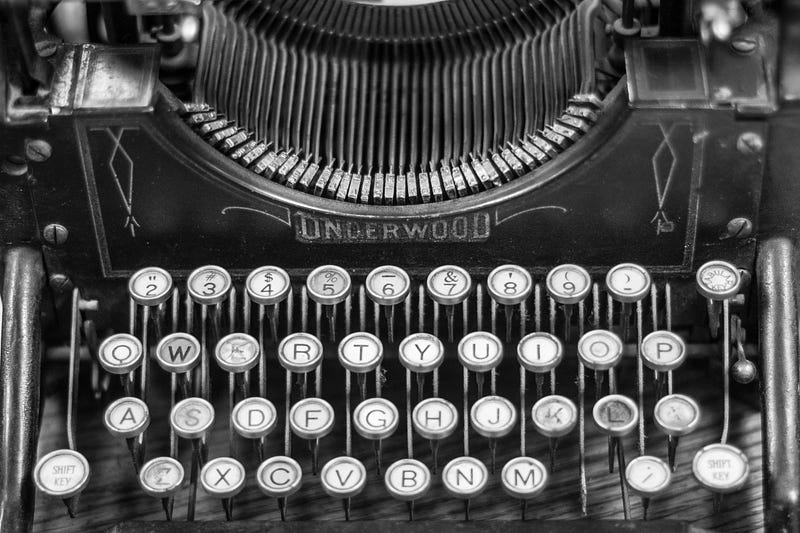
I remember a time when I used to carry around a notebook with me everywhere, jotting down deep thoughts, poetry, and observations. Then I’d meet up with friends who did the same, and we’d sit around complimenting and oohing and ahhing each other’s prose.
Not surprisingly, I started to believe I was a brilliant writer. The next beat poet, the next Jack Kerouac, even. But the problem was that the people reading my writing had an emotional slant towards me, and the writing didn’t need to fulfill an actual purpose. It was writing for the sake of writing. And while it was hugely satisfying at the time, it wasn’t a real measure of my talent.
Fast forward to journalism school, where suddenly I was placed squarely amongst professors who had been writing professionally their entire careers. They had long since been removed from complimenting anyone’s work out of niceness (including their own), as they had newspapers and magazines to please. They also had a large audience of people who expected a certain standard, and rightly so.
So when my first few assignments came back with less than ideal grades, I took it hard. “How can they not see the inherent brilliance in my work?” I thought. My initial reaction was a bit of anger — like somehow these professors had a personal goal to ruin my confidence. But as I learned over time, it was quite the opposite.
Luckily, I had a couple of friends in the course who were going through their own rude awakening — that the standard we had set for ourselves as casual writers wasn’t anywhere near where editors in the real world would accept. So, while I contemplated leaving the program a couple of times and work retail the rest of my life because it was something I knew I could do, I took some comfort in knowing that others in the course — whose writing I thought was great — were being criticized by editors too.
Here’s an important lesson when you’re a writer at any stage: you probably aren’t going to get the ego-affirming compliments you crave. And that’s a good thing.
After some soul-searching and a lot of red wine, I embraced the feedback given to me by the teachers, and worked it into my future assignments as best I could. I was able to take a step back and realize that these professors were not against me. They were applying their real-world knowledge to grading my work, and they were simply dictating how my writing would be judged in a newsroom.
Sure enough, this realization prepared me just enough to weather the storm in my first actual newsroom. The editor was very sharp and experienced, and made no apologies for ripping gaping holes in my copy. It was again a bit of a smash to my ego, but one that I got over when I reminded myself this wasn’t school — my articles now had more weight to them because they involved the very people that read them.
Even when I wrote what I thought my best article ever, I could hear sighs from the editor’s desk as they went through the copy. After a while, the sighs lessened, which left me a bit confused — did that mean I was getting better? Or worse?
Here’s an important lesson when you’re a writer at any stage: you probably aren’t going to get the ego-affirming compliments you crave. And that’s a good thing.
Instead of getting angry with any editor from pointing out deficiencies in my copy, I actually thank them, because they are providing a free education into how I can improve (while I’m still being paid for my work.)
Constantly getting patted on the back for mediocre work means you won’t actually try to improve. And when an editor points out a mistake or something that could be improved, your first impulse is to be defensive because “how dare they question the sanctity of my work?”
I see the same with writers just coming into the freelance scene. I write for one company that has an editing system that places ratings on submitted articles. It also has a social media group just for its freelancers, to bounce ideas, answer questions, and make horrible jokes. I read some posts from the writers — presumably some who have never had the benefit of a writing teacher — who get angry or hurt when they receive a lower grade than they expected, even though the client accepted the work.
In essence, they are letting their ego get the better of them, and aren’t seeing the bigger picture, which is this: editors (and teachers) typically have more experience than you. They see what works and what doesn’t work, and they know the novice errors to look for.
So instead of getting angry with any editor from pointing out deficiencies in my copy, I actually thank them, because they are providing a free education into how I can improve (while I’m still being paid for my work.)
Yes, there will be times when an editor screws up and tries to correct something they shouldn’t or gives you misguided negative feedback (after all, editors are human too. For now). A polite response about why you don’t think the edits are required is fine, in my opinion. But don’t argue too much unless you feel strongly the edits could compromise the copy’s integrity, or cause a problem for the publication. If an editor or a client wants to make the change, let them. It’s ultimately their right to do so.
I have put time and sweat into writing articles with my byline on it, only to see the published version changed substantially. Don’t take this as a knock against your work — if it was very poorly written, it probably wouldn’t get published at all. The editors are merely making sure the piece works for the client or intended audience, or they have limited space if it’s in print.
So no matter who it is looking at your work, don’t take it personally if they tell you it can be improved — even if they’re not a writer themselves. Oftentimes those outside the writing profession are a good measure of how an audience will judge your work, which is sometimes different from how a seasoned editor would.
In short, what I’m saying is this: accept all feedback, from professionals and non-professionals. You can choose to adopt the advice or ignore it. Getting defensive puts up walls to learning, and there’s a lot to learn and new perspectives to be gained at any stage of your writing career. Accept that while you may be a writer who has earned several awards (ahem), no piece of writing is ever perfect and another set of eyes is always a blessing.
So, in the spirit of being open to comments, however harsh they may be, let me know what you think of this article and how you’d improve it! I promise not to be too sad, and who knows, I might even take your advice.


