
Must do things in Canada as a newcomer
To a Newbie, From a Newbie
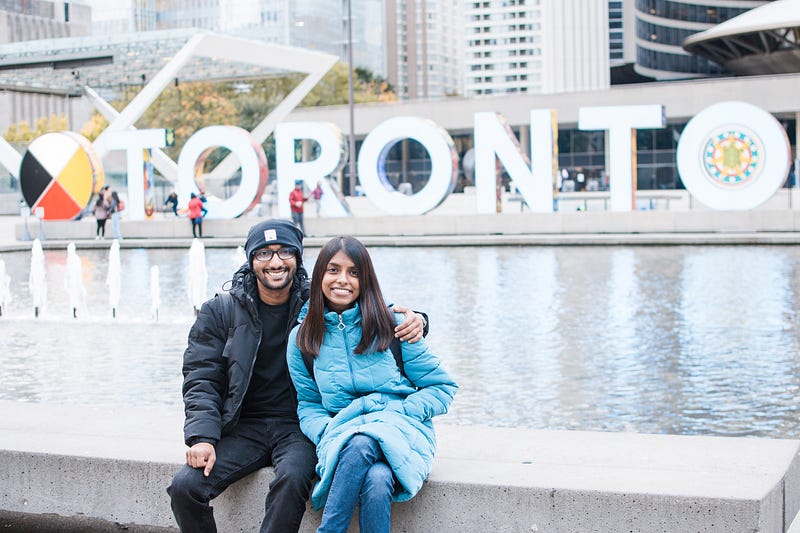
Here are a few things you should do as soon as you land and start doing before you land in Canada, based on our experience so far.
1. Getting a cab
As soon as you land, have some cash ready with you or your international credit cards active to pay for the cab. As you will be carrying luggage, you will need one. You can easily hail a taxi from the airport exit or via apps such as Uber and Lyft.
2. Finding an AirBnB
This is something you should do before you land. Check for temporary accommodation until you find a permanent place. The most recommended is AirBnB. Chat with the host, and clarify all points such as check-in times, because this needs to match your flight times.
If you are landing during morning hours and you need to settle faster, you will have to pay for the previous day because the usual check-in time is 2/3 pm.
Be ready to extend your accommodation based on the progress you make with a rental place. Therefore have adequate cash loaded to your cards to make payments. And if you wish to extend at the same place, check the availability for the next 3/4 weeks.
Until you make the payment, your reservation is not secured. This is what happened to us. Even though we had reserved it, it got overwritten by a confirmed one.
3. Rent place
You need to actively look out for a rental place. I will be honest here. When you are a newcomer with no employment yet, none of the landlords is willing to take a risk with you. But keep trying. Apps and channels we used were Realtor (works via agents mostly), Kijiji and Facebook Marketplace. Our recommendation is to try direct methods as much as possible. (Speaking of Marketplace, you could find anything you want to buy here cheaply.)
And most importantly word of mouth. Build your network here and as much as possible and check if you know anyone from your local. They will always have a soft spot for you. It is what worked for us. If possible, start it even before you land.
Access to buses/subway trains should be one key factor that you to consider. If it is very far, walking to the stations during winter won’t be the easiest.
Always negotiate for a fully furnished apartment/house. In Canada (and I’m assuming in most others), refrigerators, laundry, and cookers are given. So don’t consider that as fully furnished. You should negotiate for; beds, kitchen utensils, tables, chairs etc., otherwise you will have to buy, as those are must-have essentials.
And importantly, get the monthly rental rate with utilities which makes your life easier. For apartments and houses, you’ll have to pay for utilities on top of the rent, for basements the rent may include utilities, if not usually you’ll have to pay around 30% of the utility bill of the house.
You need to have funds to pay at least two months of rental (first and last), to sign the tenant agreement. Agree on garbage disposal methods and laundry schedules. You will be the luckiest if you get your own laundry unit and a heater. But this is not the case with most rental places, at least in the basement/houses. Condos work differently altogether.
The faster you find accommodation, the more you save on AirBnB which is way expensive.

4. Sin Number
This is the unique ID you get in the country. No one is supposed to know this unless it is your employer to arrange your payment.
Your nearest Service Canada is the place for this. Our recommendation is to get an appointment and go, which saves you half the time sitting in queues. You need to carry your immigration confirmation, proof of address and passport to get this. And you will receive your Sin number there itself.
Online method is available as well. Sharing a link here for reference as we didn’t take that path.
5. Bank Accounts
You most likely will be carrying some liquid funds with you as you need to cover your expenses here. So it will always be a headache to take care of it. Open your bank account within the first few days. Meet a banking advisor, and ask about all the programs and conditions. Make sure to inquire about newcomer programs as well. They have different benefits under these schemes.
Most of the time, they might ask for your SIN number. If you don’t have it yet, explain your plan of getting it.
With the bit we know, there are two types of accounts; a Chequing account which will be your daily account, and a Savings account for saving purposes. Savings accounts have transaction limits and conditions to get the interest rate whereas chequing accounts will not have such limits, depending on the package you go for; but carry no interest.
As you open your accounts, you are eligible for a debit card. But in Canada, everything work based on your credit history, that is the buying/payment behaviour. Hence apply for a credit card.
Depending on the bank you select, your monthly credit limit might vary from $1000 to $5000. There is no harm in using a credit card as long as you pay this on time. If you continuously don’t pay on time, you will be charged 20%+ interest, credit rating will be impacted which in turn will jeopardise your future investment opportunities.
Having a chequebook will be handy too. So, request that. Some banks charge for this whereas some give it for free.
6. Health Card
Depending on your visa status, you can apply for your health card. For this, you need to go to your state health body. For example, it is ‘Service Ontario’ for Ontario. Make an appointment and go to save time.
They will ask for address proof here. So take a document such as a billing proof or your tenant agreement here. We had a scenario where the agent who handled my husband’s case said that the tenancy agreement is not accepted, but we changed and went to another agent, and it worked.
Depending on the situation, use a few strategies as such. You will get a temporary document with your health card details, but your physical card will come to you by mail pretty fast.

7. Mailing Address
This is one of the most important things in Canada, for everything you wish to do, you are required to give a mailing address. Starting from Canada customs where your immigration status is approved, bank accounts, health card, and mobile connections, they will ask for this.
We gave our temporary AirBnB address to customs, the mobile connection provider and the bank. But, not recommended.
If you don’t have a permanent location to give to customs to send your PR card, tell them that and get the address change form which you can fax them later. Try to give a permanent address to all the other places as much as possible, as everything will be sent to you via mail.
Mobile connection providers case is the easiest where you can go and change it on the app. For the banks, you can change it too, but sometimes you might have to change your home branch. And if you don’t plan to stay in your AirBnB for more than a week, don’t give that address as credit cards will be mailed to the same. We had a time getting our cards from Brampton which was our first AirBnB. But the host was the best one that we could ask for, so he went all the way to arrange it for us.
8. Mobile connection
As we can’t use our home country connections for long, get a mobile connection as soon as you land. Sometimes you might get offers/discounts if you buy from the airport. We got one such offer which is about $20 for every month for the 1st 12 months. Providers that we know are Rogers, Fido, and Telus.
9. Groceries
You need to learn the art here. We are still new to this as well.
Product pricing works very differently here. The same product may be priced differently in different supermarkets. But if you have a pamphlet/flyer which says the price of a product is cheaper in the other store, you can get that benefit from your shopping store. This is called price matching.
Also, there is an app called Flipp where you can easily compare product prices. Again depending on the commute to each supermarket, decide how you want to buy things.
Avoid going to groceries on Sundays, as there is a high chance that things might be out of stock and queues.
10. Purchasing things
You might have to buy some essentials to get settled in. Until you find employment, go for the lowest budgets as much as possible. Check for prices on online sites and compare. We got most of our stuff from Dollarama and Walmart.
And if you are moving here during the winter, get a good cream/lip balm and some long-sleeved t-shirts. But if you aren’t sure what to buy from your home country, you can do some quick shopping from places like Walmart where you can find anything.
11. Library membership
If you are a fan of reading books, get your city library membership, it is free. You get access to any library in the city, unlimited books, movies, and LinkedIn learning material access.
So why miss it??
We got registered at the Toronto Public Library.

12. Follow Maps
Maps will be your best friend. The country is large, will need some time to get familiar with all the roads and routes. So you can use Google Maps or Apple Maps to help you.
It will help you with transit options which include train and bus options. The best part is that bus schedules are given too. The downside to this is that they say Google Maps bus schedules are not the most accurate, but there are plenty of apps such as Transit that you can use.
Major tip — During winter, target the bus schedule. Why stay at the stop when you know that bus will take another 10/20 minutes to arrive.
13. Get your transit cards
Depending on where you live, get a transit card that you can load and use, just like a credit card. In Toronto, it is Presto. In Mississauga, it is Mi Way. You have to tap in when entering. Presto card allows you to travel for 2 hours with one tap in charge. Meaning; if you tap in at 6 am getting into a bus, you won’t be charged again for 2 hours no matter how many times you tap in within the next 2 hours on the subway and buses.
So plan your tasks like that if you want to save some money. It is about $3.10–3.20 for every tap-in. Go trains and buses are a bit more convenient at a higher rate.
You can get this card from any Shoppers Drug Mart for about $6. You can schedule auto reloads to the card from your account so that once it hits a min level, it will get topped up, avoiding chances of hassle on the road.
14. Work on your driving licence
If you plan to drive soon or even later, get started working on this. Process is slightly different from state to state, but in Ontario, we need to do the G1 exam (written exam) and then take two road tests — G2 and G respectively. Once you pass G1, you can drive with another Canadian licence holder. As you pass G2 you get to drive on your own. G is the highway road test. There are conditions under each of these. Check the link for more details.
If you possess driving experience from your home country, you can get some exemptions too. Nevertheless, this should be on your to-do list as it takes a considerably long time for the full process.
15. Job hunt
I kept the most important one to the last. Finding employment as a newcomer will never be a piece of cake. It will be a lot of difficult days to pass through.
But don’t give up. Keep applying to jobs, and customise your resume to suit Canadian standards and the job description on the advert. Most companies use BOTs such as ATS systems to shortlist the resumes from the initial lot who apply. There are online ATS sites that you can try for free to get an indication. But do not rely 100% on them. So give your best shot. Sources we used were LinkedIn, Indeed and Glassdoor. Build your network here.
Get yourself enrolled on newcomer programs that the Canadian government conduct. They coach you on essential skills, and resume-building techniques, provide one-on-one reviews and mentorships etc. And check out for any hiring events which happen in different locations (but this didn’t work for us yet as we didn’t get any callbacks).
Below is what we enrolled.
Leverage on any Canadian referrals you have. It is the best way to land an interview. Out of all, the job hunt is the most difficult one which could put you down at times.
Know that you are braver and stronger than that to have come here to start a new episode of your life in Canada. So don’t give up !!
Canada is a beautiful country with people from all over the world. So here is your best chance to explore a multicultural country and plenty of different food, festivals etc. Keep exploring the country, go to events, travel, meet people and enjoy and embrace the winter!!

If I have missed any, let me know in the comments!!