
Tips From the Great Depression to Prepare for a Modern Recession
We’ve never experienced anything like it before….
Introduction
In March the Federal Reserve began hiking interest rates in an effort to lower inflation, which has become a big problem of late. Although the upcoming events this year in terms of interest rate hikes are interesting to watch they are also concerning. The Federal Reserve is essentially trying to correct the market by causing a “dip” rather than a “recession”. In my opinion, it’s a dangerous game. If the Federal Reserve doesn’t raise interest rates to stop inflation then eventually the USD will be devalued causing widespread global issues and making it difficult for Americans to maintain their current lifestyles. If the Federal Reserve raises interest rates too high it could accidentally trigger a recession. It’s a bit like walking a tightrope with a tank of electric eels on one side and a tank of lava on the other.
Signs of a Coming Recession
The U.S. economy has experienced three major economic events in the past few years of which the confluence makes me nervous. The first major event was the Covid-19 pandemic and the subsequent printing of money to supply the stimulus checks. The second major event was the Russian-Ukrainian war which while the U.S. economy will ultimately be largely unaffected at first will affect the global food supply and European energy sector. Both of these events have caused major supply chain issues which also in turn continue to affect agriculture. The third major economic event has been coined the Great Resignation and is an event in which a large number of workers have resigned or not gone back to work after Covid-19. Employers in some sectors continue to have trouble filling positions.
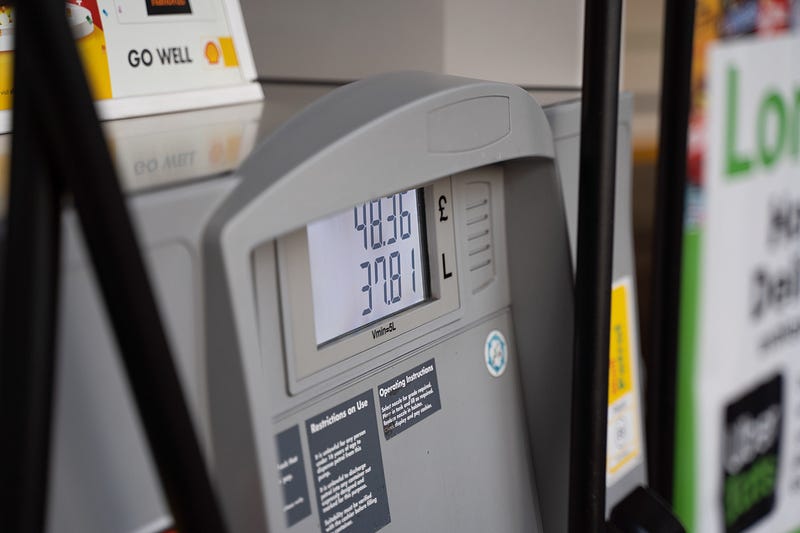
On paper, the economy looks good. The stock market is up, people are buying things and investors are investing. In reality, we are experiencing major global shortages, an excess number of open jobs that aren’t being filled, agricultural disruptions, supply chain disruptions, and excessive pricing of essential goods such as gas and food. We can only live between these two worlds for so long until the market will have to find a way to correct it — either through a controlled landing like the Federal Reserve is attempting or through a major recession.
Prepare for a Modern Recession
Keep a Rainy Day Fund Out of the Bank
During the Great Depression banks shut down and people were left with what they had available in their houses. Nowadays currency is even more virtual and we keep large amounts in the bank.
A lesson from the great depression is to always keep a small rainy day fund out of the bank in case of an emergency. Even if it’s just a couple hundred dollars in emergency savings or the key to a cryptocurrency not controlled by banks, any type of rainy day fund can make all the difference when the banks shut down. Banks shutting down may seem like a fictional reality but it can happen.
Grow Your Own Food (even in the city)
Although we live in more densely populated environments than ever before growing your own food is still possible. Focus on nutritionally dense or calorie-dense crops like kale, potatoes, and beans. Luckily kale, potatoes, and beans are some of the easiest crops to grow. Large amounts of kale can easily be grown indoors hydroponically with a grow light in a system like this one. In a pinch, it can also be grown hydroponically in a well-lit window with a net pot, cup, and hydroponic plant nutrients as long as half the roots touch the water and the other half touch air.
Potatoes can be grown in buckets or containers and beans can be easily grown pretty much anywhere!
Don’t Rely on Credit
If you can afford to buy something all at once rather than over monthly payments you should do so. While nowadays it is important to build credit, many of those who relied on credit before the great depression lost those purchases that had been through credit.
If you have a company that helps you to pay something off month-by-month such as a new phone, a student loan, or a new car you are relying on credit. Although this may sound a little crazy given all the financial advice to help you build credit, a volatile economic period is a time to rely on hard cash more than on credit. If you own a phone when the recession occurs you will still have that phone, but if you are paying for that phone through a line of credit you could lose that phone. Not relying on credit also means reducing debts such as student loans as much as possible before a recession strikes as it will be much harder to reduce these after.
Live Below Your Means
Living below your means rather than above or at your means will allow you a little more wiggle room if a financial emergency occurs. Many wealthy individuals often live below their means. If you doubt me just look at how Bill Gates dresses!
Living below your means also allows for the opportunity to save money. Money that is saved can be squirreled away for a financial emergency or invested into reliable investments that will recover easily if a financial emergency occurs. During the great depression, those that had been living below their means before the great depression had more wiggle room in terms of survival. These people were less likely to lose their houses.
Reduce Power Usage
From turning the thermostat up or down by a degree to being mindful of keeping doors and windows closed during hot or cold times of the year, reducing power usage simply involves being mindful.
Of course, if you want to go even further in terms of reducing power usage there are options. Between winter and summer, there are a few months in which the outside temperature is not that bad but heating or cooling is run. During these months turning the heating or cooling off early may help to get an edge in terms of saving power.
During the great depression, many families had to survive without heating or cooling for long periods to be able to focus on paying other bills.
Live with Lots of People… Especially Family
Living with parents isn’t glamorous and is neither what parents nor children want in life but it can help to pool resources during times of uncertainty. During the great depression, many people lost their houses and had to move in with others to pool money toward the expenses for one house. Often parents moved in with grown children, grown children moved in with parents, and siblings or cousins moved in with each other. Families found themselves suddenly living almost on top of each other with many people living per house.
This was economical as everyone in the house could concentrate their wages and resources on living in one house rather than splitting up the expenses. Living with lots of people is economically smart and a good strategy to survive a recession. Whether it’s moving in with parents or just having lots of roommates, become part of a resource-sharing living situation to benefit.
Conclusion
In conclusion, there are lots of ways in which you can use lessons from the great depression to protect yourself against a coming recession. Some of the tips in this article include keeping some money out of the bank, growing your own food, not becoming over-reliant on credit, living below your means, reducing power usage, and living with lots of people.
While the great depression was a long time ago, recessions are not a thing of the past. Throughout modern history, the economy has undergone numerous recessions. The tips in this article can help you prepare for the next one.
This article was written on 04/21/2022


