
Tips for Writing Sci-Fi Flash Fiction
A few pointers for powering your sci-fi short story
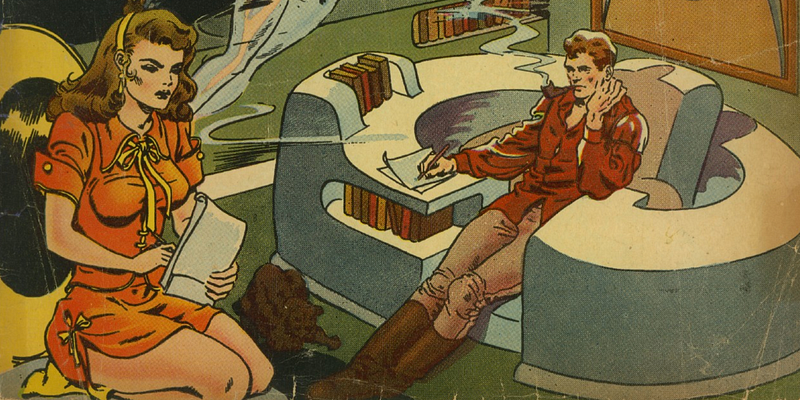
Asimov and Clarke were grandfathers of modern science fiction. Interestingly, they were both somewhat scientists themselves. This is what made their stories genius. Asimov was a professor of biochemistry, and Clarke was an inventor and undersea explorer. Their stories, rooted in not-yet-achieved science, expanded our minds and drew us in to believe the seemingly impossible. If you want to follow in their footsteps, here are some tips for propelling your own sci-fi stories forward in a flash fiction format.
- Set your story in a universe with different technology. Your sci-fi doesn’t always need to be set in the future (e.g. Star Wars is set in the past), but it does need to show a different and advanced technology. More importantly, there needs to be an element that shows how it could be possible scientifically. Think of it like magic, only plausible.
- Pick a scientific concept to mention. You don’t need to be a scientist to write great sci-fi, but your concept needs to be rooted in reality. If you feel lost when it comes to sci-fi, consider researching a scientific concept and writing a scene related to it. It’s not your job to fully explain the concept — you only need to do enough research to make the story believable.
- Have a theme and show it. There are a few universal themes: love, sacrifice, fear, faith, hope, endurance, perseverance, etc. Even if the reader can’t put an exact label on the theme, it needs to resonate in their mind. You must ‘tell’ a good bit in flash fiction because you don’t have time for detailed character or world building. But when it comes to your theme, you must show it through what happens, not state it outright. This is what makes your flash fiction powerful.
- Kill the backstory. In flash fiction, we don’t have the time to get to know your characters. We don’t care how they felt about their 3rd grade trigonometry teacher when they were in rocket school. Unless it is absolutely necessary for the story to work, spare us the description of your character’s looks and stick to the action. The best stories are the ones that let the reader draw their own conclusions and draw out whatever is in their mind.
- Limit how many names you use. In a flash fiction story, you don’t have time for many names. Your reader can’t keep 3, 4, or more names straight in only a few hundred words. If a band of characters is essential to your plot, refer to them by their titles or positions (engineer, benefactor, translator, commander, deck attendant, etc.) rather than their names. This helps keep the characters straight in your reader’s mind because titles come with built-in associations. This saves your reader the work of having to associate a name with certain traits.
- Use some dialogue. It’s tempting to tell everything in Flash Fiction and forget about dialogue. But even in as little as 500 words of prose, it’s easy for your reader to get lost without dialogue. Every paragraph or so, try to interject a statement from a character to keep the reader engaged.
- Give us a twist. Try to give us a sentence at the end that flips the story on its head. O. Henry was masterful at this. Flash fiction is at its best when it ends suddenly and lets the reader reconcile the events. You always want to leave your reader wanting more. That way, they’ll come back for your next story.
Now that you’re armed with some guidelines, get out there and write some scientific flash fiction. And when your story is ready, consider submitting it to Sci-Fi Shorts!


