
Why During Coronavirus We All Need Hope
An Exclusive Interview with NASA Astronaut (Currently on the ISS) and Navy SEAL Captain Chris Cassidy
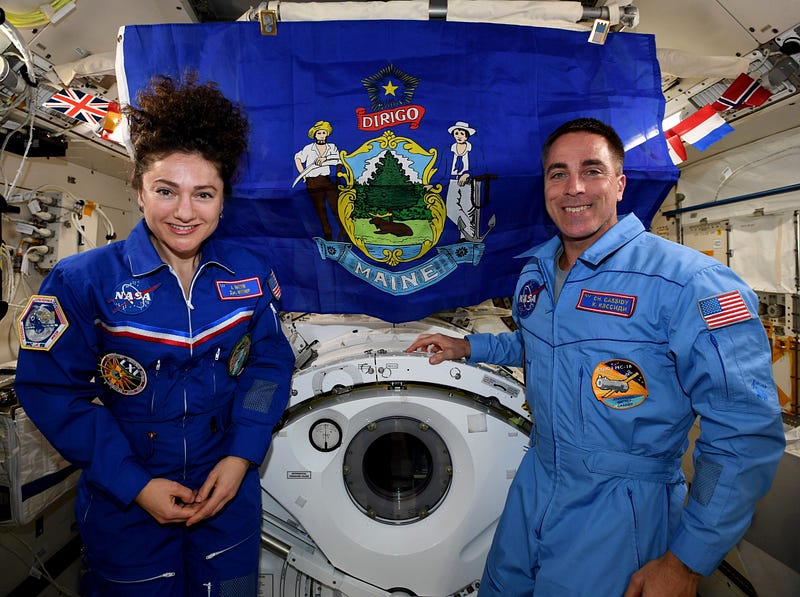
Off-world exploration and the search for other life have always fascinated me. I watched in awe as an adolescent the launches of the space shuttle, the heavenly wonders displayed from the Hubble Space Telescope, and the myriad of experiments and discoveries made on the International Space Station. Today, the advancements in spaceflight by SpaceX, Virgin Galactic, Blue Origin, Boeing and others, are accelerating Humanity faster and farther than ever before.
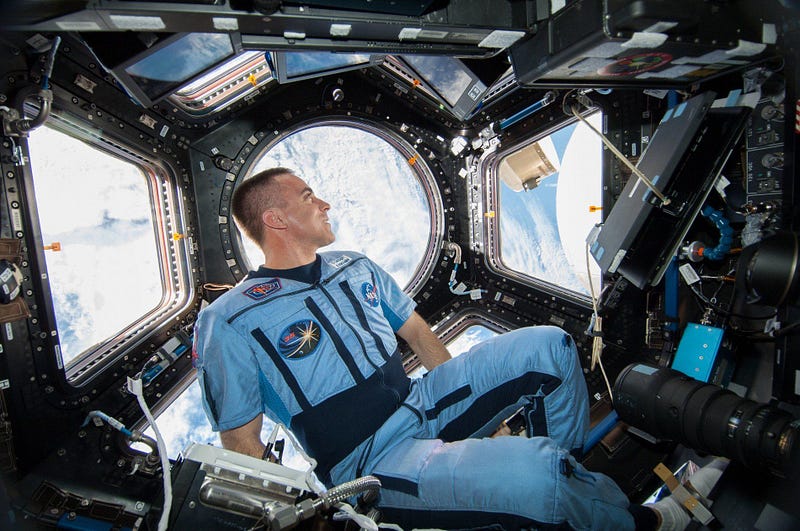
I often contemplate in wild curiosity what life would be like in space, notably the isolation the astronauts must feel spending months on the International Space Station. I’ve read from the memoirs of NASA astronauts that nothing prepares them for the view or the overall experience. They often recall that from outer space, the Earth is alive.
Apollo 14 astronaut, Edgar Mitchell, experienced this “overview effect” firsthand. He described it as a profound sense of being interconnected, along with the vanishing of time. Through his experience, Mitchell became awakened to the fact that everything in the Universe is interconnected. Other astronauts describe that seeing Earth from space creates a framework that all of Humanity and our systems are part of a synergistic totality. In other words, from space, our man-made boundaries disappear.
As astronauts experience this “overview effect,” it made me wonder if their perspective is altered by the worldwide Coronavirus pandemic. And if so, what advice might they provide!
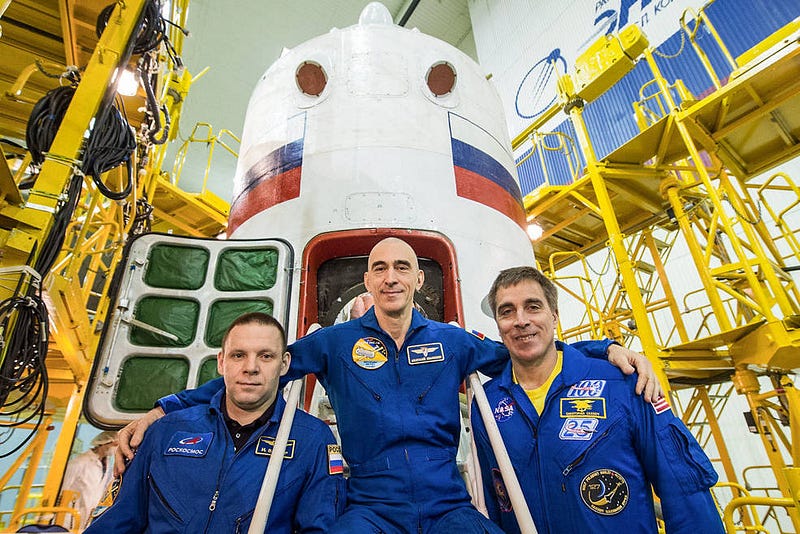
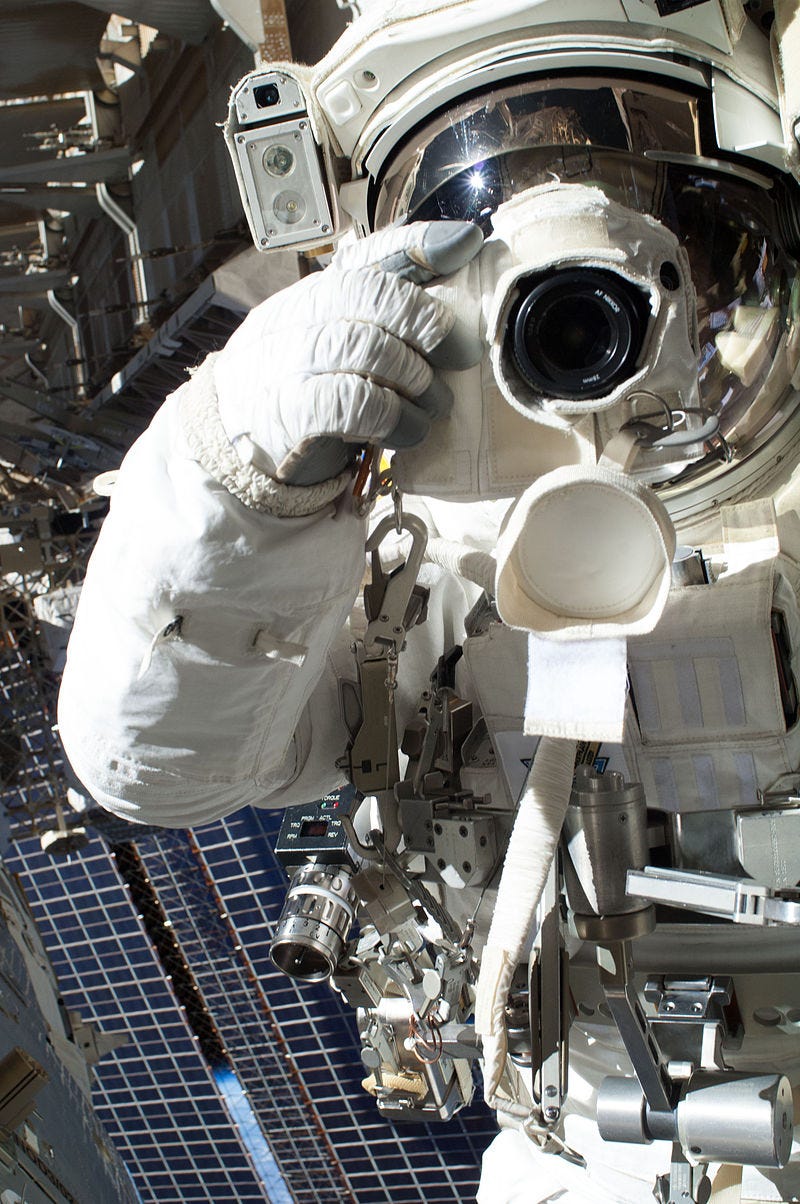
Fortunately, for an upcoming book, I had the unique privilege this week of interviewing my friend and Naval Academy classmate NASA astronaut Chris Cassidy. I conducted the interview in isolation at home as he made final preparations for his third mission to the International Space Station on April 9th in the Soyuz MS-16 spacecraft. What made this a truly unique perspective is that Chris is currently in quarantine at the Baikonur Cosmodrome in Kazakhstan with two Russian cosmonauts, Anatoli Ivanishin and Ivan Vagner. While at the same time, the world is also in quarantine due to the Coronavirus pandemic. He provides his unique thoughts on the Coronavirus through his lens as an Astronaut and highly decorated Navy SEAL.
U.S. Navy Captain Christopher John “Chris” Cassidy may not be a household name, but his many accomplishments stand toe to toe with other preeminent transformational leaders. They are the direct result of his steadfast determination and Passion Struck service to his country. Chris is the 500th astronaut to fly in space (a statistic that he jokingly says is “meaningless in the business”) and is currently the second Navy SEAL to experience spaceflight.
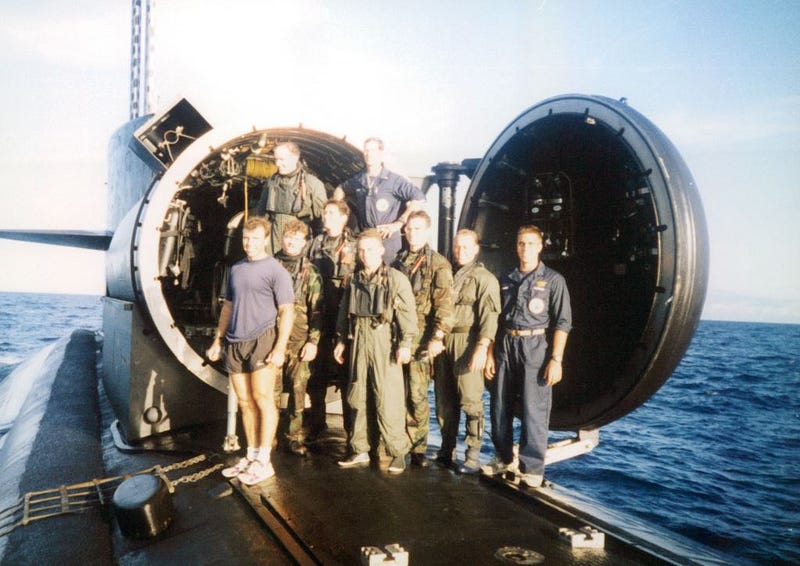
Chris was born in Salem, Massachusetts, but raised in York, Maine. Following graduation from York High School, he attended the Naval Academy Preparatory School. He received a Bachelor of Science from the U.S. Naval Academy. Following the Academy, Cassidy graduated from the Basic Underwater Demolition SEAL/School (BUDS) with class 192. During his 11 years as a SEAL, he was awarded many citations including two Bronze Stars with Valor “V” device for Operation Enduring Freedom in Afghanistan as well as the Presidential Unit Citation. He then went on to receive a Master of Science in Ocean Engineering from the Massachusetts Institute of Technology.
Chris Cassidy was selected as an astronaut by NASA in 2004 and is a veteran of two space flights: Shuttle mission STS-127 to the International Space Station and Expedition 35. During these missions, he conducted six spacewalks and accumulated 31 hours, 14 minutes of spacewalk time, and 182 days in space. Along the way, Cassidy competed in triathlons and is a finisher in the Ironman World Championship triathlon in Kona, Hawaii. In 2015, he became NASA’s 14th Chief Astronaut, the most senior leadership position for active astronauts, before again being selected for the forthcoming Expedition 63 mission.
Coronavirus Unites the World into a Singular Cause
Last week, I wrote an article examining how to navigate COVID-19 using the power of perspective. When astronauts see Earth from afar for the first time, they describe a cognitive shift in awareness. After witnessing the planet essentially “hanging in the void,” astronauts develop an uncanny sense of understanding the “big picture.” They often experience a feeling of connection to and yet more prominent than the intricate processes I described earlier as the “Overview Effect.” I asked Chris having experienced the “overview effect” himself, how space travel has changed his perspectives on the Coronavirus Pandemic we are facing?
Chris Cassidy: It’s been fascinating to see this effect and think about it from my perspective of space travel. As you look down on Earth, it does blow you away. You don’t see borders at all. What you see is brown, green, blue, white color swirled up.
So, Yes. Unfortunately, I think the global spread of the Coronavirus is an excellent example of the “overview effect,” but actually on Earth. It’s not just a problem for China, Italy, or the U.S. It is a problem for everyone on the planet. Its saving Humanity and everyone is interconnected in responding to its threat.
“We are all in it (the Pandemic) together. It is not just Americans making good choices, it’s Humanity as a whole, making good choices,” says Chris Cassidy.
Additionally, you know from living on it (Earth) what the distances are and how long it takes to get from point A to point B. So, when in space you see yourself flying over Washington state, and a few minutes later, you are over the Gulf of Mexico: Your speed becomes a completely different dimension.
Similarly, for a global pandemic, the speed and reach at which you can take an international flight or cruise create significant vulnerabilities for everyone. It really shows you just how intertwined we are across the globe.
Like Spaceflight, the Coronavirus Alters our Self-Awareness
For the majority of us, having to isolate ourselves in our homes is challenging. We are adapting to going to school, church, work, socializing, and eating all our meals from the confines of our own home. Using Zoom, Facetime or Hangouts is becoming the new norm. But, it does provide a break from our regular routines. More importantly, it gives us the ability to see the dimensions in which we live our lives through a different lens. I asked Chris if his time in space provided him a new sense of self-awareness and, if so, how this might impact how others can view their Coronavirus stay at home order coupled with the isolation they face.
Chris Cassidy: There is another critical component in the change in the aspect we experience during spaceflight. We could be flying over New York or London during rush hour. It looks the same as it does at any time. You can’t tell there are traffic jams, people cutting other people off, or getting upset about their current surroundings. It is entirely different when you are in the perspective of looking at it as you are behind your wheel, in a giant traffic jam. You are trying to get home to pick your kid up from soccer or baseball practice.
However, it’s a much different perspective being on the space station 300 miles above and seeing how insignificant that traffic jam is in the scheme of things looking down below. It really does make the difference in your mindset in which perspective you look at things. It can completely change your outlook and self-awareness and our significance in what is going on around us.
Similar to Navy SEAL Training, Coronavirus Too Shall Pass
These are trying times around the globe. Our kids miss their school friends that they would see in their daily classes. Others are missing graduations, birthdays, weddings, and other celebrations. People we know are getting sick and dying. Work is disrupted in many professions, and our 401k plans are in disarray. Stress is at an all-time high for many people, especially those already dealing with PTSD, depression, and anxiety. We are being told by our leaders and the media that this will last a few weeks only to realize it is going to last a few months.
Navy SEAL training is often described as one of the most stringent training programs a human can withstand. I asked Chris about his perspectives on it in light of the Coronavirus Pandemic.
Chris Cassidy: The big thing that the Basic Underwater Demolition/SEAL School (BUDS) taught me was that trying times END. The duration of that trying time may last minutes, like holding a log above your head during BUDS. It sucks every second you are holding it, but you know it is for a defined duration, and you can get through it.
Whereas compared to life, it might be hours, days, months, or even years if it is a long protracted health problem for an example. But, those times end. Similarly, the Coronavirus is having a tremendous impact on our planet today, but that impact is finite.
Although We May be Isolated, We Shouldn’t Tackle Coronavirus Alone.
I have a lot of single friends, and many others separated from loved ones during this time. We are getting used to living in the isolation of our own confines, and that can be difficult, especially for extroverts and those loved ones in need of our support. I asked Chris about his perspective of space and Navy SEAL training and his thoughts on how to combat this isolation.
Chris Cassidy: No one gets through those tough times in BUDS alone. If they say they did, they are lying. Like the Naval Academy, no one can get through SEAL training all by themselves or be an astronaut by themselves. It takes a class, a boat crew, it takes your swim buddy to be right next to you. That was a massive lesson for me. To really rely on others and be there for others when they needed me. It’s a reciprocal action.
This is a time for reaching out to friends and loved ones when you need their help. It could be a group text like my friends, and I are doing, a daily or weekly family Zoom meeting, or a phone call or Facetime with a friend. It is essential to make an effort to reach out to others.
During Coronavirus We all Need to Do Our Job
It is hard most days not to be drawn to the daily Coronavirus news updates. This is a pandemic like none of us on Earth have ever seen before. Our leaders across the globe are asking us to do our parts to “flatten the curve.” They want to contain the inevitable spread, so it has less of an impact on our health care systems and workers. I realize it is challenging to have decisions made for us and for us to follow the orders that we are being given. In our dialogue, Cassidy provided me his thoughts on what it means to do our part and his personal experiences from both combat and spaceflight.
Chris Cassidy: As I reflect on my time in combat, I don’t have any recollection of perspective driving my choices. I just remember thinking, I need to do my job! And my job is to lead my platoon. I realized that It is not my job to be a demolition expert or communication expert. It’s not my place to know more about land navigation than our point person who is an expert. These are their specialties. It is my job to pull it all together, lead, give the people what they need. And, provide support and motivation to others when required positively and constructively.
It was my strongest desire to do the right thing and do it well.
We do ebbing and flowing between leader and follower in the space program quite frequently because there are so few of us. Sometimes on a mission, you are the leader, and sometimes you are the follower. That is what makes a great crew member. When you have the perspective enough to know when it is time to step up and take the lead or step back and let others lead.
Could the Coronavirus Pandemic, Like the Moon Landing Unite the Planet?
For me personally, the Coronavirus pandemic has altered the way I perceive our place in the world. I’ve previously written several articles on the significant megatrends that are impacting our future global economy, businesses, and society.
These include:
· the scarcity of freshwater;
· our future food concerns brought on by staggering population growth;
· the rise of urbanization and its direct link to infectious disease;
· the growing need for new energy sources;
· the impact of artificial intelligence, machine learning, and applied innovation;
· off-world space exploration;
· and our global climate crisis, to name a few.
I believe that Humanity is at an inflection or tipping point!
Similar to the “overview effect” found in space exploration, the Coronavirus may be Humanity’s way of viewing our own civilization through a different and vital new lens. About 15 months ago, I wrote and published an article on the future of pandemics after reading The Jakarta Pandemic by my friend and fellow Naval Academy classmate Steven Konkoly.
It was a wake-up call for me.
Because of the growing impact of the megatrends I mentioned above, our human populations are increasingly encroaching on wildlife habitats. They are also causing unprecedented changes in the way we are using our land. The advent of modern infrastructure is leading to growing cases of wildlife and livestock products being transported across countries and both domestic and international travel are increasing which enables the spread of diseases.
“Bat-borne coronaviruses will cause more outbreaks. We must find them before they find us,” according to Chinese “Bat Woman” Shi Zhengli, Virologist at the Wuhan Center for Disease Control and Prevention.
With the continuation of these trends, the likelihood of additional pandemics is becoming a mathematical certainty. Therefore, the need to globally unite and focus unilaterally on them becomes both obvious and imperative.
Just listen to the words that Bill Gates spoke in 2016, “The Ebola epidemic showed me that we (the world) are not ready for a serious epidemic, an epidemic that would be more infectious and would spread faster than Ebola did.”
And, as we have unfortunately seen, both he and Konkoly were proven correct.
For me personally, it has caused the realization that the conflicts that divide Humanity now become less and less critical. I believe through COVID-19, we, the crew of “Spaceship Earth,” have the opportunity to create a truly global society that is united in the will to protect this “pale blue dot.”
As Chris points out, “We are all in it (the Pandemic) together. It is not just American’s making good choices, it’s humanity as a whole, making good choices.”
— — —
Chris and NASA asked that if you would like to follow his adventures on the ISS, please check out his Instagram page.
— — — — — — — — — — — -
ABOUT THE AUTHOR
John R. Miles is Naval Academy graduate and an accomplished multi-industry CEO, Fortune 50 Chief Information and Digital Officer, Management Consultant, Navy Combat Veteran, accomplished writer, and speaker on business transformation, leadership, futurism, the impacts of PTSD, and societal impact. His unique background brings real-life acumen around leadership, problem-solving, applied intelligence, and digital disruption.