
“Tipbaiting” Is An Incredibly Unethical Practice That Screws Over Delivery Drivers
But it’s a sign of a bigger problem
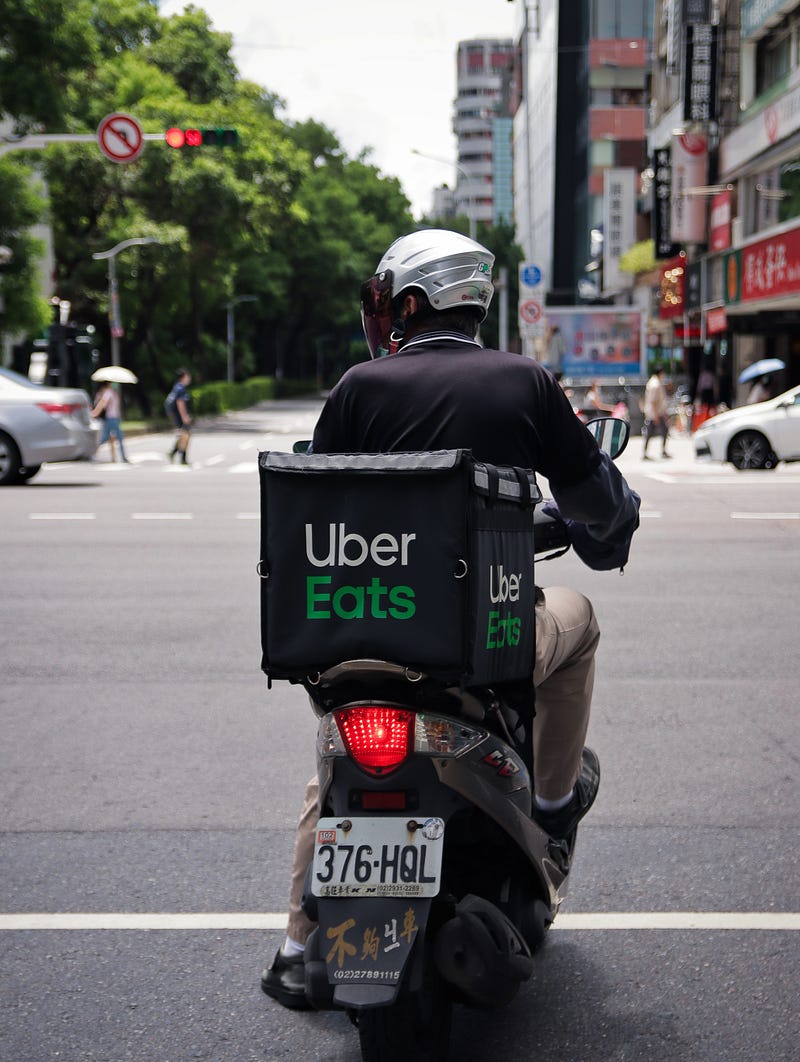
When I drove for Uber and Lyft, I did a few deliveries for Uber Eats. You don’t make much — unless the recipient tips. In deliveries, you are far more dependent on the tip of the recipient than when you’re just driving. As an Uber or Lyft driver, you can make a decent amount if you have a rider who needs to go a very long way.
But for food deliveries, tips are the only way to really make money.
And so I’ve been disappointed to hear about the recent practice of “tip-baiting” that some customers use to get their food faster and pay less for it. It’s where a customer puts a big tip to encourage the driver to deliver their food faster, only to rescind a large part of that tip later and leave the driver hanging.
Even Uber CEO, Dara Khosrowshahi, encountered tip-baiting when he moonlighted as an Uber driver. He would often be enticed by big tips, only for the recipient to rescind much of the tip once the food was delivered.
Obviously, this screws over drivers and is pretty unethical. Customers who do this do it to get their food faster, but at the expense of the driver actually getting paid.
I’m still in a lot of rideshare Facebook groups and regularly see people complaining about people who tipbait when they do food deliveries. I wouldn’t even say it’s a rare complaint — drivers complain regularly.
In customers’ defense, between a delivery fee, tip, and other fees associated with getting a food delivery, deliveries can be very expensive. If the driver is going far, you can end up paying more for the delivery than you can for the actual food. So I understand how someone in economic hardship can try to do the bare minimum, and I try not to pass judgment.
Do I think every person is a saint who is willing to take a larger amount out of their own living to serve the person who delivered them food? No, I don’t. I know this is not fairy-tale land, and people do what they need to do to survive. People who do tip-bait probably won’t advertise that practice online, and do what they feel like they need to do out of economic hardship.
I also get food deliveries somewhat regularly, too, and understand that paying for a delivery fee and also leaving a big tip isn’t necessarily super cheap. I usually just let whatever the default recommended tip is on DoorDash stand when I’m trying to order food.
One time, my colleagues and I were trying to get pizza from a popular establishment in the city. The DoorDash driver had to drive across the entire city to deliver our food, and the default tip option was around $10. I gave my phone to everyone who wanted to order pizza and had them pick out what they wanted. My colleague who picked out their pizza last hit the “Other” option and put $3.50 for the tip.
I never brought this up and also never called any attention to this (especially in front of a lot of people), but I changed the tip to the default before finishing the order. I undercut how much each of my colleagues owed me when they asked, and covered the majority of the tip myself.
But I did that because leaving a $3.50 tip for an incredibly long delivery is about as big of a “go fuck yourself” you can give to a food delivery driver. I had a friend who did DoorDash deliveries for a while, and one time, a customer left him a $1 tip for a delivery where he had to find an obscure apartment complex on a very busy street.
It took my friend forever to find parking, and the customer sent him very rude messages through the app about how long it was taking. I’m not defending this in any capacity, but my friend was so upset and angry he ate some of the customer’s food before delivering it and then left the customer a 1-star review.
I think customers just have to remember that food delivery drivers are people too, even if they never see the driver. That goes both ways, but in most cases, the customer has a bit of a power imbalance over the driver, much like the rest of the service industry.
The bigger problem might be the functionality of apps like DoorDash, GrubHub, and Uber Eats. A system where delivery drivers have to rely on tips and the goodwill and generosity of dashers is fundamentally not going to result in drivers being paid well every single time. Wouldn’t a solution just be to, well, pay drivers more without being reliant on tips? Of course, this would result in an increase in delivery fees, but wouldn’t it be better for the driver to make more in a guaranteed delivery fee than from the app than for the driver to have to rely on a tip, and the customer feel pressured to pay a large tip?
Think about it from the perspective of a DoorDash, GrubHub, Instacart, or Uber Eats driver. You go to extraordinary lengths to get the person’s food and get it to their actual house. Sometimes, the person’s place isn’t easy to find, particularly if they live in an apartment complex that’s like a maze. To get compensated so little for a trip that can take up to two hours feels like a slap in the face.
At the end of the day, complaining about customers' tip-baiting is counterproductive. Why don’t the gig economy companies just pay drivers more?
But at a certain level, good service is good service. I was proud to have a 5-star driver rating on Lyft and a 4.9-star driver rating on Uber (Uber riders tend to be a lot harder to please and ruder, sorry). For every post complaining about the pay of being a rideshare driver or a food delivery driver, there’s another person who comments in a game of one-upmanship telling them they get paid more money because they work harder or provide better service.
I tend to be an exception in that I’m somewhat dogmatic in always tipping the driver because I knew what it was like as a driver. I also tip 20% or more. But do I think some deliveries are better than others? Absolutely. Do I have a better experience with some Uber drivers than others? Yes.
I don’t put much thought into it, but I do think there is a mindset out there that the capitalist elites in Silicon Valley want — you don’t want everyone to be paid the same and there to be significant competition because you want to prove you are better than the rest and you can provide better service than the rest.
Regardless, even in a broken world where a lot of people suffer economic hardship, I think we just have to think about how the other person would feel and do the right thing.
And tip-baiting is not the right thing to do.


