
Time Travel
My evolution through personal productivity and time management
Post #4 of #20: I’m reflecting on twenty years of personal and professional insights in Birmingham. Visit www.medium.com/HonestlyEd to read the full #20for20 series.
I know the exact moment I fell in love with the field of personal productivity and time management.
I was 15-years-old, sitting on the second row in a corporate headquarters in downtown Milwaukee, WI. It was my first time in a classroom setting outside of school or Sunday school. The speaker was a human resources professional who spent a half day teaching a group of urban youth about time management and the Stephen Covey methodology. Thank God for INROADS.
The speaker introduced a wholly new concept to me called a “paradigm.” I didn’t know what it was yet, but it sounded fascinating.
Covey’s explanation of a paradigm was a paradigm shift in and of itself. A total reframing and rethinking of my situtation. I walked out of that corporate conference room with a fresh sense of agency and awareness that I could direct my days. A new realization that I could script my actions with intention. I could sleep on pillows of possibilities for my future and wake with a sense of purpose every single day. Life didn’t have to happen to me. I could use my creative energies to affect the world around me.
What a gift to a 15-year-old young man coming into his knowledge of self.
My journey through time management and personal productivity has been fun and challenging.
Here is a summary of my time management systems over the past 25 years:
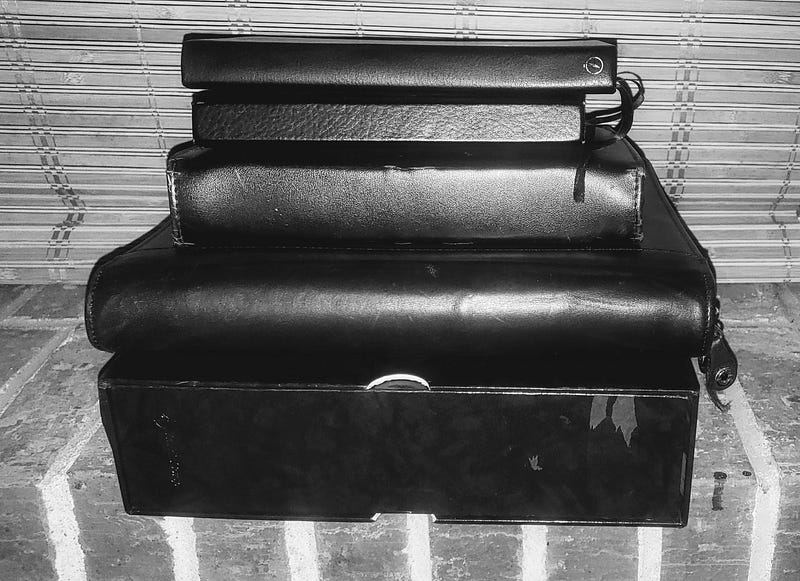
1996–2000: DayRunner 2000–2011: Franklin Covey 2011–2015: Basecamp Classic 2015–2017: Evernote + SmartSheets 2017–2019: Evernote + Physical Journal 2020: Full Focus Planner
My time management and productivity system has been informed by a lifetime of study and exploration. Having a strong productivity system isn’t just about the nuts and bolts of managing a day. That’s secondary. What must come first is clarity around values and goals; being clear about what success look like in life, not just for a day. Doing that work early in my career has been all the difference and helped me excel in getting things done.
Don’t get me wrong, I have had periods where major life changes — from starting a business, to working remote, to changing careers — really challenged every system I ever built.
My favorite productivity thought-leaders helped me understand that personal productivity is not about rigidity. It’s quite the opposite. It is about flexibility and understanding the human nature. Our energy is perishable every single day. A strong productivity respects that even as it demands discipline.
Think about a strong productivity program like a great food recipe. After you prepare the recipe many times you eventually master the dish. It is not until you have mastered the dish that you can truly innovate and take the meal to the next level with intention.
Attempting to innovate inside of recipes, systems and playbooks you have not mastered leads to confusion, inconsistent execution and weak outcomes.
That’s how I see productivity. We must to build a practice. It needs to be solid, but it need not be perfect. Because it won’t be perfected until you get inside of it, explore it and wrestle with it. And, as in many things in life, as soon as you have it perfected your process something changes in your life that might require you to make adjustments. But, at that point you will be qualified to innovate. Just ask the ultimate productivity expert and legendary college football coach, Nick Saban.
Today, I have fully adopted Michael Hyatt’s Full Focus management system (check out the podcast). But, I’ve tried others along the way, including a 10-year digital only approach. It has been surreal to return to paper systems this year!
Here are my top five productivity experts and what I learned most from them.
The Seven Habits of Highly Effective People. Dr. Stephen Covey. Major takeaway: Have a personal mission statement. This single act allowed me to run harder and faster because I had confidence in the direction I was going in.
Never Check E-mail in the Morning. Julie Morgenstern. Major takeaway: Use practical, human-centered devices such as expiration dates, checklists and respecting time of day triggers to stay focused, no matter how busy you are.
Getting Things Done. David Allen. Major Takeaway: The most powerful question in all of productivity and time management history — what is the next action?
www.MichaelHyatt.com. Michael Hyatt. A values-oriented personal excellence and content creation guru. I have fully embraced his Full Focus planner system which is built on years of practice. His system marries a deep appreciation for timeless time management practices with an understanding of the hyper-tech, multi-channel world we live in.
www.DottoTech.com. David Dotto. This quirky Canadian’s YouTube channel helped me experiment with many productivity tools, apps and techniques to enhance my systems and squeeze the most out of my day.
All these years and I’m still working to get better everyday.
Ed Fields is a marketer and strategist. He currently serves as Senior Advisor and Chief Strategist for the City of Birmingham Mayor’s Office. Follow him on LinkedIn, Medium, or Twitter.


