avatarGreg Sweeney

Free AI web copilot to create summaries, insights and extended knowledge, download it at here

1264

Abstract

s continually raises the bar for a life-threatening event.</p><h2 id="db7f">The risk is real</h2><p id="288a">The impacts on public safety from an attack on a country’s critical infrastructure can be catastrophic. They can range from mere inconvenience to mass destruction and even large-scale loss of life.</p><p id="28d5">Imagine a cyber attack occurring at a stadium full of people during an event. Even a momentary disruption to power could halt and prevent stadium access controls from operating correctly. Likewise, a simple CCTV outage could result in vandalism and criminal or violent behavior.</p><h2 id="f69a">Cybersecurity Healthcare risk</h2><p id="faf4">In September 2020, a German woman died after being diverted to a second hospital over 18 miles away from the closest one. A ransomware attack prevented the first facility from receiving the woman.</p><div id="d1c2" class="link-block"> <a href="https://securityintelligence.com/articles/hospital-ransomware-health-care-data/"> <div> <div> <h2>Hospital Ransomware Attacks Go Beyond Health Care Data</h2> <div><h3>This post was written with contributions from IBM Security X-Force's Anne Jobmann, Claire Zaboeva and Richard Emerson…

Options

</h3></div> <div><p>securityintelligence.com</p></div> </div> <div> <div style="background-image: url(https://miro.readmedium.com/v2/resize:fit:320/0*0xodiiXU9tTNbo7A)"></div> </div> </div> </a> </div><p id="8352">In October, an Alabama woman filed a <a href="https://www.nbcnews.com/news/baby-died-due-ransomware-attack-hospital-suit-claims-rcna2465">lawsuit</a> alleging the hospital was liable for the baby’s death. The hospital did not inform her that a ransomware attack had disabled its computers. The baby was born with a severe brain injury and later died. The lawsuit asserted that the cyberattack impacted the level of care and contributed to her baby’s death.</p><p id="480a">And in a 2021 survey conducted of 597 health delivery organizations (HDOs), 42% had faced two ransomware attacks in the past couple of years. And unfortunately, as the previous examples show, the effects go far beyond stolen health care data.</p><h2 id="0756">Time to act</h2><p id="9639">The barrier separating the cyber world from the physical world has long dissolved — cyber attacks now threaten human safety.</p><p id="2377">The time to act is now.</p></article></body>

Time To Regulate Cybersecurity

It’s more than just security — it’s now a matter of public safety.
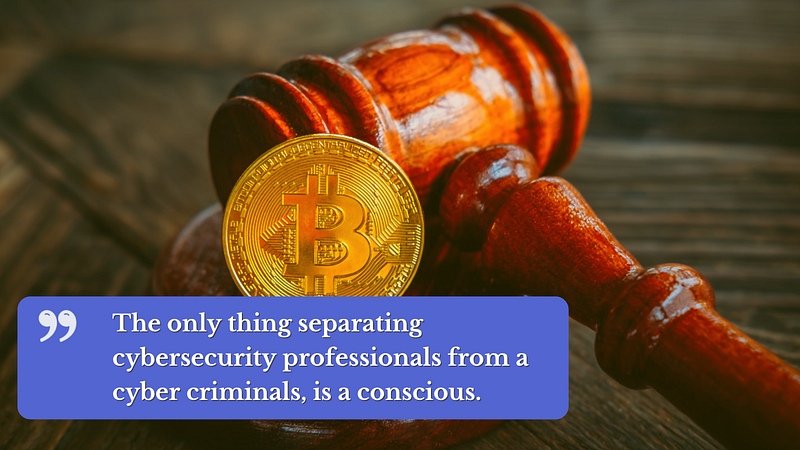
Image by the author using Canva

The only thing separating cybersecurity professionals from cybercriminals is a conscious.

It was clear from the beginning that Russia intended to use offensive cyber operations in Ukraine. However, what is surprising is the use of crowdsourced cybersecurity in the conflict. This unexpected dynamic heightens the urgency for implementing cybersecurity regulatory controls.

The need for regulation.

The only thing separating cybersecurity professionals from cybercriminals is morality.

Like nuclear technology, cyber technology is considered “dual-use.” This means the technology can be used for peaceful and military purposes. That is, it can be used for good and evil.

The same knowledge, skills, and technologies used by defenders to protect a system are the same ones used by hackers to attack it. The proliferation of cyber weapons continually raises the bar for a life-threatening event.

The risk is real

The impacts on public safety from an attack on a country’s critical infrastructure can be catastrophic. They can range from mere inconvenience to mass destruction and even large-scale loss of life.

Imagine a cyber attack occurring at a stadium full of people during an event. Even a momentary disruption to power could halt and prevent stadium access controls from operating correctly. Likewise, a simple CCTV outage could result in vandalism and criminal or violent behavior.

Cybersecurity Healthcare risk

In September 2020, a German woman died after being diverted to a second hospital over 18 miles away from the closest one. A ransomware attack prevented the first facility from receiving the woman.

In October, an Alabama woman filed a lawsuit alleging the hospital was liable for the baby’s death. The hospital did not inform her that a ransomware attack had disabled its computers. The baby was born with a severe brain injury and later died. The lawsuit asserted that the cyberattack impacted the level of care and contributed to her baby’s death.

And in a 2021 survey conducted of 597 health delivery organizations (HDOs), 42% had faced two ransomware attacks in the past couple of years. And unfortunately, as the previous examples show, the effects go far beyond stolen health care data.

Time to act

The barrier separating the cyber world from the physical world has long dissolved — cyber attacks now threaten human safety.

The time to act is now.

Cybersecurity
Cyber
Hacktivism
Hacking
Recommended from ReadMedium