Time to re-Think “Foreign” vs “International” Talent
Creating a Global Talent Hub in Singapore
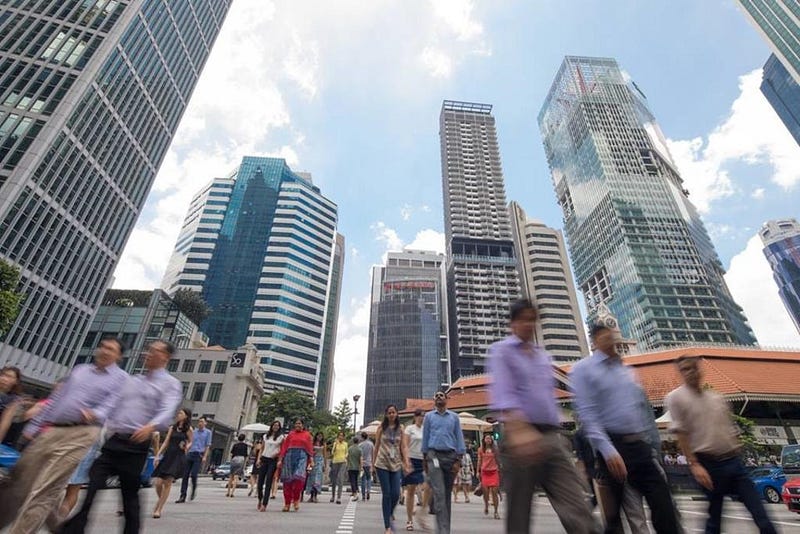
The 1.42 million foreign workers in Singapore today makes up close to a quarter of the country’s population of 5.7 million people, of whom about 2.5 million Singaporeans and Permanent Residents are in the workforce. About 400,000 foreign professionals hold either an Employment Pass (minimum S$3,900 monthly salary) or S-Pass (minimum S$2,400 salary), and nearly all the rest are work permit holders in low-wage, low-skilled positions, including domestic helpers, earning less than S$1,500 before overtime. [Note — US$1.00=S$1.35].
The Singapore economic growth model is based on the dependence on foreign workers. Economists generally agreed that decades of dependence on foreign workers have acted to foster low productivity and depress the wages of low-income Singaporean workers. The Singapore government has also acknowledged that Singapore should reduce her foreign workers dependence, instead of their complete elimination.
The conventional belief is that foreign workers are needed for the low-wage, manual labour jobs that Singaporeans are unwilling to do in areas like construction, security and cleaning. Low fertility rates and a shrinking domestic population also mean that it is increasingly daunting and well-nigh impossible to find Singaporeans willing to take up these roles.
From a market-based perspective, there is no job which cannot find the workers to do them. There are however salary levels at which no one would work for. The key is to recognize the real labour value of jobs which very few Singaporeans are willing to work for; and just pay them to get the desired workers.
In 1982, when Singapore first imposed a levy on employers for employing foreign workers, the policy intent was to eventually develop an all-Singaporean workforce by 1992. It is unknown why the policy was subsequently abandoned and resulted in the massive influx of semi-professional and mostly lower skilled foreign workers.
Not all foreigners working in Singapore are talents that cannot be found here. Granted, many are in jobs that Singaporeans are unwilling or unable to take on. Many are also recruited here by their friends who are more comfortable with co-workers of similar cultural and ethnic origins.
Case in Point: In a previous company in the Oil & gas Industry, the Marketing Chief, an American himself, once hired a marketing sales executive for our engineering equipment but who could neither distinguish a valve from a thrust bearing. It was found out later that they became acquainted with each other at the American Club. Qualified local engineers were not considered for the sales position because, according to him, “…our customers preferred to deal with non-Asians whites”. This was rather strange considering that our key customers were Indonesians and Middle Eastern!
That Singapore needs talents, and that we will never have enough homegrown ones, is a generally accepted fact of life. The uppermost concern of Singaporeans is that we should encourage only the talents that are truly needed, either in areas where we do not have enough or where there is none at all to be found locally.
From a friend came this story: his company hired a high-level foreign European CEO who immediately began to improve the company’s earnings by closing down branches and instituting various new service charges as well as increasing existing ones. The company’s cash position did improve somehow resulting from these moves. Many customers also left due to the higher prices they now have to pay without corresponding improvements in undelivered value propositions. At the year-end, the company’s overall profits were in the red. The lessons here were that any local senior executive could have instituted those cost-cutting and revenue earning measures. The foreign CEO should, at the very least, have created new businesses from new areas from his foreign experience and supposedly unique business contacts.
The use of the term “foreign talent” has unfortunately and inadvertently excluded our local talents by default in favour of the rest of the world. By advocating a self-loathing desire for “foreign” talent, we may have also unwittingly disqualified our very own talents who are presently “foreign” talents in other countries.
There are more than 200,000 Singaporeans currently working overseas in senior professional positions with world class companies. They are also our “international” talent, like many of their fellow citizens at home.
On a business visit to South Korea some years back, I discovered that many South Koreans actually returned home after the 1998 economic crisis to provide the needed international management experience that was required to help many companies in the country survive and overcome the crisis. Many of those who returned were already working in very senior positions in major US companies. The subsequent Korean economic recovery is now legendary. We should also make conscious attempts to draw Singaporean talents home, where they are crucially needed.
Since the critical emphasis is on the promotion of “talent”, our schools and educational institutions should aim to develop every Singaporean to be global talents befitting the local and international marketplace. In other words, Singaporeans should be developed to become international talents so that they could give the visitors a good fight for any job positions here, and everywhere.
It is the urgent imperative to distinguish and use the term “international” talent instead of “foreign” talent in our continual emphasis to make Singapore the global talent hub for investments, business and living.