
Time Management Tips: Do the Right Things at the Right Time
Invest in what makes time instead of wastes time

Time is a non-renewable resource that cannot be bought, sold, or traded. Each one of us is given the same amount of time every day, but how we use it is entirely up to us. When a single day, an hour, or a minute is gone, we cannot get it back. In today’s fast-paced world, it’s easy to get caught up in the hustle and bustle of daily life and lose track of time. However, by viewing time as an investment, we can maximize our productivity and achieve our goals.
Poem: A New Day
This is the beginning of a new day.
God has given me this day to use as I will.
I can waste it or use it for good, but what I do today is important because I am exchanging a day of my life for it.
When tomorrow comes, this day will be gone forever, leaving in its place something that I have traded for it.
I want it to be gain and not loss; good and not evil; success and not failure; in order that I shall not regret the price I have paid for it. — Heartsill Wilson
Productivity, in my opinion, is about being as efficient as possible with our time at work so that we can spend our downtime doing what we truly enjoy and want to do — whether that is a good book, a TV show, or family time. If we invest our time wisely during “working hours," we get to separate completely from work and enjoy other activities in our downtime.
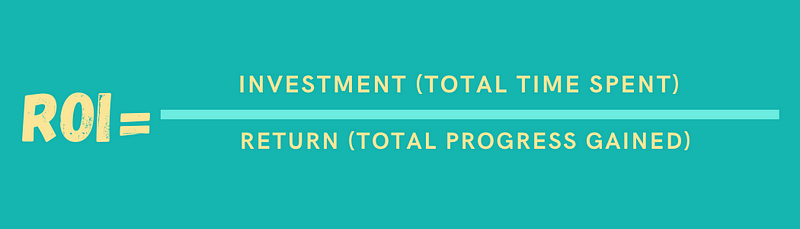
Some tasks could be considered a better investment of your time at any given moment because they make more progress towards your goals. Whatever is the most important goal to you now, the things that support that goal become more important and, therefore, a better use of your time, giving you a higher return on your time investment.
Higher ROI Time Rules & Examples
- Investing time into eating well, exercising, and getting a full night’s rest can all be looked at as things that are a high return on your time investment.
Nutrition
Eating healthy foods gives our brain and body the fuel it needs to run at optimum performance, i.e., higher cognitive function, more energy, focus, and a better memory.
Exercise
Exercise boosts both our energy and creativity, reduces stress, and improves our ability to focus.
Sleep
Getting enough sleep improves our energy, focus, and problem-solving ability.
So, before you even think about what to work on, prioritizing nutrition, sleep, and exercise all have a high return on investment and enable us to be at our best when working.
Energy
You can concentrate and be more productive when you feel at your best and have the most energy. Most people have more energy in the mornings, after a good night’s rest, and are therefore, the most productive during that time.
Investing your mornings on your MITs (most important tasks) is a high ROI for that time. If you are someone who has more energy later in the day, that would be when to work on your MITs to get a higher return on your time investment.
Goal Specific
Personal and professional development activities like taking classes, reading books, going to networking events, workshops, or following a passion or side project are examples of high ROI tasks.
Day-To-Day Tasks at High ROI Times
Daily household tasks could also give you a high ROI when you schedule them at the right time. For example, doing the dishes and preparing your lunch the night before will leave your mornings, before you go to work, free so you can get your full 8 hours rest or leave extra time to pursue a side hustle.
Lower ROI Time Rules & Examples
Monotasking
In an article by Psychology Today, multitasking lowers productivity by 40%, and therefore, time spent multitasking has a low ROI value. Instead, gauge your tasks by cognitive difficulty and effort, organizing them throughout the day based on your energy, concentration level, priorities, and time available. But, always working on a single task at a time is a way to improve your ROI of that time.
Everyday Work Tasks
Organizing, filing, and sending emails are all mundane tasks that have low ROI and can be saved for after lunch, when you might have less energy and concentration. However, a quick check of your inbox after you get your MITs done to address anything pressing is a good practice — and usually has a higher ROI.
Downtime Activities for Downtimes Only
Thinking beyond your work schedule, low-ROI value tasks could include watching the fifth episode in a row of a TV series, scrolling through your social media and surfing the internet aimlessly, or needlessly shopping and spending money. We all deserve downtime, and these could be ways to spend that time, but doing them during your normal working hours has a low ROI on that time. Also consider things you could do during your downtime (like meal prep over the weekend) to turn that time into a higher ROI use — anything that makes your working hours easier or that creates more time overall.
Prioritization of your tasks, both work-related and normal day-to-day household ones, is key to effectively using your time so you can get the highest ROI possible.

Be Cautious Of
There are tasks that make you feel like you are investing your time wisely, but in reality, it is a false sense of productivity.
An example of when I had a false sense of high ROI time use is when I download yet another planning, habit, or productivity app to try. For a long time, I was always searching for an app that encompassed all of the various features that I liked from each of the apps I was using. I would download new ones, just to try, in the name of productivity.
I felt productive because I was planning or tracking habits and projects, but in reality, I was inputting the same projects, tasks, and habits into different apps over and over just to try out the features that each had — just to eventually delete them and revert to my old ones.
A feeling of productivity is not being productive and getting a high ROI
Things Change
What is a high-value and low-value ROI of your time task will be different for everyone. It can also vary for you at different stages of your life. For instance, when you are young and before you have a family, spending your evenings doing work at home could be a high ROI of your time because you are eventually furthering your career. However, when you have a family, you might feel that spending quality time with them has a higher ROI in your evenings.
If we look at time as an investment, there will be tasks that get a higher return on that investment than others. When you think about how you invest your time, what should be considered?
Some questions to ask yourself are:
1. What are your current goals?
2. What tasks will help me reach my goals?
3. How much time do I have?
4. Which tasks are urgent and which are important? What wastes time and what makes time?
5. Why do you want to productively spend your time? If you had two extra hours in the day, what would you do?
These questions can help you identify tasks that have a high ROI for your time and help you prioritize them based on your goals, their importance, and the time you have at the moment to devote to working on something.
Decipher between spending time and investing time over time because our definition of high and low ROI uses will change as we change.
Final Thoughts
We must assess how we spend our time and beware of a false sense of high value time investment. The time we have is limited, so knowing how to make good use of it is important. Identifying ways to have a higher ROI on our time throughout the day will help us reach our goals faster. Goals change over time, so asking these questions will help you know the difference between investing and spending your time, so you get the highest ROI possible.
Next Reads:
- Stop Multitasking. Work Within Your “Working Spheres”
- How To Estimate the Time Needed To Complete A Task
- Move the Needle: Choosing Your Most Important Tasks
Follow me for more on productivity, habits, personal development, flow, writing, and mindset. And on Twitter @mj_jens0
Join my email list to receive a newsletter with tips, highlights, and extra content!



