
Tim Ferriss’ Story of Childhood Sexual Abuse Was Incredibly Hard to Listen To
When super successful people get revealed as human beings, it’s a beautiful moment in history.
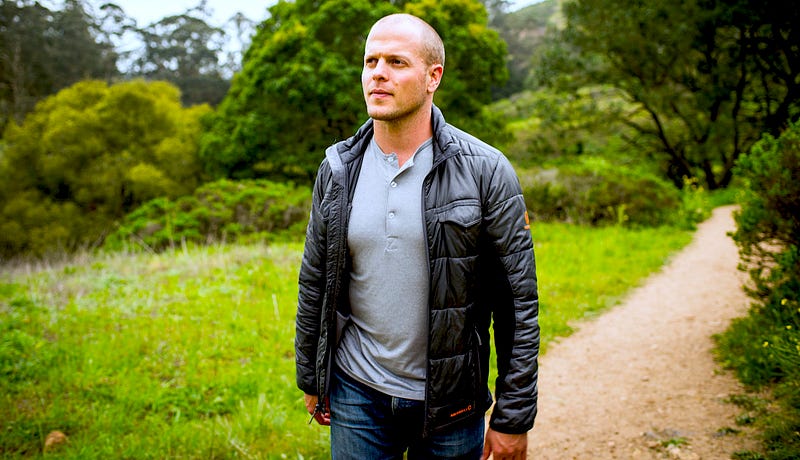
When super successful people get revealed as human beings, it’s a beautiful moment in history.
Many people have idolized Tim Ferriss. They’ve seen him as some kind of superhuman experimenter who can do no wrong.
Recently, we saw the real Tim Ferriss in all his glory.
The podcast episode that revealed his childhood trauma was hard to listen to. I shed many tears through much of the episode and felt all sorts of emotions. Tim describes it as “the most important podcast episode” he has ever published (I agree).
What happened to Tim Ferriss?
From the age of two to four years old he was sexually abused by the 12 year old son of his babysitter. The abuse happened at such a young age that Tim had completely forgotten the whole experience. But his life was full of tiny signs that something was wrong.
Through his journey with psychedelics, and by attending a silent retreat, he had flashbacks to this moment in his childhood a few years ago.
This moment was so important to him because earlier in 1999 he had tried to commit suicide. He borrowed a book from his university’s library to learn how to go about it. Through sheer dumb luck, the book was unavailable.
The library notified him via his mailing address that the book was unavailable and his mother accidentally opened the letter. She rang him up and discussed the subject of the book with him. In that moment he realized he was going to hurt many more people than himself with his life-ending actions. So he decided to forget the whole idea.
It wasn’t obvious to Tim at the time that this hidden childhood trauma may have been a contributing factor to his fantasies of exiting human life. Thankfully, Tim survived and went on to inspire millions of people with his books and podcast.
Hearing Tim admit the sexual abuse he endured as a child is one of the kindest and most selfless acts you will ever witness. Sharing his story comes at great personal risk and could radically change how he’s perceived. It’s enough to bring a grown man/woman to tears.
Here’s what you can learn from Tim’s brave decision to share his story.
You Will Be Fearful When You Share Your Truth
Tim recorded the podcast episode about admitting his childhood sexual abuse a month earlier. The intention was to record it in case the global health crisis took his life. It was clear his original intent was never to release the episode after hearing the interview.
He had hinted about something happening in his childhood for years but nobody knew what it was.
A few days before the release of the episode Tim emailed his millions of fans and told them he was about to share something big. My hands trembled as I read his words. I knew this moment was going to be life-changing for me, and for Tim. You could tell by reading the email that he was scared shitless. That fear, mixed with his truth, was a glorious moment.
You will feel fear. When you lean into that fear your entire life changes for the better. You just won’t know exactly how.
“The Ripple Effect” Is Highly Underrated
Tim’s journey to sharing his story of sexual abuse happened by accident. A guest on his podcast, Debbie Millman, accidentally shared her story of sexual abuse. Tim asked her why she was part of a not-for-profit and she let it slip. Debbie decided not to have the slip up edited out.
Tim watched in awe as Debbie revealed her hidden secret with him. He fantasized secretly in his head about doing the same. It would take him years to do so, but Debbie’s story would be the catalyst.
Every action you take in this world has a ripple effect. Take actions that can cause positive ripple effects that help people. Be the example.
Push through the fear, shame, and self-loathing to create a ripple effect that can be felt for centuries after your human existence.
Make Your Trauma Part of the Medicine
The solution to trauma, according to Tim, can be part of the medicine. In the process of dealing with his trauma he learned how to heal himself.
That medicine helped him in many areas of his life including his business and romantic relationships.
Trauma isn’t all bad.
Trauma Helps You Feel People Differently
Tim used to be an alpha male Silicon Valley type. His book “The 4-Hour Workweek” only backed up that persona with evidence.
Over the last few years Tim has become softer. He credits this transformation to the discovery and slow healing of his childhood trauma.
The reason he is able to empathize with his podcast guests on a deeply high level is because of his trauma.
I never understood why millions of people listened to his podcast until I understood it was the empathy he had towards his guests.
The way you treat people comes down to your ability to heal yourself.
We all have deep, dark secrets that injure our souls. Overcoming those traumas and accepting the pain from your battle with life is how you feel people in an entirely different way. This process will attract people into your life that you could never have dreamed possible before.
Everyone you meet is fighting a battle you know nothing about. Be kind. Always — Brad Meltzer
The Noise of Life or Competition Stops You Having to Heal
Tim has been highly competitive for most of his life.
Through wrestling and competitive tango dancing he has managed to exert his manliness and cover up the noise of his hidden trauma. Listening to the noise in his head was something he avoided at all costs. This is why he adopted a busy lifestyle and pursued entrepreneurship and, in some ways, competitive writing. This quote sums up his thinking:
All of humanity’s problems stem from man’s inability to sit quietly in a room alone — Blaise Pascal
You can heal when you face the noise in your head and lean into the problems that have led to it. Listen to the noise. Sit in silence and be uncomfortable with what you hear. Work on yourself.
You can only hide from yourself for so long.
Don’t Leak Energy by Not Working on Yourself.
— You could point that energy at a much more useful target.
This insight from Tim’s trauma was fascinating. Not dealing with your problems causes you to leak energy. This is why many people feel so tired. It’s easy to assume you haven’t eaten right or exercised enough and that’s why you’re always tired.
Maybe you’re leaking energy by not working on yourself or solving your personal problems.
“You Are Much Stronger Than You Give Yourself Credit For”
Tim shared this quote and I instantly thought “I felt like that too.”
I overcame years of hidden mental illness a few years ago. I had no idea what solving these lifelong issues would do. I have reached more than 100M people over the last six years with my writing.
It turns out I was much stronger than I gave myself credit for. And that strength could be handed to other people through the act of sitting alone in a quiet room and writing.
You may be dealing with setbacks. You may be dealing with trauma like Tim. You may be enduring a secret battle with mental illness like I was. But you are way stronger than you realize. You can overcome anything and discover strength you never knew you had.
It Is Possible to Rewrite Your Software
Your brain runs on software. That software updates itself over time based on your experiences and the stories you tell yourself.
Once you can see how your brain is programmed, you can rewrite it. You can write over the viruses that infect your thinking through self-awareness.
Dealing with trauma, facing your problems, and working on yourself is how you rewrite your software.
Once you treat your thinking like software your life changes forever. You realize you can change anything about yourself or the way you see the world.
Nothing is fixed. Therefore, opportunities to change your life are everywhere, staring you in the face and begging you to take charge.
Have One Notch More Hope than You Do Shame
Tim used this idea as a way to describe how he’s endured so much pain associated with his childhood trauma. The key message is that you can’t wipe out shame entirely.
All you need to do is level-up your shame with hope.
I disagree with Mark Manson and his book on hope. Hope can do a lot of good for you. To have hope is to believe that everything will work out for the best. Hope means you embrace a touch more positivity than you do negativity.
Hope is often based on nothing. So hope is a demonstration of how you think and choose to see the world.
Having hope shows you’re attempting optimism.
Tim says:
“Have hope about what your life *CAN* be.”
Use Adversity to Give You a Purpose
“Do work that connects you to humanity and the shared suffering that is life,” was the advice Tim gave.
Tim took his childhood trauma and turned it into an obsession to support research into ways to overcome trauma, naturally. It’s the largest financial investment he has ever made into anything — bigger than his early-stage investments in Uber and Shopify.
When he had the option to be a part of this life-changing research he instantly felt drawn to it. The fact his childhood trauma led him to spend a lot of money to help people with their own suffering is what he describes as contributing to his purpose.
Tim endured sexual assault as a child so he could use the trauma as an adult to ensure others wouldn’t have to.
Something bad may have happened to you. It’s in the past now. What can you do to ensure nobody has to go through the pain you did? This idea will give your life purpose.
“Helping other people heal helps you heal,” says Tim.
***Problem: Tim Ferris Isn’t Perfect, Though***
You might be reading about what Tim endured and thinking he has it all figured out. You might think his lessons are genius and he can do no wrong.
There was one moment of the interview with Tim about his childhood trauma which revealed he’s still far from perfect.
When asked about what would happen if he met the person who sexually abused him up until he was 4 years old, he described how he would be too afraid he would “put a bullet in his head.”
I’m not here to judge whether Tim’s feelings towards his abuser are right or wrong. I can only speculate that the final step of his journey might be forgiveness. It is taking everything he has endured and having the courage to learn from his abuser. This is a huge step. It may not be possible and you couldn’t be angry with him for that.
I can’t help thinking “put a bullet in his head” isn’t the answer Tim will eventually land on.
Only time will tell how far Tim goes in this journey and whether he is able to forgive. I’m quietly sitting on the sidelines hoping Tim can change the world, yet again, and defy the odds. He may even decide to confront his abuser and forgive them live on his podcast.
One thing I have personally learned about Tim, through him sharing his story of childhood sexual abuse, is you never know what he is going to do next. Anything is possible.
Final Lesson:
There is light on the other side.
“I wouldn’t have believed this even five years ago, but I now consider myself living proof that deep, lasting change is possible. Don’t give up. You are never alone, and it is never hopeless. I’m right there alongside you, as are millions of others.”
You don’t need to suffer alone. When you free yourself, your life goes from darkness to light. Then you become the light for other people.


