
TikTok vs. Tradition — The Secret War Over Your Social Media Feed
Why the U.S. Might Favor Facebook Over TikTok — A Tale of Power, Privacy, and Propaganda
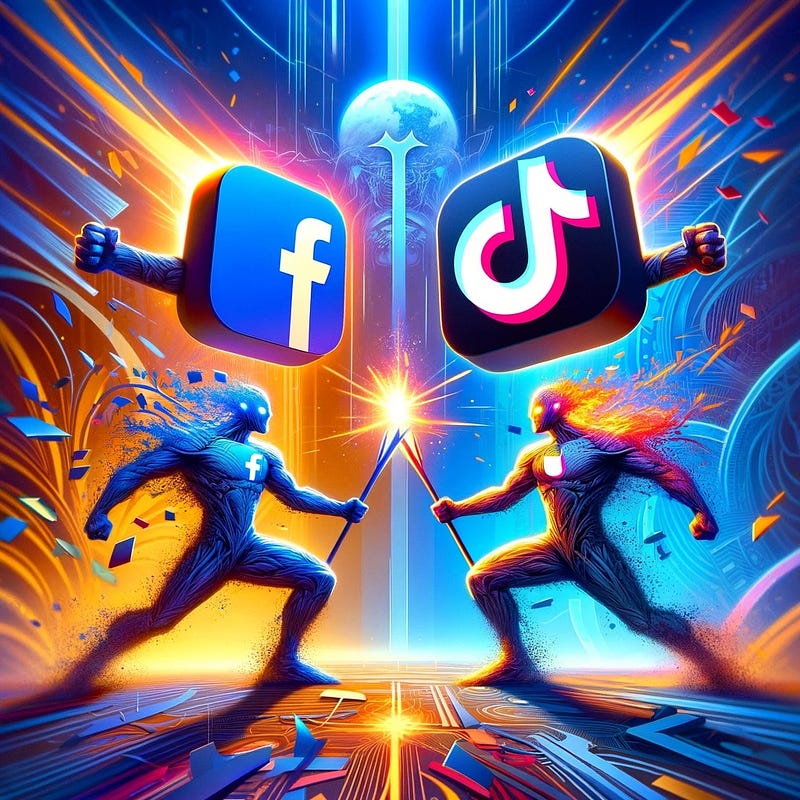
The battle for control over the narratives that shape our society has become increasingly prominent. Central to this conflict is the U.S. government’s stance on social media platforms, particularly the ongoing controversy surrounding TikTok.
This issue not only highlights concerns over free speech but also raises questions about why there seems to be a push towards more traditional social networks like Facebook and Instagram, where the narrative might be more easily controlled by the us government. The heart of the matter lies in the escalating tensions between the United States and China, with TikTok, a Chinese-owned app, caught in the crossfire. U.S. officials have raised alarms over potential national security risks, fearing that the Chinese government could use TikTok to harvest data on American users or push narratives that might influence public opinion and electoral processes. This concern has led to calls for TikTok to be banned or heavily regulated on American soil.
However, the debate extends beyond issues of privacy and national security. It touches on fundamental questions about free speech and the control of information. Critics argue that the push to marginalize platforms like TikTok, which has become a vital space for creative expression among Gen Z, is indicative of a broader attempt to control the social media landscape. By steering younger generations towards platforms like Facebook and Instagram, which have a history of cooperation with U.S. government requests and a more established system for content moderation, it is perceived that the U.S. can more effectively manage the narrative and maintain social stability.
Yet, this perspective oversimplifies the complexities of social media regulation and the genuine concerns about data privacy and misinformation. Facebook and Instagram, despite their more stringent content moderation policies, have not been immune to criticism regarding their handling of user data and the spread of misleading information. The challenge, therefore, is not just about choosing between TikTok and other platforms but about addressing the broader issues of how social media influences public discourse and how it can be regulated to protect users while ensuring freedom of expression.
In navigating these waters, it’s crucial to strike a balance between national security interests and the preservation of free speech. The conversation should not devolve into an “us versus them” narrative but rather focus on establishing clear, fair, and transparent guidelines for all social media platforms, regardless of their origin. This includes rigorous data protection standards, accountability measures for the spread of misinformation, and policies that protect against censorship while promoting a healthy digital ecosystem.
The ongoing debate over TikTok, Facebook, and Instagram illuminates the complex interplay between technology, politics, and society. As we move forward, it’s imperative that policymakers, technology companies, and users engage in open and constructive dialogue to ensure that the digital space remains a bastion of free expression, innovation, and connection.
The goal should not be to control the narrative but to foster an environment where diverse voices can coexist and where the integrity of our digital and democratic institutions is preserved.
Thank you, for reading.
Leave your views/thoughts, I’d like to hear from you!