
TikTok Filter Enables Stalker Porn
The women seeing red over viral Silhouette challenge
Sarah* walks towards the light that separates the hallway from the kitchen. She looks beautiful but incomplete. Her eyes are the footprints of an unruly boy — her mouth his signature. She stops walking, pulls at her baggy sweatshirt, and turns to look at the camera. The screen goes red, a slowed-down version of Put Your Head On My Shoulder by Paul Anka begins to play. Her body is now naked, though silhouetted by a TikTok filter. Feeling relatively secure in this red obscurity, she dances seductively.
Three years ago, Sarah started a blog to share the story of her transition. It was a small affair that attracted a few hundred followers each week. They came to read uplifting, humourous, and sometimes moving stories from a woman who seemed to be shaping her future. Though happy with her progress and the feedback she received from her followers she wanted more. She read articles on how to grow her audience that advised reaching out on social media platforms. She chose Facebook, Twitter, and TikTok.
It was supposed to be something fun that empowered women.
The origins of the Silhouette challenge has been traced back to Beyonce and her 2014 Partition video which, featured the singer’s silhouette dancing provocatively in a high budget production. Others say it was a video by Chloe Bailey who recreated Beyonce’s iconic look with cheaper, but still costly, equipment. Someone discovered that the aesthetics of these videos are achievable for free using a filter on TikTok. Numerous tutorials sprang up that advised people on how to take part — the silhouette challenge was born. It went viral. Thousands of people accepted the challenge, including celebrities such as Cardi B and Tiffany Haddish. The challenge, no doubt, was created with good intentions. Designed to celebrate the body beautiful in a way that retained the privacy of the individual.
However, the internet is the internet.
Creeps reverse the filter
Almost as soon as the challenge went viral people realised that the TikTok filter is reversible by removing the red tint and rendering the original unfiltered version naked and exposed.
YouTube hosted tutorials on how to remove the filter on these videos.
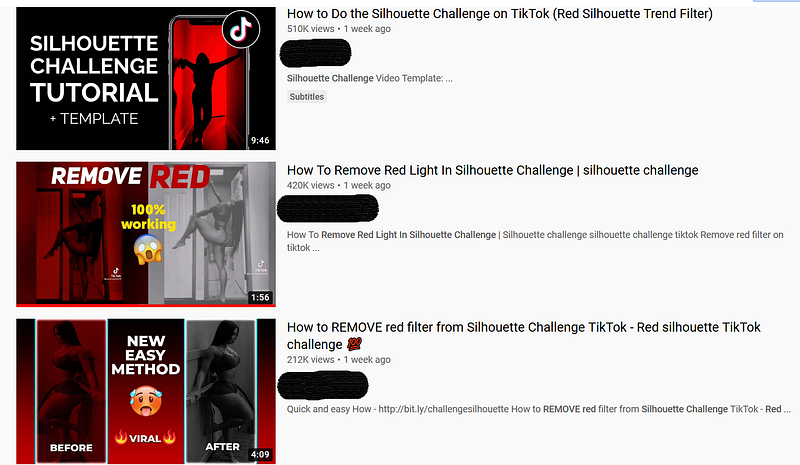
Reddit had a subreddit, called r/SilhouetteUnfiltered, where some men would post unfiltered versions of these videos and other men would plead desperately for certain women to be exposed. Reddit has since removed this subreddit. You can still find tutorials on YouTube.
I’ve seen your video on a pornsite
The first hint Sarah had that something was wrong was a seemingly random comment on a blog post.
‘Your video is on a pornsite’
She ignored it. Then she saw the following warning trending from TikTok photographer Kai Lee:
Sarah was mortified that her video may have been stolen, unfiltered, and shared on unseemly sites.
‘Some people who aren’t outright against trans women accept us only as a niche porn catergory. The thought that someone can do this to me has caused me a lot of harm.’
Sarah has decided to take a break from the internet.
Why does the internet hate women so much?
Despite the prevalence of free internet pornography, some men have taken a predatory interest in unmasking and viewing women in a way that they haven’t consented to.
In an interview with Stuff, feminist writer, Clemintine Ford stated ‘Men like this are abusers, because they can literally go to millions of sites online and look at naked bodies legally and even for free. The allure here isn’t the nudity, it’s in knowing they’ve violated the woman involved.’ She went on to say ‘It’s about getting off on stealing something from women that they know has been taken without consent and humiliating them as a little bonus.’
*Name changed to respect the privacy of the individual


