
Art and Culture
Tiki Life Ticks On
The Polynesian God Never Seems to Go Out of Style
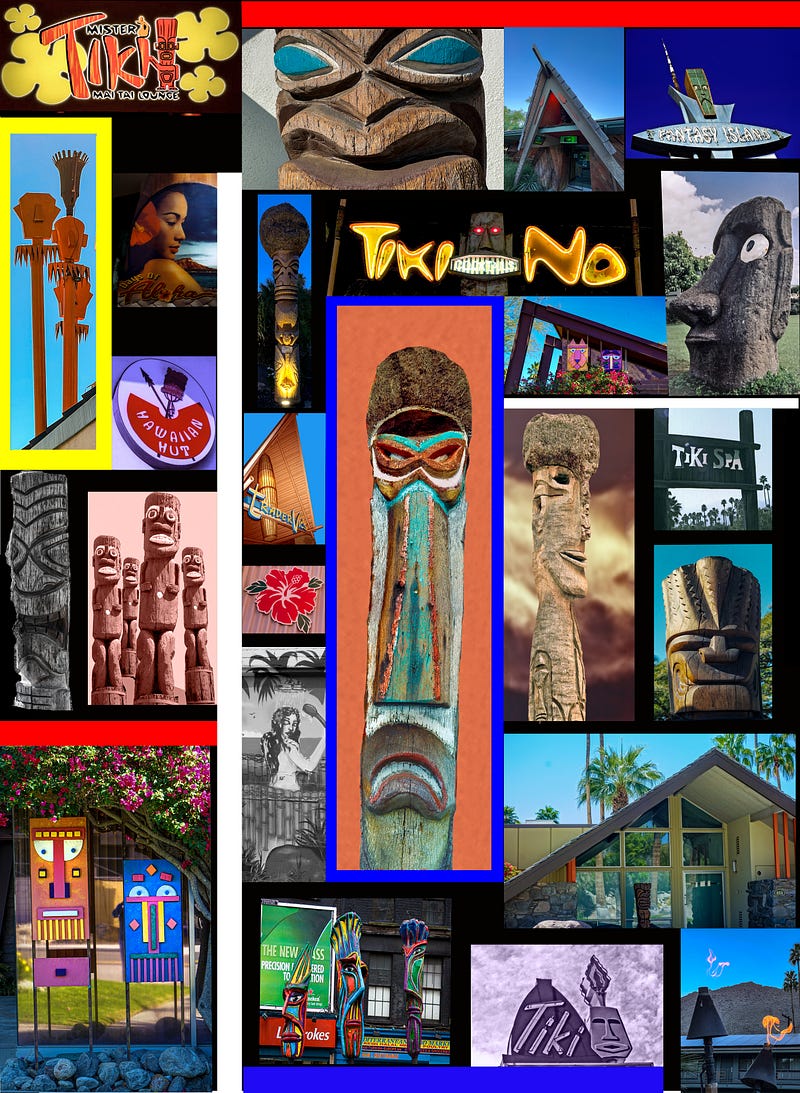
For as this appalling ocean surrounds the most verdant land, so in the soul of man, there lies one insular Tahiti, full of peace and joy
Herman Melville, “Moby Dick”
Tiki conjures up fantasies of rum bamboozles, lines of torches flickering in the night breeze, and the swiveling hips of exotic dancers, daring, sleek, and alluring, like the hands of the dancer herself.
All parts of the locales in the South Pacific, from Hawaii to Polynesia, are revered locations with a sense of tropical style.
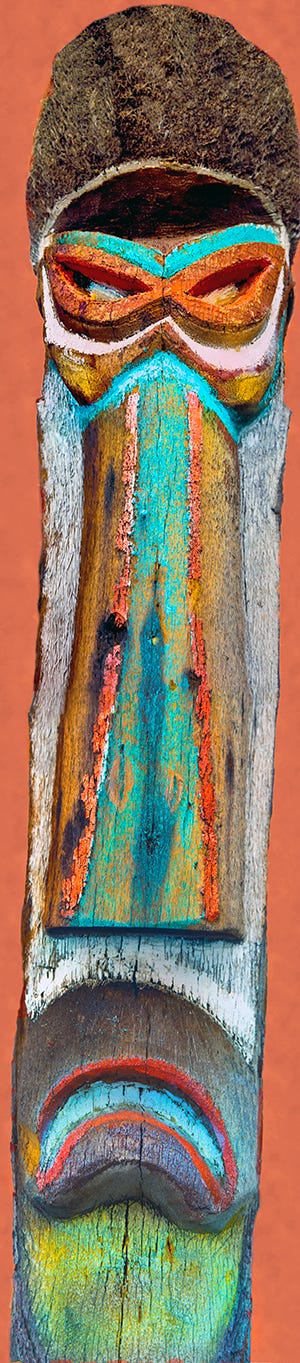
And modern. A contrasting image that carefully balances the clean lines and curves of modernist architecture. More than all this, Tiki has been recreated to enhance, explore, and embellish our innate primitivism, our best chance to develop our playful spirit…our sense of FUN.
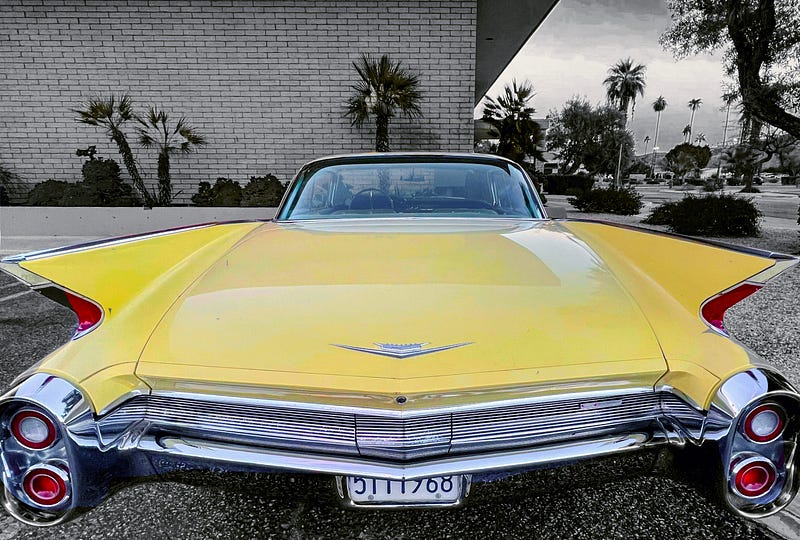
The juxtaposition of a 1950s Cadillac against a Polynesian A framed building (the term used for buildings with steep sloped roofs that form the letter A) illustrates how the modernists adapted primitive design. The Cadillac’s tail fin brake lights also form the letter A — sleek, space-age, and fun.
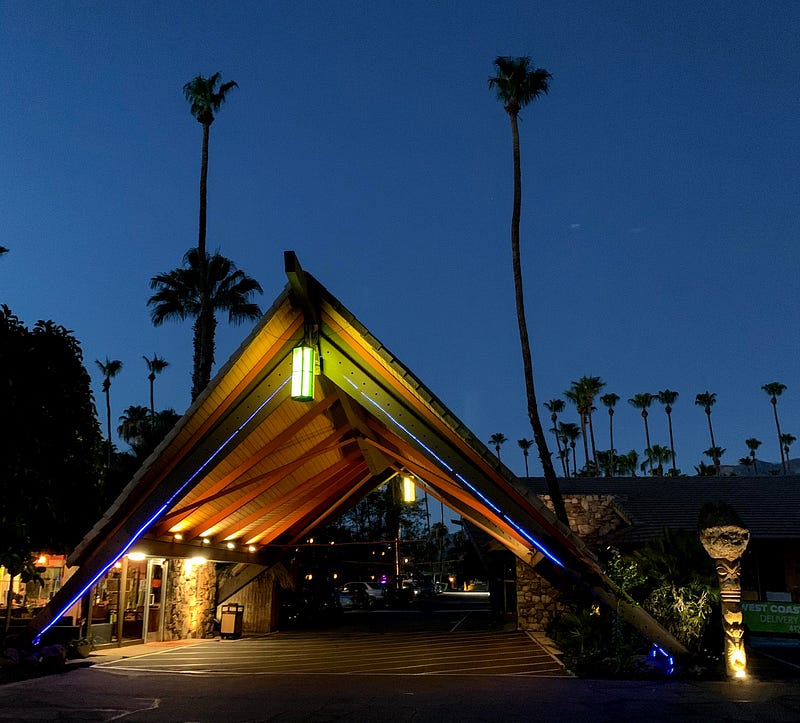
Tiki coincided in the 50s with fascination and optimism…rockets, jetplanes, tail fins (on Cadillacs), and A-frames.
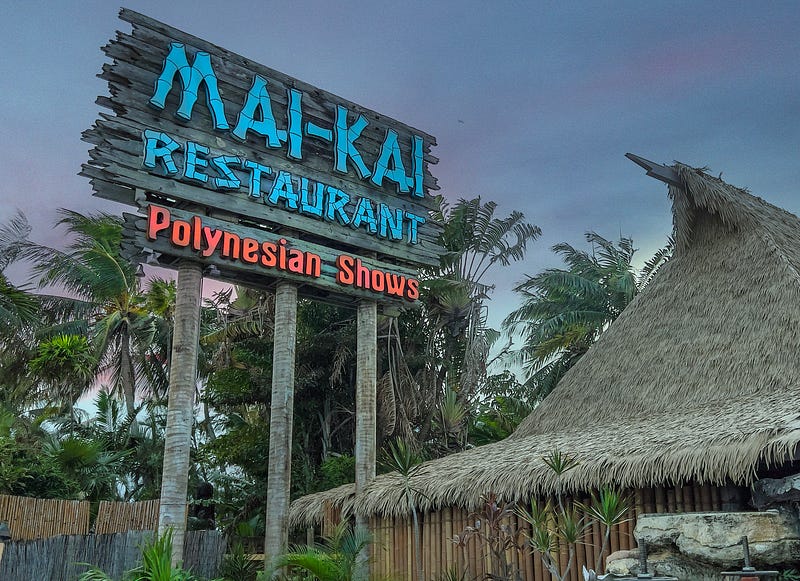
Conjure up an image of the first man on earth, and you’re thinking Tiki according to Polynesian mythology. Forget the caveman image of a grunting man with a club. Think broad nose artfully surrounded by huge eyes that pour out exotic. Think Mai Kai, Tropicana, Hula Hut, Tradewinds.
Put the lime in the coconut and shake it all up.
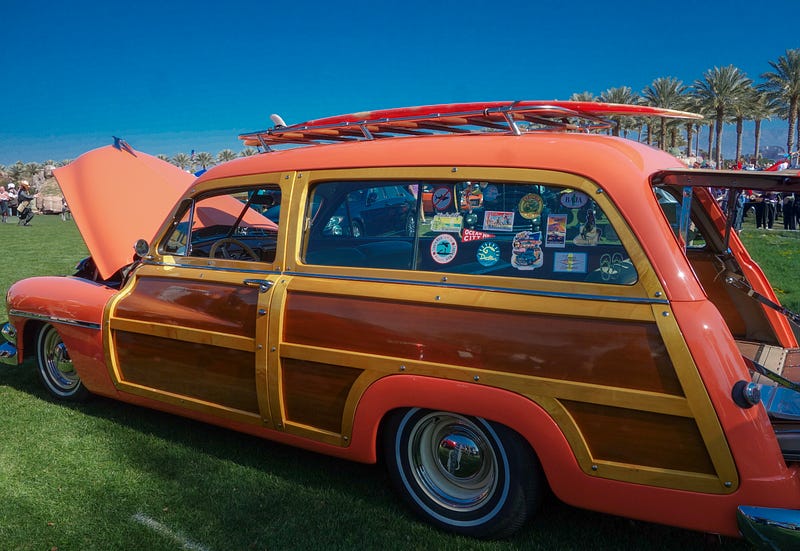
In the early sixties, a nationwide surfing craze made for a wild beach life, and Hollywood noticed.
Who can forget the beach party movies of Frankie Avalon and Annette Funicello? Starting in 1963, he appeared in “Beach Party,” “Muscle Beach,” “Beach Blanket Bingo,” and “How to Stuff a Wild Bikini.”
From Annette Funicello’s recording of Pineapple Princess to her and Frankie Avalon’s Beach Blanket Bingo (for those old enough to remember: Beach-Blan-ket-Biiiiin-go repeated three times made you want to rotate your hips in a grass skirt), Tiki was never far away.
No beach party of the '60s was without Tiki — the surfers’ God. The surfing culture adopted Tiki as their party dad, always lurking under a tree or by a swimming pool, and, yes, even the music had a Tiki flavor (songs such as Island Uprising, Rusty Nail, Fire Good, and Lava Flow sound very similar to the movie soundtracks). After all, the best waves in the world rise high off the coasts of Polynesian lands, so it seems natural that surfers would pick up the music and culture.
No reading list of classic literature is complete without the novel of the South Seas — Moby Dick, and the Tiki cultures that go along with it.
In the middle of the 19th century, Herman Melville, its author, lived among South Seas Islanders, which became the root of his writings.
At the time, Papeete, Tahiti’s capital, was a “tainted paradise,” the Tikis were rotting, and the temples were falling. (There’s nothing worse than a collapsing A-frame.)
Ditto for nineties America, a time when Americans saw the fifties Tiki architecture in a similar way as Herman Melville, saw the harpooner, Queequeg, and Capital Ahab of the whaling ship, Pequod, in his novel, Moby Dick.
Both characters’ spiritual and religious beliefs broke stereotypes about the concept of God in a similar way to how artists and designers have drawn inspiration from how some Polynesians worship Tiki.
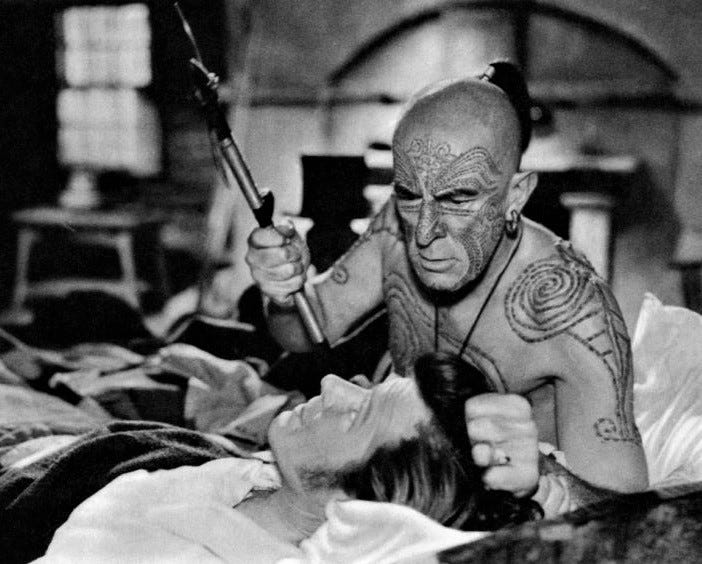
Queequeg was a kanaka (ka-NAH-ka), or what the white men viewed as savage. Melville uses this part of the book to help readers learn about how people can be misjudged based on religion and culture.
“The man’s a human being, just as I am; he has just as much reason to fear me as I have to be afraid of him. Better sleep with a sober cannibal than a drunken Christian.” Captain Ahab says in Melville’s book, possibly referring to the false implications about people when they’re associated with a religion.
Not only the acceptance of Tiki but the embracement of it and other cultures led to a new definition of mid-century modernity.
The fine shapes and colors of surf culture, hula hoops, velvet paintings, and luaus live forever.
Aloha!


