
Live Music Experience
Ticket Stubs and Cheap T-Shirts: Some Things are Missing from the Concert Experience and They Aren’t Coming Back
But someone is still making a killing
They were the evidence that it actually happened and that you were there. But advances in technology insist that there is a better, more efficient way. As a result, we are missing something without the physical paper tickets that used to be a part of going to a show.
One of the reasons that they don’t exist anymore is because Ticketmaster has, in making everything digital, completely wiped out the private sale of tickets. And in addition, those guys shouting “who needs tickets” in front of event venues have disappeared too.
I’m not sure if anyone misses them, however.
It’s shrewd business genius, simply put. They charge a fee when you purchase the tickets from them online. They charge a fee when you want to sell those same tickets on their platform. They charge a fee to the new purchaser of those tickets.
You see what they did there, right? They found a way to triple dip the fees on a single ticket. Paper tickets are out, paper money is out. Making profit hand over fist from concert goers is in.
Because Ticketmaster insists on squeezing every last dime out of its customers, the joy of collecting ticket stubs has also been robbed of us. Somewhere, in a box in a closet, I have a stack of them, dating back to the first show I ever saw in 1988. Sting, since you asked. This collection was dutifully amassed over the course of the decades, but ends somewhere around 2015.
Archaeologists will dig these up one day and piece together and use them to paint a picture of our society. And one of their biggest unsolved mysteries will surround how it all came to a sudden halt.
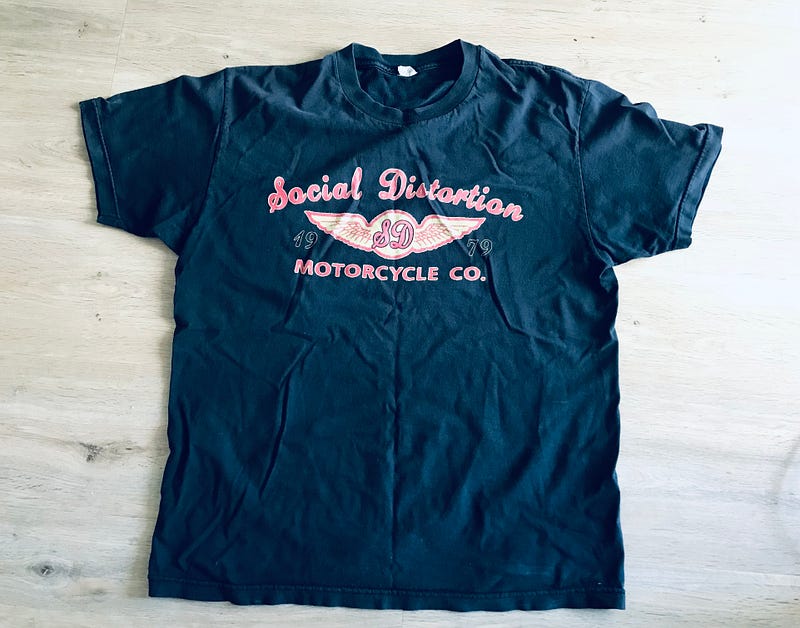
Along with hanging on to ticket stubs, another way to mark the occasion of attendance at a show was to buy an overpriced, poor quality T-shirt at a crowded stand, located in the concourse of the stadium or at the back of the club.
I remember never being sure if or how it would fit, but thinking back, I can remember having purchased dozens of these. The aforementioned Sting, the Rolling Stones, the Who, REM, the first Lollapalooza, Jane’s Addiction, Neil Young and Crazy Horse, Midnight Oil, the second Lollapalooza.
We’d happily shell out $20, wore them to school the next day and tried not to let it bother us when they were already stretched out after two laundry cycles. We already knew that they were going to be a temporary part of our lives.
And where are they now? I shudder to think that my decision to buy and briefly wear a piece of cotton with a band’s name on it, resulted in it ending up in one of those massive bales of textiles that we used to ship to countries in Africa, which now refuse them because of the disastrous impact this deluge of product has on their own textile industries.
I still swing by the merch table at shows, but I rarely buy the t-shirts. They’re a lot more than $20 now, for one thing. And they’re often hideous, relying on people to make impulse purchases, as though the internet doesn’t exist and that this will be their last chance ever to buy a piece of a particular band.
On the positive side, they often sell a band’s records, which can sometimes be hard to find in record stores. And in that way, the music industry has reverted to the original reasons bands went on tour.
It’s usually tour posters I’m more interested in now. They don’t end up in landfills as quickly, nor end up in container ships going overseas, as our fast fashion castoffs do.
And, with a decent frame around them, they can be a lot less temporary in my life.
Remind me someday to tell you about how to get your hands on setlists after a show and then getting them up on the wall at home as well. I really hope those don’t go the way of ticket stubs too. There is something that is just not right about a musician looking down at an iPad to see what the next song is.
Here are some thoughts on ticket prices, from a few months ago:


