
Three Walking Routines To Free Your Mind and Improve Your Life
Walk Into a Thought, Away From It, and Thought-free

There are many benefits to walking, such as: Improve Circulation, Shore Up Your Bones, Enjoy a Longer Life, Lighten Your Mood, Lose Weight, Strengthen Muscles, Improve Sleep, etc — from arthritis.org.
Walking is considered a good physical exercise and recommended by Doctors. If a purely physical aspect, that is losing calories, is the goal, running is the better option. But there is a mental aspect to walking that differentiates it from running.
The physical demands of running dampen the thinking aspect out of it, for most people. The goal becomes to regulate your breathing and complete the target distance. While some thoughts come and go when running, a coherent thought process does not happen usually. In fact, many times the thoughts tend to focus on the running itself. This is one reason a headset with music is preferred by many runners. Strong music can also work against cogent thinking.
A walk is different. Even with a brisk walk, the mind is unfettered and many thoughts come and go. If the purpose is to use these thoughts, then there is no need for distractions such as music.
What are the things we can do with our thoughts, during a solo walk?
I try to use it in three different ways.
1. Walk into a thought

Many inventors and creators have said that they have had their groundbreaking ideas when walking. Beethoven walked a lot around Vienna and took a pencil and paper with him to write, when inspiration struck him. Charles Dickens took long walks and created many of his memorable characters via thought and observation, during that time. Charles Darwin was known to have walked as he worked on problems. Steve Jobs would take long walks for exercise, creativity, and solving problems. He even did what is known as walking meetings, where he brainstormed with others.
Other famous thinkers who walked and created/solved include Aristotle, William Wordsworth, Henry David Thoreau, Albert Einstein, Friedrich Nietzsche — the list goes on.
In 2014, Stanford University researchers Marily Oppezzo and Daniel Schwartz found that walking indoors or outdoors boosted creative inspiration.
“… 81% of the participants saw an increase in creativity when they were walking.”
Interestingly, they found that when participants were tested for a second time after sitting down, they stayed more creative, showing that the beneficial effects of walking remained.
To be creative, the idea is not to think of something, but to let the thoughts come to you. If you have a problem to solve, or you are looking for a new idea, or an inspiration, a walk can do wonders. Sometimes you may not even be thinking of anything specific and an interesting thought might bubble up. You may be able to gain an insight or a different point of view, one that you had not considered before, during a walk.
Whatever it is, the best thing to do is not to force yourself to think about anything. Instead, gently bring up the subject of the problem or the new idea. For example, in the case of writing, you can think about it without looking for a specific topic or its contents. Let your mind start bouncing stuff around and allow a thought to float up.
In the same study by Oppezzo and Schwartz, they found that focused thinking while walking did not improve the creativity of the walkers.
Once a thought comes in, do not try to manage it. Let the thought slowly build on itself and create something. Sometimes you do end up with a solution. Other times, you find a path to it.
It is important that you have something to write on at the end of the walk. Tchaikovsky would sit down to compose after a 2-hour walk.
Make sure you write as much as you can, trying to remember at least the core points if not everything. Do not look to write a finished product or come up with a logical flow. Simply recollect your thoughts as much as you can and write them all down. You can come back later and work on the assembly.
2. Walk away from a thought
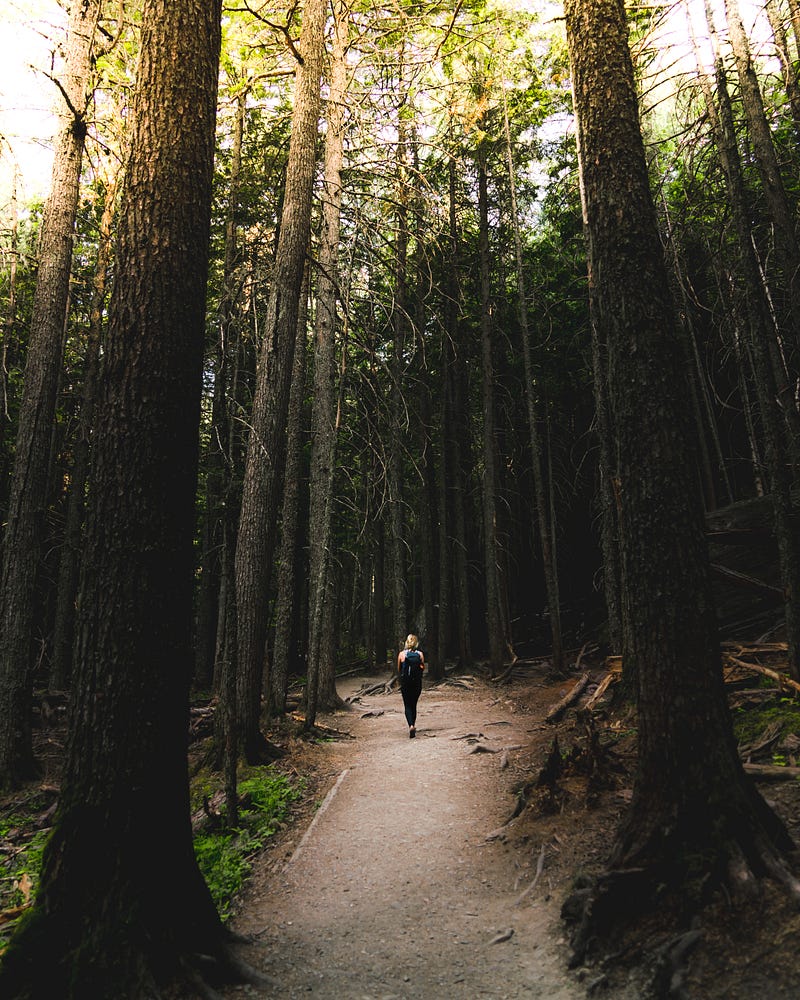
All of us run into difficult situations in our lives and many times end up regretting what we said or did at the heat of the moment. It could be an argument, a tense situation at home or at work, something that bothers us, and so on.
Behind all these situations and actions are our thought processes. It is our thoughts that gain traction over time and put us into rigid positions or prepare planned reactions, that create these situations. It is not easy to argue if you do not have a thought process behind your position and trying to express it forcefully.
Therapists and advisers would tell you to count to a number, take a deep breath, etc to handle such situations. But these may not be very effective if you choose to stay back in the area. Because frequently it is not just you in the situation; there is a partner there who may not be respectful of your breathing or counting attempts. In situations where you are alone, the location itself may add to the problem. Therefore, it is good, nay imperative, that you walk away. Then attempt the breathing and counting techniques. Better yet, walking itself can replace these techniques.
Walking away is not necessarily the solution to the problem. Because the act of walking away itself may be frustrating to your opponent. It is likely that you have to return to the location or the relationship and have to face the other person at some point. More than that, the original thought that caused the situation has still not been handled. At this point, all you have done is address the effect, but not the cause. Nevertheless, dealing with it after a gap, after you have had time to think about it, is better than being there continuously and trying to handle it.
“Maturity is learning to walk away from people and situations that threaten your peace of mind, self-respect, values, morals, and self-worth.” — Buddha
So, how do you address the thought hat caused the situation? Not just walking away, but actually taking a walk and letting the thought exit your mind. With each step, let the anger, the frustration, and eventually the thought to seep away. As your mind gets calmer, you then have a choice. Allow yourself to stay calm with no further thoughts.
“When I let go of what I am, I become what I want to be.” — Lao Tzu
Or, you can walk into a different thought. One that is more empathetic to the other person, one that looks at the situation from their side or any side except yours. Maybe a new solution to the problem will present itself. If that happens, make sure to come back and write it down as before.
“Change your thoughts and you change your world.” — Norman V. Peale
3. Walk thought-free
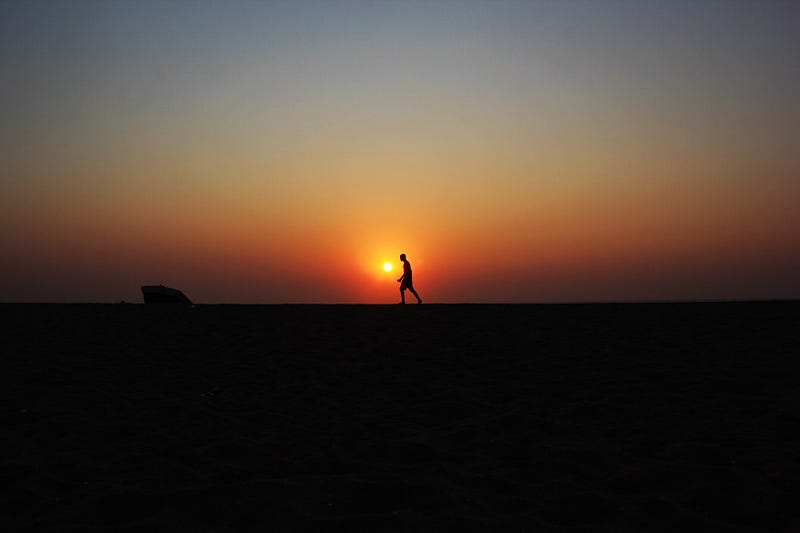
There are times when you just want a calm mind and nothing else is needed. The goal here is to reduce the clutter and attain a meditative state.
Thought-free is not being free of thoughts, but not having focus on any of them.
You can walk to achieve this through practice. For this, don’t attempt to clean up your thoughts or empty your mind forcefully. Let the thoughts come in randomly and let your mind process them, but without focus. A catharsis of your thoughts.
Your mind is capable of producing thoughts relentlessly. The goal is not to stop them, but not allowing them to stay.
Many meditation and yoga schools that used to teach about emptying your mind, have started teaching this now — that is, not to empty your mind, but to let thoughts surface and go away, like bubbles in the water. Let them appear, pop and exit.
A walk is a great way to make this happen.
This is one time you don’t want to come back and write anything. All you are looking for is a refreshed mind. Then go tackle whatever is waiting for you.
“The nearer a man comes to a calm mind, the closer he is to strength.” — Marcus Aurelius
Mahatma Gandhi took long walks daily that culminated in the famous Dandi march at the age of 60 plus when he walked 386 km in 24 days against the British empire. Presumably, he had entered such a meditative state during that long march.
Walking can be used to create a thought, destroy a thought, or prepare for a new thought. The result of each is creating a new you.


