
Three use-cases in which AI can identify disease

For Brain Disease
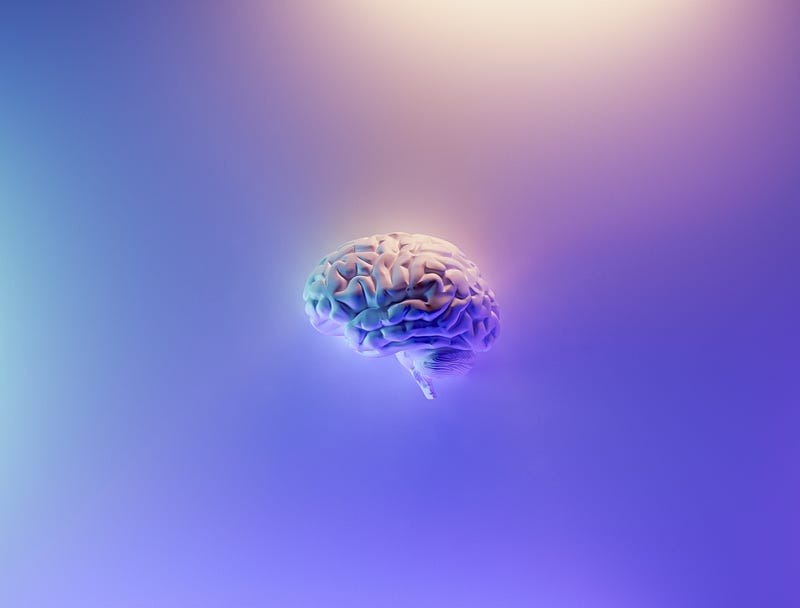
P. Khan et al. elaborated thoroughly about methods of utilising artificial intelligence for diagnosis in their paper “Machine Learning and Deep Learning Approaches for Brain Disease Diagnosis: Principles and Recent Advances”. Here they explain how deep learning (DL) is a subset of machine learning (ML), a subset of what is commonly referred to as artificial intelligence (AI). While focusing on different models applied to brain disease medicine, they discuss how much research is currently going into each. To narrow down the potential sets of diagnosis, the researchers focused their discussion on utilising algorithms for early detection of Alzheimer’s diseases (AD), Brain tumours, Epilepsy, and Parkinson’s disease (PD). This thorough review also compared different datasets to utilise such models and modalities for gathering potential symptoms data.
Among the exciting results from this survey, P. Khan et al. discussed the difference in articles between ML and DL research and their acquisition methods and datasets for each significant disease. According to their review, deep learning techniques are more explored for this application, especially those focused on Alzheimer’s followed by Parkinson’s. Interestingly, the most used data source for Brain Tumour detection in research came from MRI images from the BraTs dataset. While Alzheimer was also commonly researched with MRI images, the most common database was ADNI. Unlike these, Parkinson’s was more commonly detected in research utilising sensors and Epilepsy with EEG, but none had a preferred dataset for study, thus depending on that provided by universities. From these results, we can infer that there is still plenty of work to do for correctly applying algorithms for early disease detection. Visual exams are still the low hanging fruit (like MRI) which might lead to the breakthrough implementations given enough data, leading to further concrete study in more complex data acquisition diseases such as Parkinson’s and Epilepsy.
For Kidney Disease
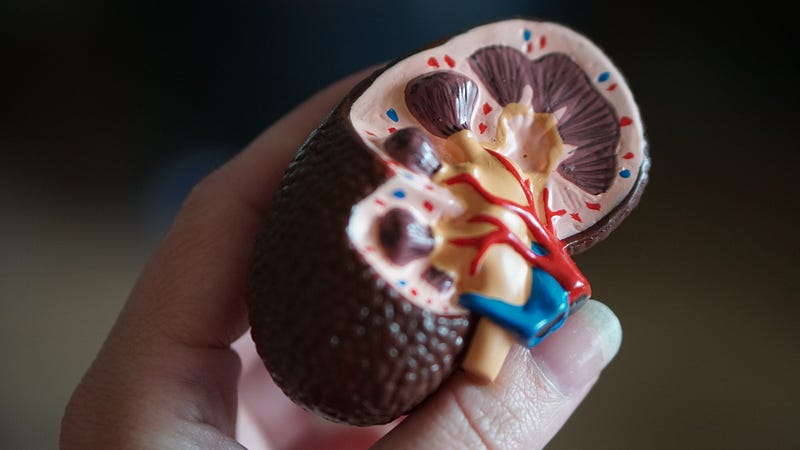
P. Chittora et al. focused on the difference in performance when using different machine learning algorithms for prediction kidney disease in their paper “Prediction of Chronic Kidney Disease — A Machine Learning Perspective”. Chronic Kidney Disease (CKD) is a condition that can be terminal if ill-treated and one which costs healthcare systems a large amount of money yearly. For these reasons, researchers experimented with using seven classifiers (artificial neural network, C5.0, Chi-square automatic interaction detector, logistic regression, linear support vector machine with penalty L1 & with penalty L2 and random tree) for early detection with UC Irvine’s database. The collected variables focused on EGFR, Blood Pressure, urine kit and each was applied with specific methods according to the available data. Of all methods, IBM’s Deep Neural Network provided the highest accuracy at 99.6%, but it was not further studied in this paper as it was outside the study’s scope.
Of the classifiers studied in this paper, the linear support vector machine with penalty L2 was the most accurate at 98.86% when comparing actual with synthetic datasets for identification. Using synthetic minority oversampling technique (SMOTE) and least absolute shrinkage and selection operator (LASSO) algorithmic methods provided exciting results regarding the correlated variables selected for the study. Of all the variables, only red blood count (RBC), pus cell values as normal or abnormal (PC) and albumin range 0 to 5 (AL) were determined to have a coefficient greater than 0.05 for utilisation. Then only bacteria values present or not present (BA) and blood urea (mg/dl) (SU) were given approximately 0.02 coefficient. They left only pus cell value as a present or not (PCC) and serum creatinine (SC) as significant coefficients with a value of 0.01, proving all other results unnecessary for identifying this diagnosis. Of all the mentioned variables, only AL, SU, and SC can directly correlate to kidney disease as the other variables could be high due to other inflammatory conditions. Hence, the complexity of a diagnosis and all the potential for efficiency of this kidney disease remains in medical laboratory study aided by machine learning.
For Diabetes

U. Ahmed et al. elaborate on the importance of using technological advancements to solve significant problems such as identifying diabetes in their paper “Prediction of Diabetes Empowered with Fused Machine Learning”. Diabetes is a chronic condition that impacts the lives of many around the globe, and that is on the rise due to our modern sedentary lifestyle and high caloric diet. Although the disease can be subdivided into type 1, which is mainly genetic and starts impacting early in life, type 2 is a chronic condition that develops with lifestyle choices. Although type 2 is usually milder, both have similar symptoms, such as polyuria, polydipsia, weakness, polyphagia, obesity, sudden-weight-loss, genital-thrush, visual blurring, itching, irritability, delayed-healing, partial-paresis, muscle-stiffness, alopecia mainly. However, others could also be associated with such a condition.
Given the rise of such a condition, researchers considered it critical to examine other potential disease identification tools beyond current blood tests. In this paper, the researchers conducted a review of results using machine learning (ML) algorithms such as support vector machine (SVM) and artificial neural network (ANN) with data from UC Irvine’s repository and a Hospital in Bangladesh for diagnosing diabetes with weighted symptoms only. With 70% actual data to 30% artificial for testing, the results were impressive. By combining both SVM and ANN classifiers with well examined and parametrised data, they obtained an accuracy of 94.87%. With such a paper, the researchers showed how accurate these models could be with enough data and leveraging one another, which motivates us to continue pursuing more profound research into utilising them for efficient disease identification given limited variables such as only symptoms.
References
P. Khan et al., “Machine Learning and Deep Learning Approaches for Brain Disease Diagnosis: Principles and Recent Advances,” in IEEE Access, vol. 9, pp. 37622–37655, 2021, DOI: 10.1109/ACCESS.2021.3062484. URL: https://ieeexplore.ieee.org/stamp/stamp.jsp?tp=&arnumber=9363896&isnumber=9312710
P. Chittora et al., “Prediction of Chronic Kidney Disease — A Machine Learning Perspective,” in IEEE Access, vol. 9, pp. 17312–17334, 2021, DOI: 10.1109/ACCESS.2021.3053763. URL: https://ieeexplore.ieee.org/stamp/stamp.jsp?tp=&arnumber=9333572&isnumber=9312710
U. Ahmed et al., “PREDICTION OF DIABETES EMPOWERED WITH FUSED MACHINE LEARNING,” in IEEE Access, DOI: 10.1109/ACCESS.2022.3142097. URL: https://ieeexplore.ieee.org/stamp/stamp.jsp?tp=&arnumber=9676634&isnumber=6514899