
Three Scientific Lies Spread During the Ancient Times
Popular ancient theories that make no sense now
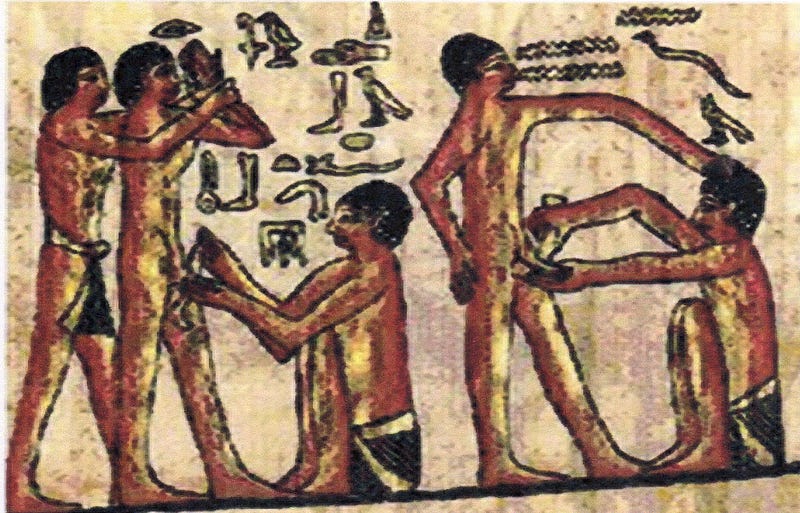
There are many ancient practices that are still followed now, and there are others that make no sense. For instance, the ancient practice of circumcision is still followed today, among many parts of the world. However, practices like using python bile to treat ulcers or drilling holes in the skull to release ‘demons’ are unimaginable today. Let’s look at some of the mind-boggling ancient beliefs that are no longer relied on anymore.
1. “Bloodletting will help cure most diseases”
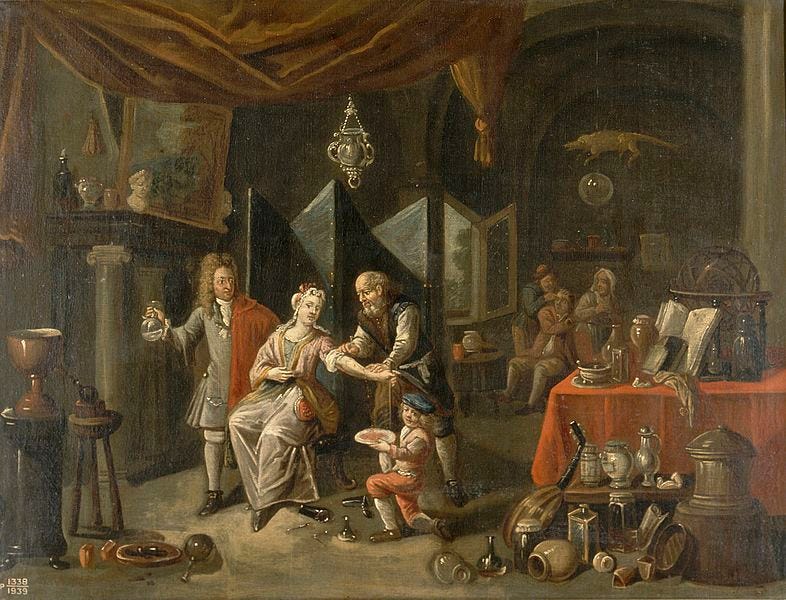

After Hippocrates, Galen was the most popular and reliable physician of his time. Apart from being a very successful writer, he served three different Roman emperors as a court physician. However, his curiosity always got the best of him, and he sometimes made decisions at the expense of his patient’s comfort. He would not hesitate to treat humans as laboratory mice to better understand the cause of a medical complication.
Being the genius he was, he would always find a correlation between his dissected specimens and human specimens. Through his extensive research and experiments, he discovered that blood flow through arteries and believed that excess blood was the reason behind most recurring diseases. He then treated his patients using bloodletting, which was unheard of, especially in Europe. On the contrary, bloodletting was a widespread practice in the Middle East regions.
Recent researches show that bloodletting does not benefit much in most situations. Sometimes, this does more harm than good because of the high risk of high blood loss. However, having the influence he had in his time, Galen popularized bloodletting until the 1800s.
2. “The air you breathe runs through your arteries”
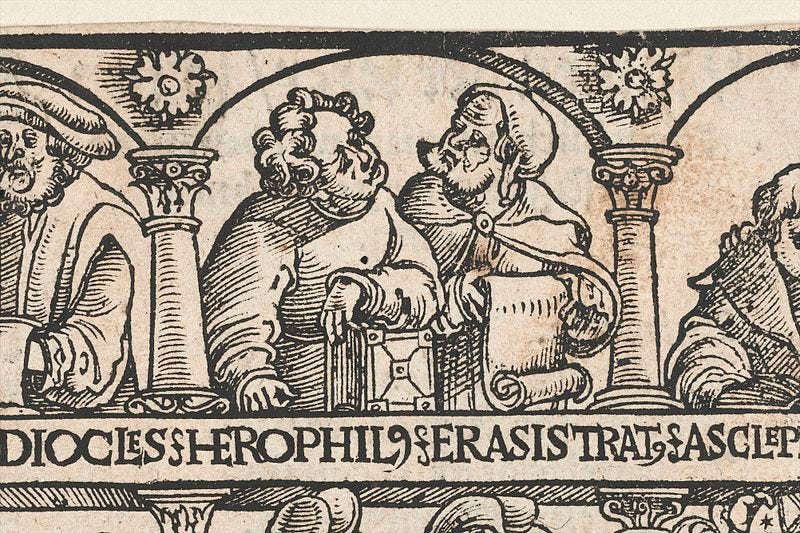

Herophiles served the Ptolemaic dynasty in Egypt, which allowed him and his students to dissect dead human bodies to study anatomy. They were also allowed to cut up living humans — like their prisoners. These strange studies carried out Herophiles did a lot to advance medical science, primarily human anatomy. His students, like him, contributed a lot to this field. At the same time, they put forward some strange theories too.
One of Herophile’s students, Erasistratos, believed that ‘pneuma’ (meaning breath in Greek) flowed through arteries and veins. They had already concluded that ‘pneuma’ was responsible for the human body to be alive and functioning. As per his hypothesis, lungs selectively took in ‘pneuma’ from the air and directly supply to the blood vessels. These vessels then transport ‘pneuma’ into the brain that modifies it and passes into the nerve fibres so that the body functioning remains proper.
3. “Everything is made up of fire, earth, water and air”
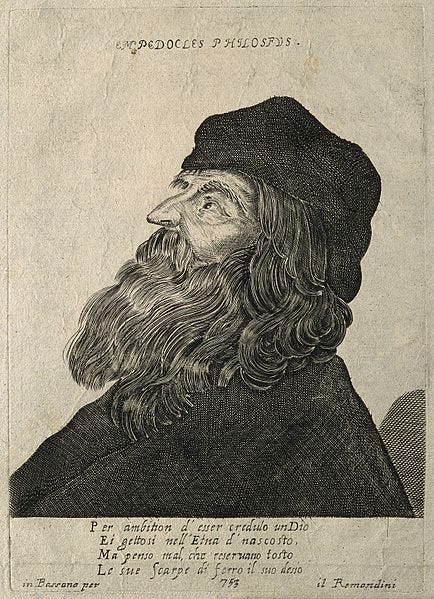

Empedocles was a philosopher who preceded Socrates. He was the first to believe that every matter is made of either or all of the following four elements: water, fire, air, and earth. Though this idea appears to be wrong initially, his concept gave rise to the advances in modern physical sciences.
His theory of four elements attempted to show that any matter can neither be created nor destroyed; instead can be transformed or changed from one form to another. There is a very close correlation between Empedocles’ theory and the Law of Conservation of Mass, and the First Law of Thermodynamics.