avatarDowan Simon

Free AI web copilot to create summaries, insights and extended knowledge, download it at here

1146

Abstract

9d13">As the thing in itself cannot be known, we are left with patterns of rationality as the only relevant reality (idealism). These patterns of intelligibility structure reality, and like living things they can develop towards more rational states. The name for this kind of extended mind in German is <b>Geist</b>, meaning a combination of mind and spirit.</p><p id="8020">The development of Geist is driven by two processes: <b>differentiation / articulation</b>, and <b>integration</b>. Together, they comprise the <b>systematization</b> of the world itself. This autonomous system gradually evolves as it synthesizes opposing ideas through the dialectical process. In this way, rationality (and thereby reality) realizes itself, ultimately becoming self-aware in the form of the World Spirit (or God).</p><p id="ce4a">One of the consequences is that God, as the self-organizing principle of reality, is again seen as rational, and we can again access the divine through rational reflection. Hegel is effectively translating religion into philosophy.</p><p id="fbc4">While popular in his time, Hegel’s ideas faced critiques on numerous front

Options

s:</p><ul><li>Schopenhauer (and later Nietzsche) considered the intelligibility patterns to be driven by will (Will to Live, Will to Power), making them fundamentally irrational and arbitrary.</li><li>Kierkegaard criticized Hegel’s philosophy for being a purely intellectual system lacking in the participatory knowledge needed to cultivate wisdom. From the Kierkegaardian perspective, our attempts to realize the divine have been severed from personal transformation (they do not compel us to take the “leap of faith”).</li><li>Marx saw religion as an opium distracting us from the reality of how socioeconomic forces shape history through conflict. The participation that Hegel inherently lacked, Marx provided through a call to political and economic revolution.</li></ul><p id="dc4e"><a href="https://readmedium.com/summary-of-awakening-from-the-meaning-crisis-by-john-vervaeke-chapter-23-romanticism-0ded8b29cb29">Previous chapter: Romanticism</a></p><p id="24a8"><a href="https://readmedium.com/summary-of-awakening-from-the-meaning-crisis-by-john-vervaeke-chapter-25-the-clash-a8ea65710b2d">Next chapter: The Clash</a></p></article></body>

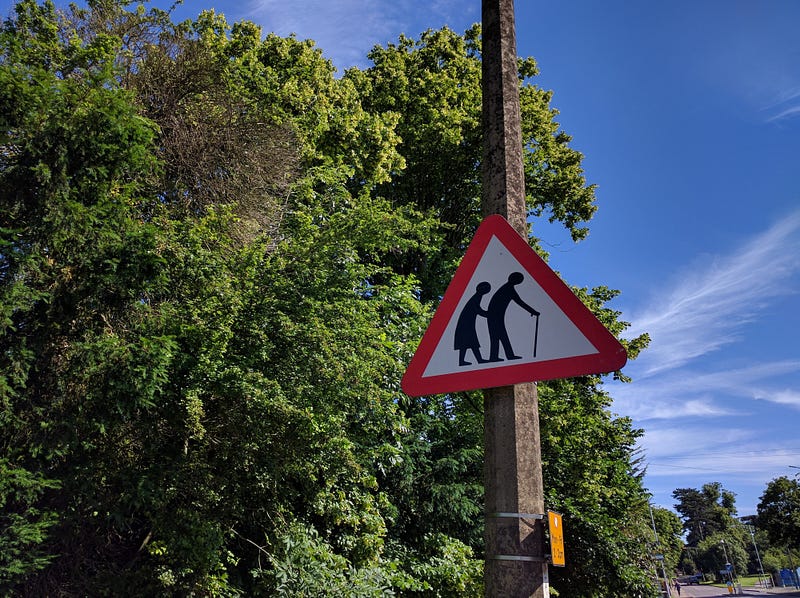
Photo by Stéphane Juban on Unsplash

Three Old Beings

Yesterday afternoon when I was leaving my job I met three old beings.

It was a very old couple with their Pekingese dog that had trouble walking. It was a tragicomic situation. Walking first, the naked man from the waist up, jogging and loose short and the flip flops. The white belly that hung forward looks like in going to losing control of his balance. It was warm, so the lack of clothing was justified. The lady was walking backward at a very slow pace because she could hardly lift her foot to pass it later. Tousled, in an old and dirty dress, she was dragging the poor dog who was one-eyed, obviously lame, and who looked at me with a look of “save me from these two lunatics”.

In what it took me to walk that half-block they seemed to be approaching in slow motion. When I passed by them I greeted with a tilt in the head, thinking about what kind of life they would lead, and why they would have started to go for a walk despite their evident difficulties to do so.

They were going to the corner, where part of the company where I work is renovating and there is rubble, new walls, machines, and men working all day. I know that the Elder had to leave his house to see what was happening in his neighborhood, what new work the crazy man had on the corner …

Curiosity killed the cat….

Fiction
Old People
Curiosity
Dogs
Life Force
Recommended from ReadMedium