avatarGeorge J. Ziogas

Free AI web copilot to create summaries, insights and extended knowledge, download it at here

4746

Abstract

hrase raises intriguing questions about the role of free will: are humans powerless to determine the course of their own life? Though the ancient Romans were often fatalists, this Latin quote encourages people to strive to achieve their goals, regardless of the odds.</p><h2 id="260e">2. Veni, vidi, vici</h2><p id="1bf6">Commonly translated <a href="https://www.goodreads.com/quotes/759953-veni-vidi-vici-i-came-i-saw-i-conquered#:~:text=Quote%20by%20Julius%20Caesar%3A%20%E2%80%9CVeni,saw%2C%20I%20conquered).%E2%80%9D">as</a> “I came, I saw, I conquered,” the catchphrase coined by <a href="https://www.britannica.com/biography/Julius-Caesar-Roman-ruler">Caesar</a> is perhaps the most famous Latin quote. Artists, poets, and musicians have often created variations of this phrase. After the early death of his daughter, French poet <a href="https://www.britannica.com/biography/Victor-Hugo">Victor Hug</a>o wrote a poem called <i>Veni, vidi, vixi</i>, or “I came, I saw, I lived.” The <a href="https://en.wikipedia.org/wiki/These_Foolish_Things_(Remind_Me_of_You)">song</a> <i>These Foolish Things (Remind Me of You) </i>includes the line, “You came, you saw, you conquer’d me.” A parody of Caesar’s motto can also be found in <a href="https://www.imdb.com/title/tt0087332/"><i>Ghostbusters</i></a>, where <a href="https://www.imdb.com/title/tt0087332/characters/nm0000195?ref_=tt_cl_c_1">Peter Venkman</a> exclaims, “We came, we saw, we kicked its ass!” <i>Veni, vidi, vici </i>is also a popular tattoo.</p><p id="2668">Linguists remark that Caesar’s phrase became memorable because it follows the so-called “Power of the Three.” British author <a href="https://en.wikipedia.org/wiki/Mark_Forsyth">Mark Forsyth</a> explains that <a href="https://mannerofspeaking.org/2015/03/16/rhetorical-devices-tricolon/">tricolons</a>, or groups of three similar-sounding phrases, form a pattern that allows the human mind to easily process information. As a result, the tricolon is one of the most effective rhetoric tools. Caesar was not only a notoriously effective general. He was also known as one of the most charismatic orators in ancient Rome. In his <a href="https://www.amazon.com.au/Norths-Translation-Plutarchs-Julius-Caesar/dp/0343036363"><i>Life of Caesar</i></a>, Greek historian <a href="https://www.britannica.com/biography/Plutarch">Plutarch</a> remarks that the words of Caesar’s catchphrase “have the same inflectional ending, and so a brevity which is most impressive.”</p><p id="f29e">This Latin quote is generally taken as a comment on Caesar’s swift victory in the brief war against <a href="https://en.wikipedia.org/wiki/Pharnaces_II_of_Pontus">King Pharnaces</a> of Pontus in 47 BCE. The Roman general defeated his enemy after a four-hour battle in <a href="https://en.wikipedia.org/wiki/Battle_of_Zela_(47_BC)">Zela</a>. Today, Caesar’s motto is often used to celebrate or commemorate personal achievements. However, the original meaning of the phrase can be fully understood by taking into account the historical context. After the collapse of the <a href="https://www.historyskills.com/classroom/ancient-history/anc-1st-triumvirate-reading/#:~:text=The%20First%20Triumvirate%20a%20secret,')%2C%20and%20Marcus%20Licinius%20Crassus.">First Triumvirate</a>, a bloody civil war broke out between <a href="https://www.britannica.com/biography/Pompey-the-Great">Pompey</a> and Caesar. The latter won the battle of Zela a year after Pompey had been murdered in Egypt. Some scholars believe Caesar coined his catchphrase to mock his political rival. While it took Pompey almost 20 years to defeat the king of <a href="https://en.wikipedia.org/wiki/Mithridates_VI_Eupator">Pontus</a>, Caesar “went, saw, and conquered” the same enemy in only one month.</p><p id="53ef">According to historian <a href="https://en.wikipedia.org/wiki/Ida_%C3%96stenberg">Ida Östenberg</a>, v<i>eni, vidi, vici </i>was also <a href="https://www.jstor.org/stable/43906009">a</a> “strong announcement of self” and a political statement aimed to defy the traditions of the Roman Republic. Ancient author <a href="https://www.britannica.com/biography/Suetonius">Suetonius</a> reports that Caesar paraded a placard with his personal motto during his Pontic triumph. Triumphing generals often displayed only lists of prisoners and spoils of war. Accounts of military achievements were traditionally narrated in the third person. Caesar broke this rule by using the first person in his famous sentence. Thus, Östenberg explains that v<i>eni, vidi, vici </i>was more than a celebration of Caesar’s ability as a general. It declared <a href="https://www.google.com/search?q=%C3%96stenberg+explains+that+veni%2C+vidi%2C+vici+was+more+than+a+celebration+of+Caesar%27

Options

s+ability+as+a+general.+It+declared+his+%22unquestionable+new+position+of+authority+and+power%22&rlz=1C1CHZL_enAU740AU740&oq=%C3%96stenberg+explains+that+veni%2C+vidi%2C+vici+was+more+than+a+celebration+of+Caesar%27s+ability+as+a+general.+It+declared+his+%22unquestionable+new+position+of+authority+and+power%22&aqs=chrome..69i57.636j0j7&sourceid=chrome&ie=UTF-8">his</a> “unquestionable new position of authority and power” and a challenge to the Republic and its traditions.</p><h2 id="ef25">3. Homo faber suae quisque fortunae</h2><p id="bf02">While the ancient Romans believed that the lives of mortals and immortals were ruled by fate, they also thought that <i>homo faber suae quisque fortunae</i>, <a href="https://www.goodreads.com/quotes/8177241-each-man-is-the-architect-of-his-own-fortune#:~:text=Quote%20by%20Appius%20Claudius%20Caecus,architect%20of%20his%20own%20fortune.%E2%80%9D">or</a> “each man is the architect of his own fortune.” Roman historian <a href="https://www.britannica.com/biography/Sallust">Sallust</a> quoted this phrase in his <i>Speech on the State</i>, where he attributed it to <a href="https://www.britannica.com/biography/Appius-Claudius-Caecus#:~:text=Appius%20Claudius%20Caecus%2C%20(flourished%20late,notable%20personalities%20in%20Roman%20history.">Appius Claudius Caecus</a>, one of the first celebrities in Roman history. There’s no denying that Appius Claudius Caecus shaped the future of Rome. During his tenure as a censor, he constructed and named after himself the <a href="https://www.britannica.com/topic/Appian-Way">Appian Way</a> and the <a href="https://en.wikipedia.org/wiki/Aqua_Appia"><i>Aqua Appia</i></a>, Rome’s first aqueduct. Toward the end of his life, when he was blind and unstable on his feet, Appius Claudius Caecus delivered a powerful speech urging the Senate not to make a peace treaty with <a href="https://www.britannica.com/biography/Pyrrhus">Pyrrhus</a>, the king of Epirus.</p><p id="47e2">Over the centuries, Appius Claudius Caecus’ phrase has been interpreted in several different ways. During the Italian Renaissance, for example, the idea that humans could control their destinies became a key concept. In his <i>De hominis dignitate oratio</i>, or “<a href="https://www.amazon.com/Oration-Dignity-Giovanni-Della-Mirandola/dp/0895267136/ref=sr_1_1?keywords=Oration+on+the+Dignity+of+Man&amp;qid=1685614894&amp;sr=8-1">Oration on the Dignity of Man</a>,” <a href="https://www.britannica.com/biography/Giovanni-Pico-della-Mirandola-conte-di-Concordia">Count Pico della Mirandola</a> wrote <a href="https://www.goodreads.com/quotes/741380-we-have-given-you-o-adam-no-visage-proper-to">that</a> God created Adam “as the free and proud shaper of [his] own being” so that he may “fashion [himself] in the form [he] may prefer.” <a href="https://www.britannica.com/biography/Innocent-VIII#:~:text=Innocent%20VIII%2C%20original%20name%20Giovanni,pope%20from%201484%20to%201492.&amp;text=Named%20bishop%20of%20Savona%2C%20Italy,Sixtus%20IV%2C%20whom%20he%20succeeded.">Pope Innocent VIII</a> denounced Pico della Mirandola’s statement as heretical. As a result, the Italian philosopher fled to France, where he was arrested and imprisoned.</p><p id="1a84">The concept of <i>homo faber </i>later inspired both <a href="https://www.britannica.com/biography/Hannah-Arendt">Hannah Arendt</a> and <a href="https://www.britannica.com/biography/Karl-Marx">Karl Marx</a>. According to Hannah Arendt, humans are <i>fabers</i>, or “smiths,” because they can forge their instruments and shape the world around them. Similarly, Karl Marx spoke of a <i>homo faber </i>that transforms his surroundings through his material activity and labor. Today, Appius Claudius Caecus’ phrase urges people to reflect on the dichotomy between destiny and their ability to play an active role in determining the course of their lives. It also raises challenging questions about humankind’s behavior towards nature and the environment.</p><p id="282e">Though phrases coined in a dead language may seem irrelevant in the modern world, these Latin quotes are more than tattoo ideas. Concepts, thoughts, and knowledge from ancient history can still help people navigate a complex and ever-changing reality. After all, history is the “witness of the times, the light of truth, the life of memory, the mistress of life,” as <a href="https://www.britannica.com/biography/Cicero">Cicero</a> famously <a href="https://www.goodreads.com/author/quotes/13755.Marcus_Tullius_Cicero?page=12">declared</a> in his <a href="https://www.amazon.com/Oratore-Marcus-Tullius-Cicero-Latin/dp/B091NRQCMP/ref=sr_1_1?keywords=De+Oratore&amp;qid=1685615329&amp;sr=8-1"><i>De Oratore</i></a>.</p></article></body>

Three Latin Quotes That Are Still Inspiring People

The wisdom of ancient Roman thinkers continues to influence modern society and philosophy
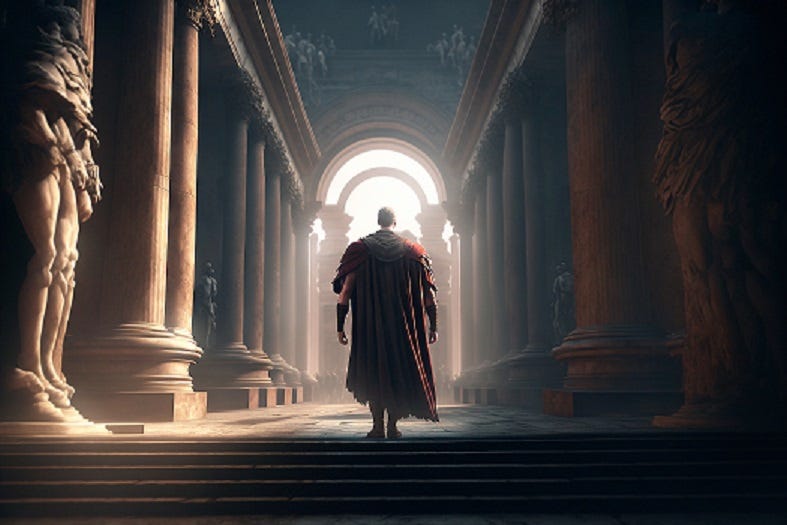
© Giordano Aita / Adobe Stock

Latin is a dead language. However, it would be inaccurate to consider it irrelevant. Language scholars point out that more than 60 percent of English words have Latin origins. Additionally, many Latin terms are embedded in everyday vocabulary. Latin phrases are also common in legal and medical terminology. Schools and universities often have Latin mottos.

Though there are no native speakers alive, many Latin proverbs and sayings are still relevant today. The wisdom and insight of ancient Roman thinkers continue to inspire, challenge, and provoke humankind.

Here are three inspiring Latin quotes and their meanings.

1. Flectere si nequeo superos, Acheronta movebo

Written by the ancient Roman poet Virgil in the Aeneid, this Latin phrase is commonly translated as “if I cannot move heaven, I will raise hell.” The ancient Greeks and Romans believed that the Acheron was one of the rivers that led to the Underworld. In particular, Virgil explained that the souls of the newly departed were ferried across the Acheron by the boatman Charon.

Today, Virgil’s phrase is perhaps best known for its association with Freud’s The Interpretation of Dreams. The founder of psychoanalysis wrote that he included the Latin quote in his book “to picture the efforts of the repressed instinctual impulses.” In this context, the Acheron River symbolizes the unconscious. According to Freud, the material hidden in this unavailable layer of the human psyche affects a person’s conscious behavior. Freud famously believed that unconscious impulses and desires reveal themselves in dreams. Thus, he declared that he intended to “raise the underworld” of the psyche to understand the “inner life.”

In the Aeneid, the phrase has quite a different meaning. In book VII, Juno, the queen of the Roman gods, swears to raise the powers of the underworld to exact her revenge against Aeneas. Juno knows that her efforts are doomed to fail as the Trojan hero is destined to build Rome. However, she’s determined to inflict pain and suffering on Aeneas and his fellow Trojans.

In ancient Rome, fate was even more powerful than the gods. No mortal nor immortal being could alter what was destined to be. Fate is the key theme in the Aeneid. Indeed, in the poem written to glorify the powerful Julio-Claudia dynasty, the foundation of Rome is unavoidable. Thus, Juno’s phrase raises intriguing questions about the role of free will: are humans powerless to determine the course of their own life? Though the ancient Romans were often fatalists, this Latin quote encourages people to strive to achieve their goals, regardless of the odds.

2. Veni, vidi, vici

Commonly translated as “I came, I saw, I conquered,” the catchphrase coined by Caesar is perhaps the most famous Latin quote. Artists, poets, and musicians have often created variations of this phrase. After the early death of his daughter, French poet Victor Hugo wrote a poem called Veni, vidi, vixi, or “I came, I saw, I lived.” The song These Foolish Things (Remind Me of You) includes the line, “You came, you saw, you conquer’d me.” A parody of Caesar’s motto can also be found in Ghostbusters, where Peter Venkman exclaims, “We came, we saw, we kicked its ass!” Veni, vidi, vici is also a popular tattoo.

Linguists remark that Caesar’s phrase became memorable because it follows the so-called “Power of the Three.” British author Mark Forsyth explains that tricolons, or groups of three similar-sounding phrases, form a pattern that allows the human mind to easily process information. As a result, the tricolon is one of the most effective rhetoric tools. Caesar was not only a notoriously effective general. He was also known as one of the most charismatic orators in ancient Rome. In his Life of Caesar, Greek historian Plutarch remarks that the words of Caesar’s catchphrase “have the same inflectional ending, and so a brevity which is most impressive.”

This Latin quote is generally taken as a comment on Caesar’s swift victory in the brief war against King Pharnaces of Pontus in 47 BCE. The Roman general defeated his enemy after a four-hour battle in Zela. Today, Caesar’s motto is often used to celebrate or commemorate personal achievements. However, the original meaning of the phrase can be fully understood by taking into account the historical context. After the collapse of the First Triumvirate, a bloody civil war broke out between Pompey and Caesar. The latter won the battle of Zela a year after Pompey had been murdered in Egypt. Some scholars believe Caesar coined his catchphrase to mock his political rival. While it took Pompey almost 20 years to defeat the king of Pontus, Caesar “went, saw, and conquered” the same enemy in only one month.

According to historian Ida Östenberg, veni, vidi, vici was also a “strong announcement of self” and a political statement aimed to defy the traditions of the Roman Republic. Ancient author Suetonius reports that Caesar paraded a placard with his personal motto during his Pontic triumph. Triumphing generals often displayed only lists of prisoners and spoils of war. Accounts of military achievements were traditionally narrated in the third person. Caesar broke this rule by using the first person in his famous sentence. Thus, Östenberg explains that veni, vidi, vici was more than a celebration of Caesar’s ability as a general. It declared his “unquestionable new position of authority and power” and a challenge to the Republic and its traditions.

3. Homo faber suae quisque fortunae

While the ancient Romans believed that the lives of mortals and immortals were ruled by fate, they also thought that homo faber suae quisque fortunae, or “each man is the architect of his own fortune.” Roman historian Sallust quoted this phrase in his Speech on the State, where he attributed it to Appius Claudius Caecus, one of the first celebrities in Roman history. There’s no denying that Appius Claudius Caecus shaped the future of Rome. During his tenure as a censor, he constructed and named after himself the Appian Way and the Aqua Appia, Rome’s first aqueduct. Toward the end of his life, when he was blind and unstable on his feet, Appius Claudius Caecus delivered a powerful speech urging the Senate not to make a peace treaty with Pyrrhus, the king of Epirus.

Over the centuries, Appius Claudius Caecus’ phrase has been interpreted in several different ways. During the Italian Renaissance, for example, the idea that humans could control their destinies became a key concept. In his De hominis dignitate oratio, or “Oration on the Dignity of Man,” Count Pico della Mirandola wrote that God created Adam “as the free and proud shaper of [his] own being” so that he may “fashion [himself] in the form [he] may prefer.” Pope Innocent VIII denounced Pico della Mirandola’s statement as heretical. As a result, the Italian philosopher fled to France, where he was arrested and imprisoned.

The concept of homo faber later inspired both Hannah Arendt and Karl Marx. According to Hannah Arendt, humans are fabers, or “smiths,” because they can forge their instruments and shape the world around them. Similarly, Karl Marx spoke of a homo faber that transforms his surroundings through his material activity and labor. Today, Appius Claudius Caecus’ phrase urges people to reflect on the dichotomy between destiny and their ability to play an active role in determining the course of their lives. It also raises challenging questions about humankind’s behavior towards nature and the environment.

Though phrases coined in a dead language may seem irrelevant in the modern world, these Latin quotes are more than tattoo ideas. Concepts, thoughts, and knowledge from ancient history can still help people navigate a complex and ever-changing reality. After all, history is the “witness of the times, the light of truth, the life of memory, the mistress of life,” as Cicero famously declared in his De Oratore.

History
Philosophy
Quotes
Inspiration
Life Lessons
Recommended from ReadMedium