
Three Inspiring Non-Native English Speakers Who Wrote Bestsellers in English
These trailblazers prove you can leave your mark on the literary world even if you acquired English later in life.

Writing is an insatiable need I succumb to daily. I fed my addiction by pursuing a career in journalism and, when I left the industry, I continued to write so I could get my fix.
When I was younger, I was full of self-doubt. This was fueled by the fact that I was a non-native English speaker. I only started learning English when I was ten and it soon became the language I wished to express myself in.
I often wondered whether I could capture the world with the same skill and nuance as someone who was born speaking the language. This was an invisible barrier I built for myself and an obstacle I only recently overcame.
Knowing that other non-native English speakers and polyglots had written brilliant bestselling novels already was definitely a big help in my journey to self-confidence. It proved that a successful career in writing was not out of reach just because I learned English later in life.
Here are three of these authors and their stories for those of you who are struggling with the same internal battle. They prove that the only barriers to success are the ones you build yourself.
1. Elif Shafak
“If we can dream in more than one language, if our brain is perfectly comfortable with this multiplicity, then that means we can write in more than one language too.”
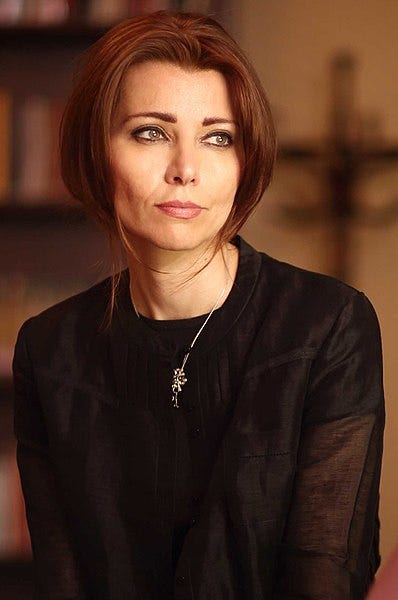
Elif Shafak is a bilingual author who writes bestselling novels in both Turkish and English. To date, she has written and published 18 books translated into 54 languages. Her work has been nominated for prestigious awards including the Orange Prize for Women’s Fiction.
Shafak was born in Strasbourg, but spent much of her childhood in Ankara, Turkey after her parents separated. Her teenage years were spent in Turkey, Spain, and Jordan as she followed her mother to her diplomatic postings. She has since taught in prestigious universities in the UK and US.
In an essay for Waterstones, Shafak relates how she decided to switch from writing in Turkish to English. She shares a comical but profound encounter with an elderly cleaning lady she met in the halls of Mount Holyoke College:
I told her I was a writer and I had come from Istanbul. I told her I had decided to write in English from now on and it scared me this sudden shift, this migration from the familiarity of my mother tongue into the unknowns of a foreign language.
‘Good,’ she said. ‘Write in English then.’
‘You think I can do it?’ I asked.
‘Of course you can’ she said with a confident smile. ‘But you have to go on Oprah.’
Shafak’s work has since gained widespread prominence. Her books have been translated into more than 50 languages. She has also judged numerous prestigious literary prizes including the Orwell Prize for Political Writing in 2020.
But even a literary genius like Elif Shafak was not immune to the nagging self-doubt we all face — what if I can’t do it? What if I’m not good enough? Yes, but what if you are.
2. Chinua Achebe
“It is the storyteller who makes us what we are, who creates history. The storyteller creates the memory that the survivors must have — otherwise their surviving would have no meaning.”
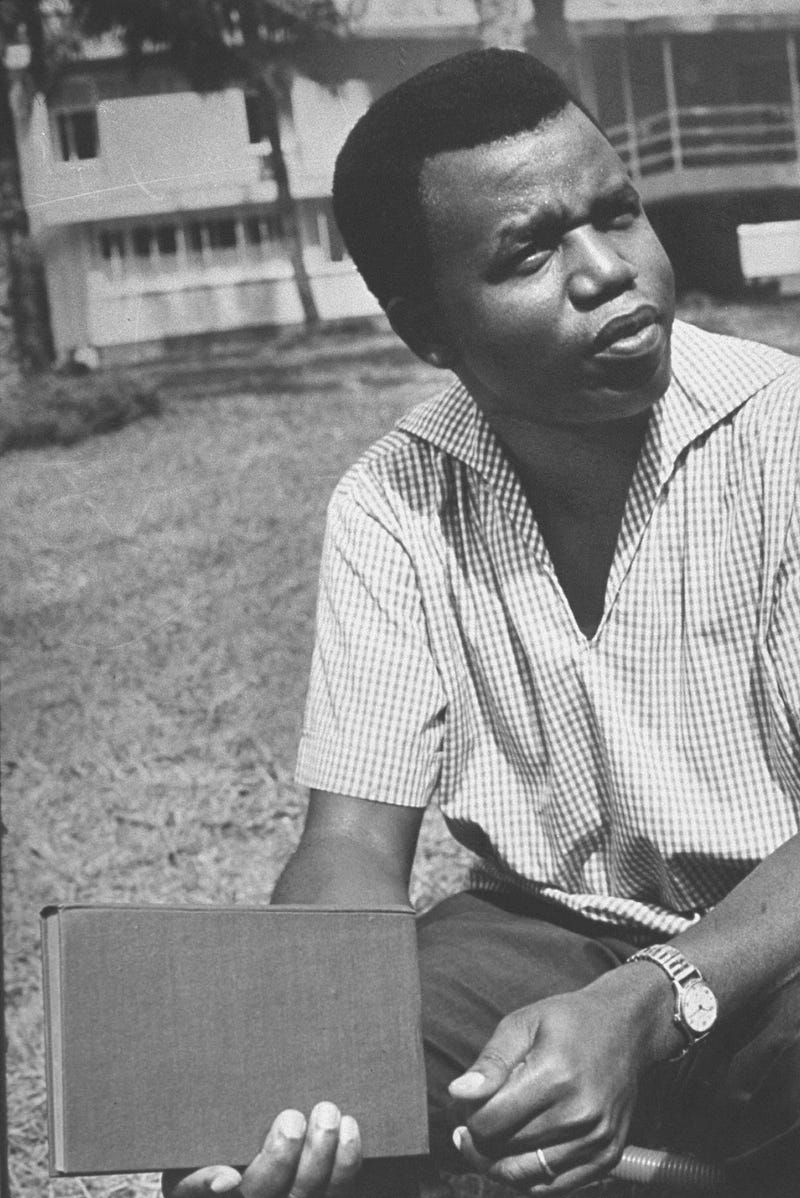

Chinua Achebe was a Nigerian novelist and poet who penned the most widely read book in African literature — Things Fall Apart.
Born in a small, Nigerian village to a teacher and vegetable farmer, Achebe came from a humble background. But this did not prevent him from becoming one of the greatest writers of our time.
Although his native language was Igbo, Achebe wrote his debut novel, Things Fall Apart, in English. This was a political statement. The book was a response to earlier accounts of the colonial experience in Africa — accounts that were written primarily by those doing the colonising.
At the time, the novel was rejected multiple times as publishers had concerns about publishing the work of an African writer. It was eventually picked up by a London-based publisher in the late 50s, but only 2,000 copies were published.
Nowadays, Achebe’s work is taught in schools — a pretty mean feat for a Nigerian boy from a small village.
3. Vladimir Nabokov
“Words without experience are meaningless.” ― Vladimir Nabokov, Lolita
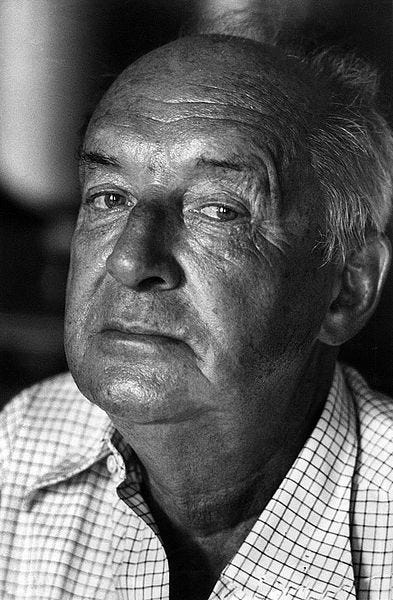

Vladimir Nabokov was a Russian-American novelist who wrote the famous novella Lolita. Acclaimed director Stanley Kubrik adapted the story into a movie in the 60s. There was a later adaptation in the 90s as well.
You may recall the iconic opening lines from the antihero Humbert Humbert:
“Lolita, light of my life, fire of my loins. My sin, my soul. Lo-lee-ta: the tip of the tongue taking a trip of three steps down the palate to tap, at three, on the teeth.”
Those words are poetry and display a command of the language that not many native speakers possess.
Yet, Nabokov was born in Russia in the late 1800s and lived there until his twenties when his family were forced to flee to England. He wrote first in Russian, and only started writing English novels when he was in his 40s and had migrated to the US.
Nabokov had a privileged upbringing but suffered great losses — first, when he lost his native land, and then later when his father was murdered during a right-wing brawl.
Despite this, he managed to leave his mark on English literature with a popular classic and found success with his writing.
Non-native English speakers throughout history have left their mark on English literature. This shows that any barriers to success are only in our own heads. A flourishing writing career in a foreign language is possible — we just have to put in the work and have a little bit of luck on our side.
I’ll leave you with one final thought.
“And by the way, everything in life is writable about if you have the outgoing guts to do it, and the imagination to improvise. The worst enemy to creativity is self-doubt.”
- Sylvia Plath
Sign-up for my upcoming newsletter, The Impactful Storyteller, and learn from my successes and failures as I launch a content writing service for companies that care.