
Three English Grammar Mistakes You Can Stop Making Now
Simple tips to remember the correct way to say and write these commonly misused phrases.
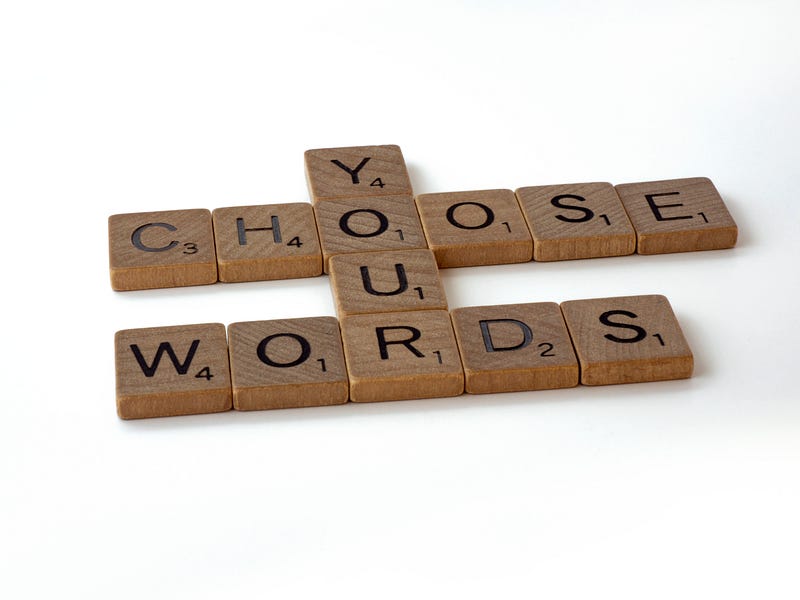
English is sometimes called the hardest language to master. The tricks and idiosyncrasies can be almost insurmountable for a new learner, and even those who have been using it all their lives as native speakers can be easily tripped up by its whims and inconsistencies. Here are a few simple ways to fix some very common mistakes, which will help you seem more confident in your use of English — especially when writing!
“That doesn’t effect me.” / “This had a positive affect on me.”
In the words of Willy Wonka when creepily played by Gene Wilder (as opposed to being even more creepily played by Johnny Depp), “Wait, scratch that. Reverse it.” These homonyms are frequently swapped, as seen above.
Affect with an A is a verb. It means “to act on” or “to move.” A handy-dandy way to remember when to use it is to keep in mind that A is for Action. If you’re using the verb form — action! — use the A version.
Effect with an E is a noun. It means “a result” or “the power and ability to influence.”
The correct way to write these phrases would be, “That doesn’t affect me,” and “This had a positive effect on me.”
“Anyways…”
Good news for typists! You get to leave off one letter, thereby increasing your efficiency and enabling you to work faster. What will you do with all that extra time? The world is your oyster! The sky is the limit!
“Anyways” is a corruption of the proper compound word “anyway,” which means “regardless.” It’s used frequently in verbal communication and in less formal written communication. Though it shouldn’t be confused with the two-word phrase “any way” (more details on the difference can be found at this Grammarly post) it also shouldn’t be artificially pluralized. If you try substituting the word “regardless” when you would otherwise use “anyway,” this can be a good reminder to leave off that unnecessary S. Nobody says “regardlesses.”
Though this colloquialism seems to be largely regionally based, being around people who say “anyways” can rub off on people who grew up saying “anyway.” Ask me how I know!
“I could care less.”
Why does it somehow sound better to say “I could care less,” when in fact that phrase is saying the opposite of what you really mean? What you’re intending to say is that you couldn’t care less.
Let’s break it down.
If zero represents no caring, and ten represents the ultimate measure of caring, and you are somewhere in the middle — perhaps around level five — then yes, you definitely could care less. You could care a whole five points less.
I, personally, could care less if Coke decides to market a new raspberry vanilla flavor. Would I hate it? Absolutely not, but it probably wouldn’t live up to the hype. Therefore, I’m in the middle ground of caring about it. I could care less, sure, but I could also care a whole lot more. So if I could care less, then I do care some. Not a lot, but some.
Conversely, if the New England Patriots decide to change the color of their jerseys, that’s where I couldn’t care less. I am at zero on the caring scale for football jerseys and football teams. It is not logically possible for me to go any lower. (We’re operating on the assumption that the scale doesn’t go below zero and negative levels don’t exist. Bear with me.) There is nowhere to go but up; I could care a whole lot more, if the color of the jerseys started to matter at all to me, but I could not possibly care any less.
Therefore, the proper phrase to use in a situation that involves your complete, detached apathy, like football jerseys (or raspberry vanilla Coke, if you’re inclined in that direction) is, “I couldn’t care less.”
A quick question to ask yourself, if you’re having a hard time remembering which one to say: could I care any less? If so, how much less?
The good news is that if you’ve been using these phrases the wrong way, it’s a piece of cake to change them around and use them the right way going forward. The even-better news is that there’s nowhere to go but up: if you’re trying to polish your writing to seem more professional, you will make a better impression on those you seek to impress in the workplace, the writing world, and even, perhaps, the dating scene. And if no one notices your subtle shifts toward better grammar and sentence structure? Well, it really doesn’t matter in the long run. Clearly, those people couldn’t care less.


