
Three Basic Tools to Help Boost Your Writing
Are you having trouble creating ideas? Or do you find that while the ideas are easy enough, starting the article can be the hardest part? Try going back to the basics.
1. Listen to Your Brain — And Feed It
Your brain is your most important writing tool. Don’t neglect the signals it gives you. If it tells you to write something, pay attention. If it tells you an idea sucks, listen up. If it feels as if your brain is waving to you, it’s either time to pay attention … or time to cut back on the caffeine.
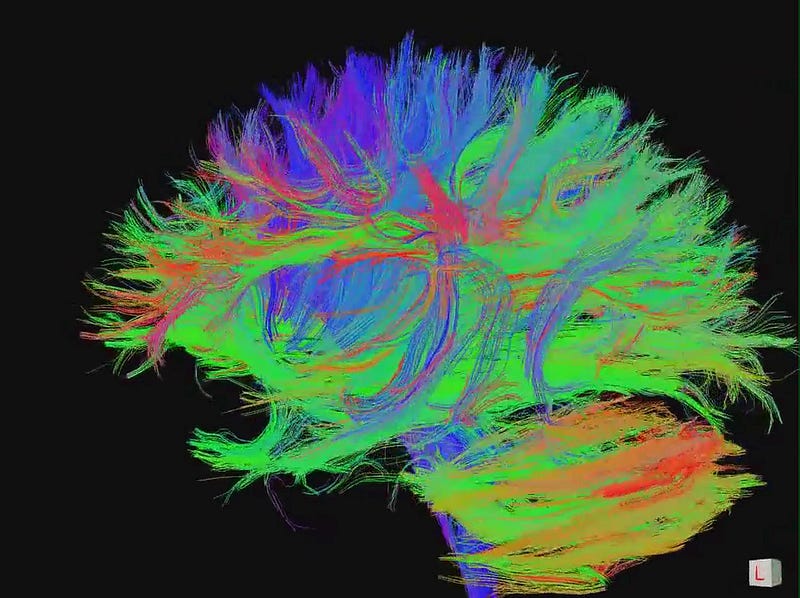
If you’re short on ideas, feed your brain. (Apologies if you hear Grace Slick singing “feed your head” about now.) Keep it active with reading or puzzles or whatever you like.
But give it some quiet time, too. Try doing something monotonous and repetitive. That can give your mind a chance to spread its wings and go wild. Or do something that relaxes you. Meditate. Listen to music. (Yes, even heavy metal can help you relax.) Go for a walk in a garden. Wash your car. Sew or knit. Pet a cat or dog. Paint. Wander about a bookstore if that’s what helps (raises hand).
Try mundane activities, such as dusting. Acclaimed author Ursula K. Le Guin’s schedule included things like “house cleaning.” Did you just envision Ursula K. Le Guin vacuuming her living room and suddenly getting a great idea?

Always be on the lookout for something that will catch the attention of your mind. Read (all sorts of things). Watch the news. Watch movies, viewing them as a writer. If you like an idea, can you think of ways to create an article about it? Can you find a new focus to wrap that idea around?
Once you get an idea, go further if needed. Legendary speculative fiction author Theodore Sturgeon told writers to “Ask the next question.” He symbolized this concept in a logo and in a necklace he wore. Writers still revere the concept today, and it has its own Tumblr blog.
2. Jot Ideas Down
After your brain gives up the bounty, preserve those ideas. Use the technique that works best for you. If you feel weird when you write them down, try something else. If you feel self-conscious when you speak ideas into your phone (raises hand), try something else.
When I’m at my computer, I write down a lot of ideas in Notepad. But what about when I’m not at my computer? Sometimes, I email article ideas to myself.
But let’s go old school. I often jot ideas down on sticky notes. I think of those notes as shopping lists for my mind. I’m not alone in my love of sticky notes.

Several years ago, I attended a talk by domestic thriller authors Greer Hendricks and Sarah Pekkanen, which I wrote about for All About Romance. I learned that when they meet in a hotel room to plot out their chapters, they use giant sticky notes and stick them on the hotel wall.
I’ve been writing ideas on paper for eons. The first writing articles I read urged aspiring authors to keep their ideas in notebooks. I was already doing so on my own. Sure, many of those early ideas are utter crap. But at least I can get a good laugh when I read my old story ideas!
Ever since I started writing for Medium, I went back to scribbling ideas on sticky notes. It prevents them from slipping away from my brain. Sometimes, I’ll store the notes in my pocket. It’s a tactile way of remembering them. The note that said, “Write an article about scarecrows as scary things” (which became Let’s Put Scarecrows Higher on the Creepiness Scale) shared my pocket with a reminder to buy toothpaste.
Then there are those blasted ideas that sprout while you’re driving! Tell me about it! (grump grump)
Do not write down ideas when you are driving. Keep your attention on the road. If you think of an idea while driving it, try to remember it. But safety comes first!
Not all writers are fans of jotting down ideas. Shaunta Grimes reminded us that Stephen King Doesn’t Need a Notebook. It’s Fine if You Do. Stephen King doesn’t keep a notebook, and he thinks other writers shouldn’t use one. As Shaunta points out, we’re not Stephen King. So keep writing those ideas down. (Like Shaunta, I also loved Stephen King’s On Writing: A Memoir of the Craft.)
Most writers learn the hard way to write their ideas down. As Rachel Thompson explains in The Importance of Writing Your Thoughts Down for The Ninja Writers Pub, this is backed by neuroscience. Hurray for neuroscience!

3. Collating Ideas in a Computer File
You can use a basic text editor; your word processor; or the Medium app. Whatever you feel most comfortable with. I like using Notepad because there are fewer distractions. I don’t feel as “committed” to an idea if it’s written in Notepad instead of in a word processor or the Medium app. I can goof around with it.
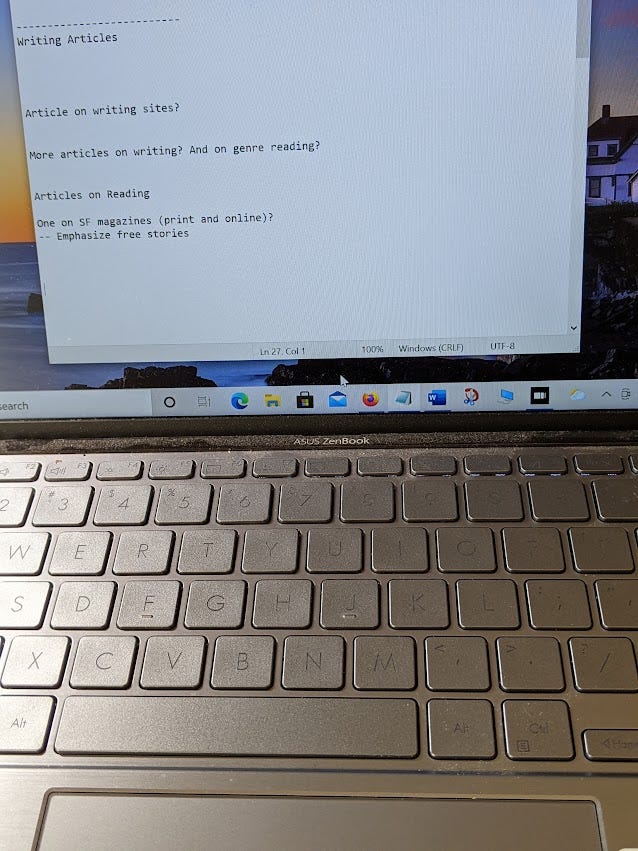
When I started writing for Medium, I created a list of article ideas in Notepad. First, it was just a list of some basic ideas. It became a list of local true crime stories I wanted to tackle (such as the Capital Gazette Shooting) mingled with a few other topics.
Then, I started copying and pasting the links I’d need to include as a source. Typing memories about how locals responded to a true crime case. Realizing I had a lead sentence. Even a paragraph or two. Sometimes, I even typed up a numbered list. (That’s how my article Five Online Sources for Science Fiction and Fantasy Fans to Explore started.)
That’s when I realized my brain was looking out for me. Telling me what to write next. (My brain says, “Duh, Anne!”)
So I started writing my opening paragraphs in my list of ideas. Yes, in Notepad. Sure, there’s no spell check, very little formatting, and no curly apostrophes and quotation marks. But there’s also no commitment. I don’t have to start a new article and give it a title. I can start typing in my file of ideas.
If it works out and feels right, I know it’s ready. I think of a title (sigh) and add that. Then, I copy and paste the text into my shiny new article; add formatting; correct my typos; and get out the curler for all those apostrophes and quotation marks. Before long, I have a great starting point. The rest of it will come.
Postscript
In the end, use what works for you. Don’t torture yourself if something doesn’t work. Never forget to have fun!
Affiliate Link Note: The links in this article may include affiliate links for books and other products at Amazon. If you purchase something on Amazon after clicking one of these links, I’ll earn a small percentage of the purchase from a qualifying purchase.
If you like my stories, or if you want to read more stories by authors like me, please click here to upgrade to full membership. This is an affiliate link, meaning I receive a financial incentive for new referrals.