
Thoughts on Belonging
Or, how to foster a sense of place
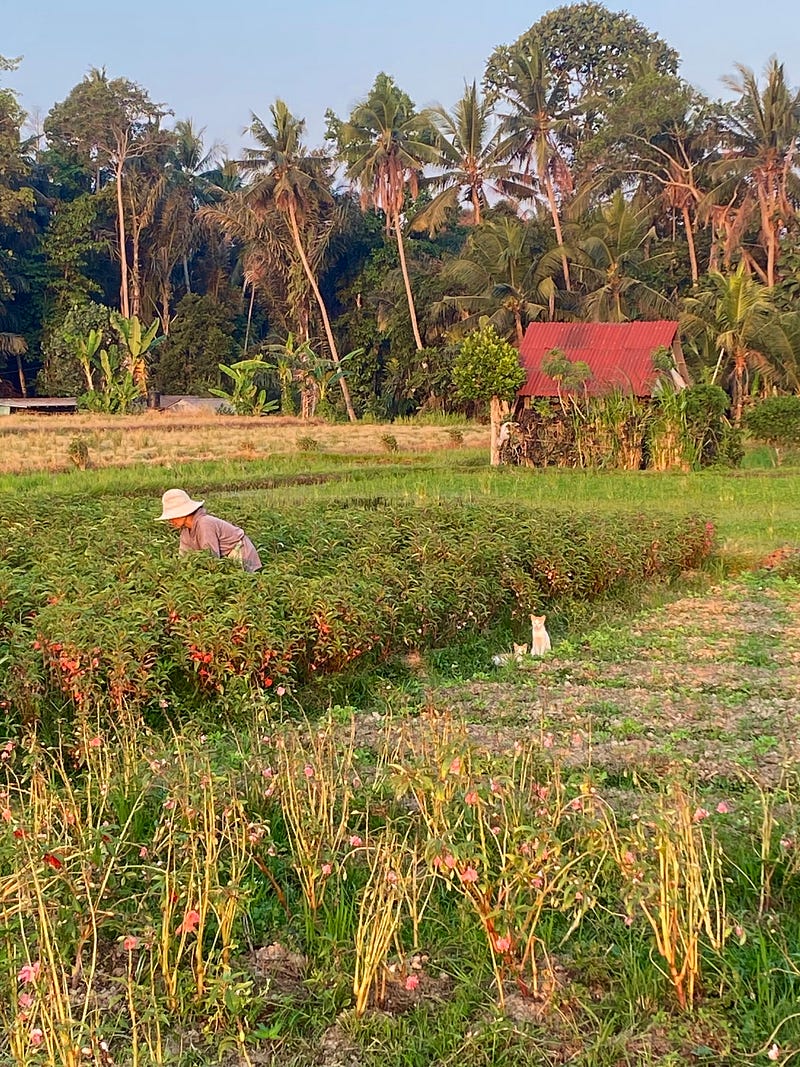
I had to move to the other side of the world to understand something important: That belonging isn’t interlinked with a physical home, that belonging is a matter of relations and deeply felt bonds to other people, of kinship, that belonging is connected to a sense of place, and that belonging is a crucial part of human well-being.
I always had a need to shake up the norm. To explore various different ways of living — as an individual and as a family. What is the perfect work-life balance (and how do I stay passionate about my work)? What can a home be and look like (and how little can it consist of?) What can community-living be like, feel like, look like — how far can you take the concept of community? (I have lived in an off-grid bamboo village with my family for half a year, with no walls and no doors — and that became a little too communal to my liking). What constitutes a fulfilling friendship? What do nourishing daily routines consist of — and are routines essential to feeling at home, or to feeling a sense of belonging? And how should family life be structured in order to be fulfilling for all family members?
It appears that in order to experience the coveted sense of belonging all of these questions must be answered and complied with. So, belonging is interlinked with family-life, friendships, community, work, but also with one’s physical home or with what we could call one’s ‘sense of place’.
A physical home per se, however, is not enough to feel like you belong. Not even a really, really nice and comfortable one. It can, for a while, fill you up, nourish your senses and make you feel safe and comfortable, well, even inspired and aesthetically content. But after the initial “honeymoon” phase the feeling of contentment interlinked with this kind of physical belonging tends to vanish. It will start as boredom, turn into a despairing feeling of loneliness, and develop into a dark and unsettling sense of living in a very beautiful and comfortable prison with no connection to the surrounding community and society.
That, of course, isn’t sustainable.
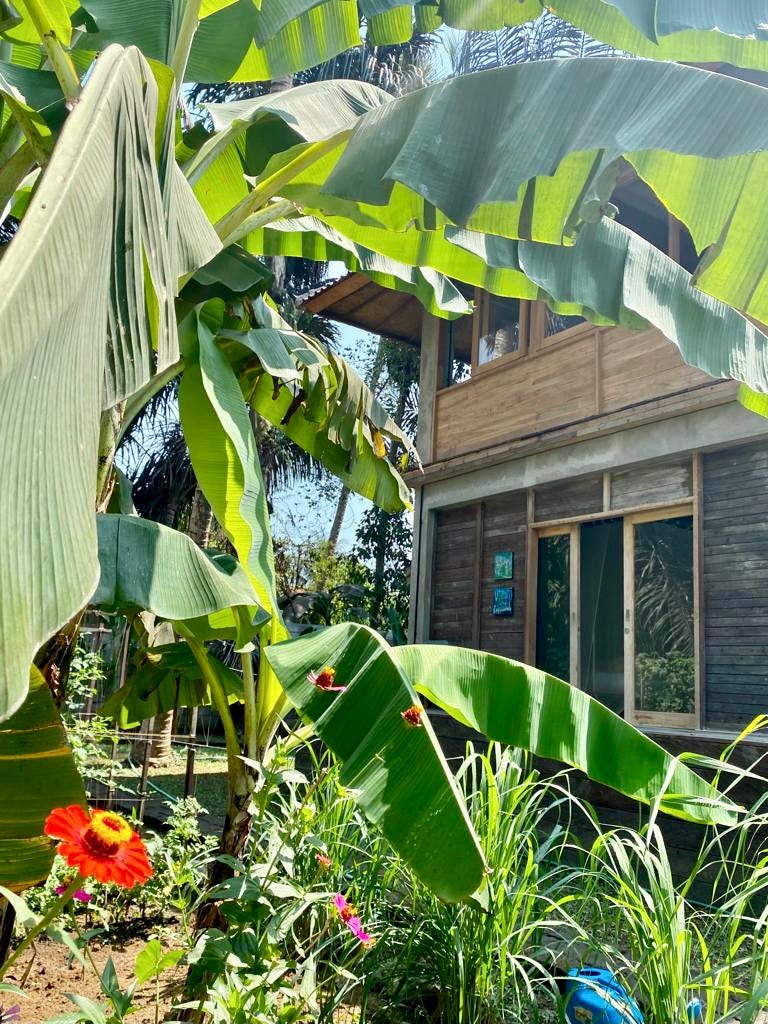
One way of overcoming the sense of loneliness that a lack of belonging leads to is fostering a sense of place by grounding oneself — in a physical matter, that is. Almost like trees we humans need to nurture our roots too. Our roots can be spiritual and/or emotional, or they can be physical. As in getting one’s shoes off and walking barefooted through the soil — as well as interacting with and nourishing the soil; gardening, making things grow, literally getting one’s hands dirty.
I lived in large cities the majority of my life. But I always felt intrigued by gardening, by planting something and watching it grow. There is something so simple and beautiful about it. My previous lifestyle, however, didn’t allow for that kind of stuff. I did try out engaging in a communal urban garden once, but it became mostly about our kids playing and us adults drinking beers around the bonfire on summer nights (which actually felt as a very nourishing yin to my busy urban yang at the time).
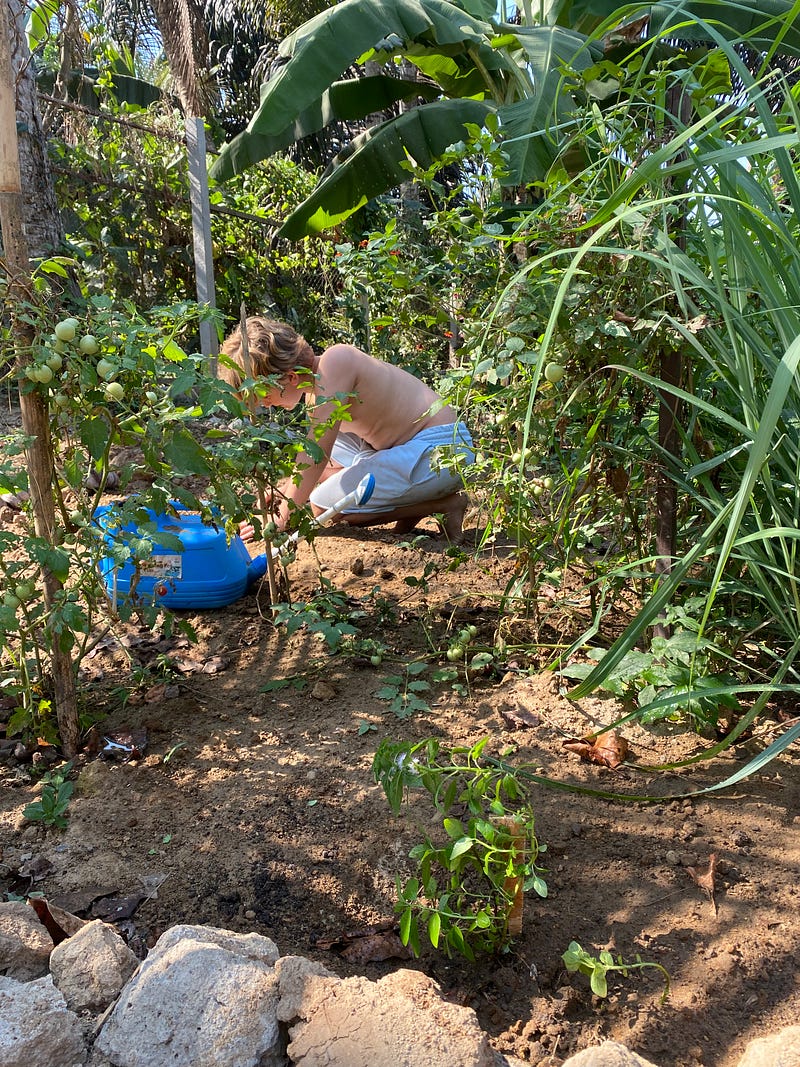
However, when I moved to the other side of the world. To a climate that allows for outdoors, barefooted activities all year around, I felt the longing for the soil once again. As if my roots were screaming for a solid base.
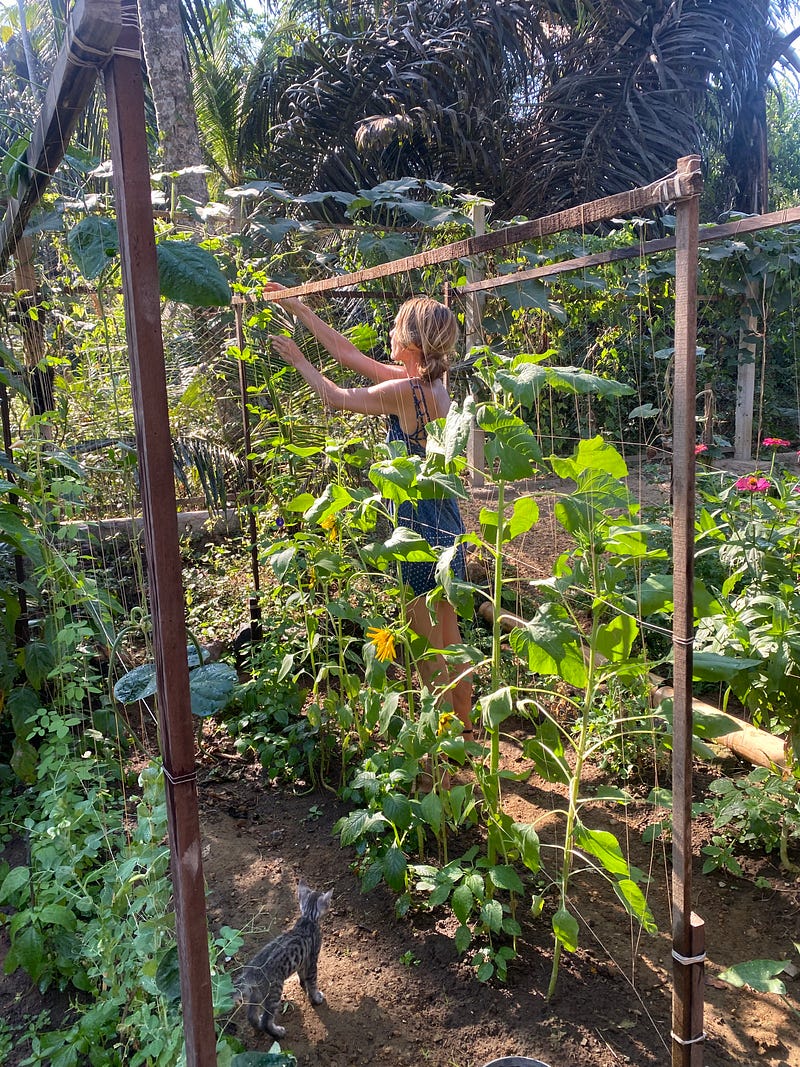
And so I began gardening. A total amateur at it of course. But gosh how good it felt.
The alienation I initially felt when I came to this place — that in every way is different from my motherland — seemed to vanish once I got my hands (and feet) in the soil. Why? I am still not quite sure. But there is something about the mentioned ‘sense of place’ that seems to be more than a metaphysical feeling — and rather about being closely connected to the land, to the soil, to the plants and the atmospheric changes around us.
The American poet and environmental activist Gary Snyder claims that there are now many people on this planet who are not inhabitants. This is his way of describing the late-modern rootlessness and despair. According to Snyder a sense of belonging is interlinked with the spirit of a place, and the spirit of a place is only accessible through direct relation to the land. Know the plants is his mantra and has led his involvement in the Back-to-the-land-movement.
And, as I have lived this over the past years, I must say that I agree. When you really know the plants, you are beginning to get a sense of a place, a sense of what is possible and a sense of how to harmoniously live there.
“Reinhabitory refers to the tiny number of persons who come out of the industrial societies and then start to turn back to the land, back to place. This comes for some with the rational and scientific realization of interconnectedness and planetary limits. But the actual demands of a life committed to a place, and living somewhat by the sunshine green-plant energy that is concentrating in that spot, are so physically and intellectually intense that it is a moral and spiritual choice as well.” Gary Snyder, ‘Reinhabitation’
Another way of overcoming the dark sense of despair and loneliness interlinked with not belonging is to foster meaningful relations to other people.
However, this can be a very lengthy process and furthermore a complicated one. Because not only does it require a value-based community of like-minded people, it also requires commitment, trust, and time. And on top of that, it requires an unspoken agreement on how preferred inter-human interaction takes place (this sounds awfully technical, but please follow me here): Do you prefer to be together with others in big groups, or do you feel more comfortable in one-on-one relations or in small social gatherings? Do you have the need for frequent, light interactions, or do you prefer to socialize less often but more intensely or profoundly?
Unfortunately I don’t yet hold the answers on how to conquer these dilemmas, or rather how to communicate my preferences. For now, my sense of place is primarily interlinked with the soil that my feet are getting more and more rooted in, the plants that grow around me, and particularly, the children I am raising and to whom creating a solid, stable home base is essential.
Feeling connected to other people is not determined by culture — by where you are from or where you grew up. On the contrary. Well, at least that is my experience. However, at times a silent understanding or a knowing can characterize the relationship you have to people who have similar backgrounds as you: who grew up in similar neighborhoods with similar societal norms in families with similar cultural capital as you. Not always, but sometimes these things do seem to matter. They can foster a special kind of recognition that can ignite a sense of belonging.
I think all people who have moved far, far away from their home country know this feeling. The feeling of meeting compatriots and experiencing a kinship with them. Especially if they have made similar life choices (and hence, due to similar value-based decisions have ended up far away from home).
I miss my close friends in my home country very, very much. It is a longing that is determined by all of the time we have given to each other — the hours, the days, the years of talking and spending time together — and the intimate understanding we have of each others’ lives and relations. But there is also a part of me (perhaps my inner nomad that was recognized by a long-bearded desert shepherd with intense dark eyes and an incredible indigo-blue Tuareg scarf around his head in Morocco years back, who looked at me for a bit longer than what felt comfortable, and said, with an acknowledging nod: you are a blue-eyed berber woman) that loves the transience of people coming in and out of my life. Like the waves in the ocean.
A sense of belonging doesn’t arise out of staying put — it isn’t synonymous to stagnation. On the contrary. And, as Gary Snyder writes in the previously quoted article: Inhabitation does not mean “not traveling.”
I guess belonging is a matter of finding the perfect balance. Between stability and transience, between long-term relations and short-term ones, between light easygoing encounters and profound dialogues, between groundedness and flexibility, between sameness and diversity, between traditions and rewilding. And furthermore it’s a balancing point between growing one’s roots and being able to establish a foundation for them in new lands if necessary.
I belong. Right here. Right now.
Maybe this feeling will alter in the future. But right now, this is where my journey has taken me, and where I belong.
Let’s connect! https://www.instagram.com/the_immaterialist/