
Thought-Provoking Children’s Books With Life Lessons
Children’s books contain some of the most profound and philosophical life lessons.
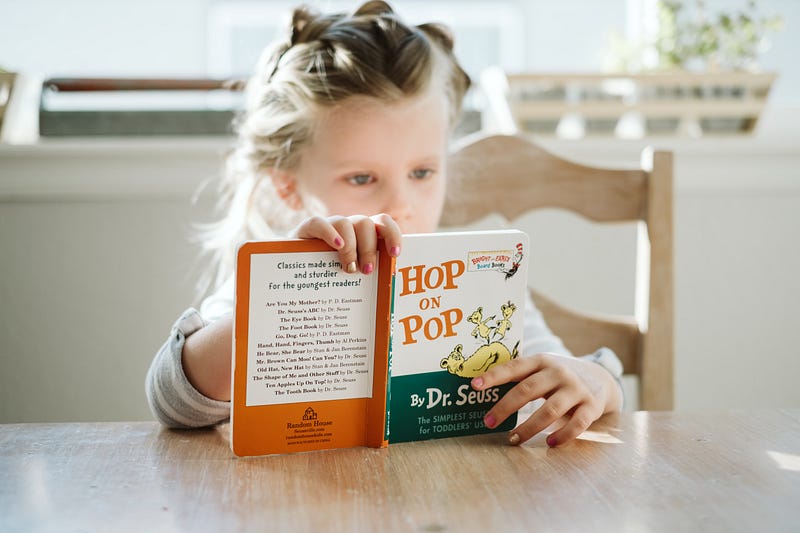
Even though I am considered “too old” for children’s books, I get drawn to the fun stories that fill the colorful and vibrant pages. Classic children’s books inspire old and young readers alike to get creative and make a change.
In a day and age where there is a fight for change for issues such as racism and climate change, children’s books give a new perspective to adults and are thought-provoking on such issues. Besides, they contain some of the most profound and philosophical life lessons. Therefore, reading children’s books is as important for kids as for adults.
“I do believe that something very magical can happen when you read a good book.”
-JK Rowling
These books were some of the best I have come across and have had deep and important messages for their readers. Not only have these children’s books been thought-provoking but they have taught me valuable life lessons that I will forever cherish.
“The Dot” by Peter H Reynolds
Peter H Reynolds wrote a story that illustrates how a single action by a teacher helped a child unlock her creative potential.
Reynolds wrote about a girl named Vashti, who wasn’t confident that she could draw. Out of frustration, she made a single dot on her white sheet of paper. Her teacher framed her dot for the whole class to see. This motivated Vashti to make big dots, small dots, pink dots, purple dots, and every type of dots she could, leading her on a journey of growth and becoming more confident.
“Just make a mark and see where it takes you.”
Don’t doubt yourself or your abilities before you even get started. Start by trying. We often let the fear of exploring the unknown stop us from even getting started, but you will never know what you are missing out if you don’t even start.
Doubting your capabilities is crippling. Address why you are doubting yourself. This can give you more reasons to ignore the doubt and push forward.
“Let’s Talk About Race” by Julius Lester
Julius Lester wrote a honest and beautiful book about race, and how underneath our skin, everyone looks the same.
“I am so, so, so many things besides my race. To know my story, you have to put together everything as I am.”
Lester talked about how other factors such as neighborhood, school, gender, or financial status can make humans judgemental.
Race doesn’t define a person. Beneath our skin, everyone looks the same. Driving a better car, living in a bigger house, or having a certain skin tone doesn’t make you better than me.
The current racial tensions in the United States and around the world are existing because someone decided to judge a person by the color of their skin.
“The Giving Tree” by Shel Silverstein
Shel Silverstein is known for writing poetry and literature for children and is one of my most favorite poetry authors.
In “The Giving Tree”, Silverstein wrote about the relationship between a boy and a tree. The tree loved the boy and gave everything it had to make the boy happy. The boy grew up and became a man, the tree gave the boy what he wanted. The boy grew old, the tree gave the boy what he wanted.
The tree was selfless. It gave and gave until it didn’t have anything left to give. She never expected anything in return for what she had sacrificed.
Being selfless within your capabilities is extremely powerful. Being altruistic seems like a quality that is becoming less common, and that is what makes having that trait so powerful.
“The Giving Tree” not only had a lesson on selflessness, but it also had a message about gratefulness. The boy visited the tree only when he needed something. First, it was a place to play, then it was money, and so on. The boy was not grateful for what the tree gave him. After he got what he wanted, he quickly forgot about the tree.
Being grateful for what you have and what others have given you produces a much more meaningful life. You will appreciate what you have than dwell on what you don’t.
“Have You Filled a Bucket Today?: A Guide to Daily Happiness for Kids” by Carol McCloud
Everyone is carrying around invisible buckets. The actions of you and others around you determine how full your bucket is. If your bucket is full, you feel happy and if your bucket is empty you feel sad or lonely.
Author Carol McCloud highlights in her book the importance of filling the buckets of others. When you fill others’ buckets, you fill your own as well. Any small, positive gesture such as a smile fills others’ buckets. A negative gesture results in you dipping into others’ buckets. When you dip into another person’s bucket, you cannot fill your own.
One receives happiness in return when they give happiness. To see someone smile and make a positive impact on them is truly something to live for. Even scientific studies have suggested that you feel happier when you make others happy.
It is as simple as ‘you get what you give.’ You are going to receive what you put out into the world.
“Lorax” by Dr. Suess
Dr. Suess is one of the most well known and respected authors of the children’s book industry.
Ted lived in a world with no nature. He wanted to win the heart of a girl, so he embarked on a mission to find a Truffula tree. This led him to Lorax, a greedy capitalist who destroyed the environment for profit.
Dr. Suess wrote “Lorax” which addressed the critically important message that if one does not take care of the environment, our world will look like the world Lorax created.
Take care of the environment. A clean environment is essential for healthy living. Our ecosystem cleans the water, air, and provides us with food.
This is the only home that humans have and it is crucial that we protect it by being environmentally-friendly. Take initiative and start recycling. Many people are going the route of the “Zero Waste Lifestyle.”


