Summary
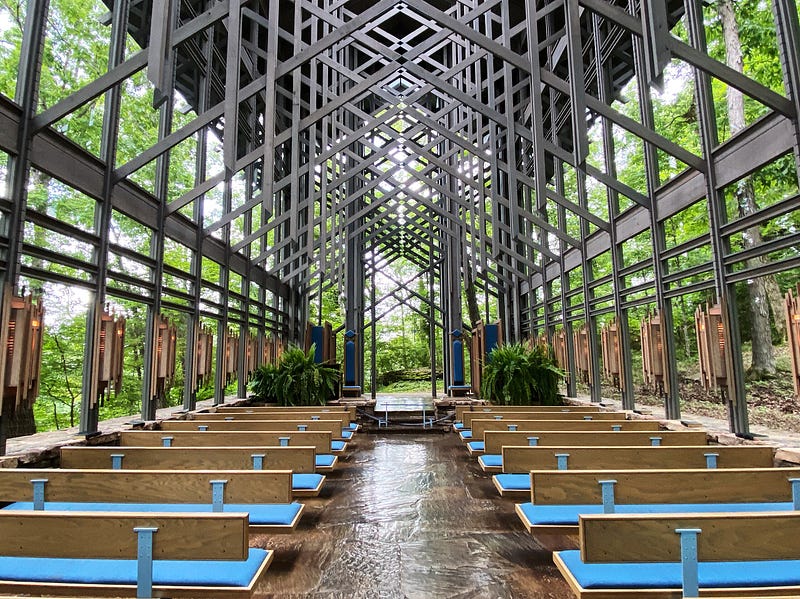
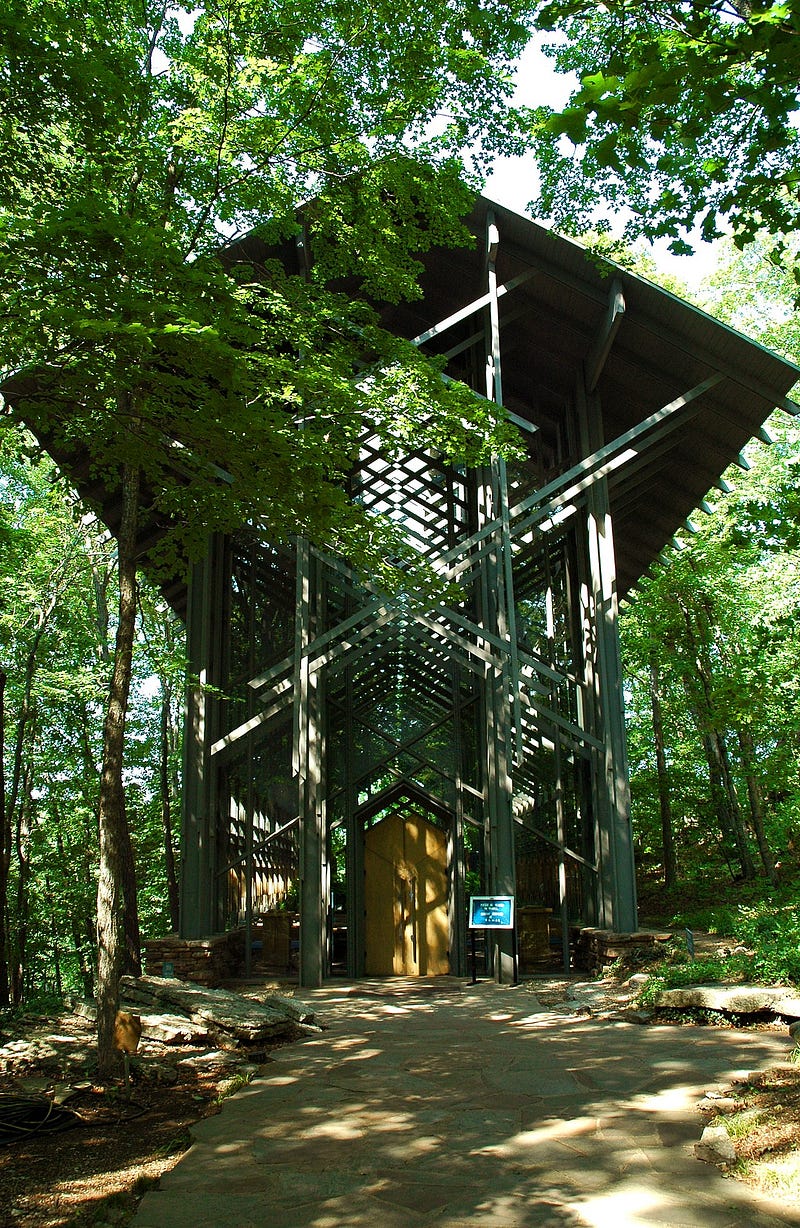
Thorncrown Chapel, a non-denominational sanctuary nestled in the forests of Eureka Springs, Arkansas, offers a serene space for meditation and spiritual reflection, embodying a harmonious balance between architecture and nature.
Abstract
The Thorncrown Chapel, designed by E. Fay Jones and completed in 1980, stands as a testament to non-denominational spirituality, providing a tranquil retreat for meditation and contemplation amidst the serene forest surroundings. The chapel, commissioned by Jim Reed, represents a departure from the rigidity of organized religion, offering a peaceful alternative for those seeking a more personal and nature-infused spiritual experience. Its existence challenges the conventional notion of "God in a box" by fostering an environment that encourages continuous spiritual engagement rather than weekly rituals. The chapel's design and setting resonate with the author's own spiritual journey, away from an unkind and unbending religious upbringing and towards a more hopeful and kindly disposed form of spiritual guidance.
Opinions
- The author perceives traditional religious practices as confining, with a tendency to control rather than guide.
- There is a critique of the perfunctory nature of weekly church attendance, which the author views as a superficial and temporary engagement with spirituality.
- The chapel's design and location in the forest are seen as a physical manifestation of the author's personal spiritual ideals, offering peace and tranquility.
- The Thorncrown Chapel is viewed as a sanctuary that promotes genuine spiritual experiences, free from the constraints of dogmatic religion.
- The author finds solace and a deeper connection with the divine through the natural setting of the chapel, emphasizing the importance of nature in spiritual practice.
- The chapel symbolizes hope for the author, representing the presence of individuals dedicated to guiding others with kindness and without exerting control.