
Thomas Beatie: From Pregnant Man To Trans Activist
What a man getting pregnant means to a woman who can’t
Welcome to TRANSlating Everything, a newsletter covering pop culture, news, politics, and the science of storytelling through the lens of a cool trans mom. You can support my work by leaving a tip or choosing a paid subscription to Translating Everything on Medium or Substack.
Y’all know men can get pregnant, right?
We’ve come a hell of a long way since 2008
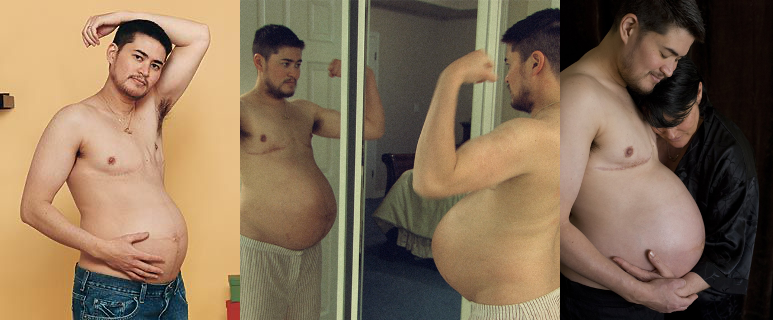
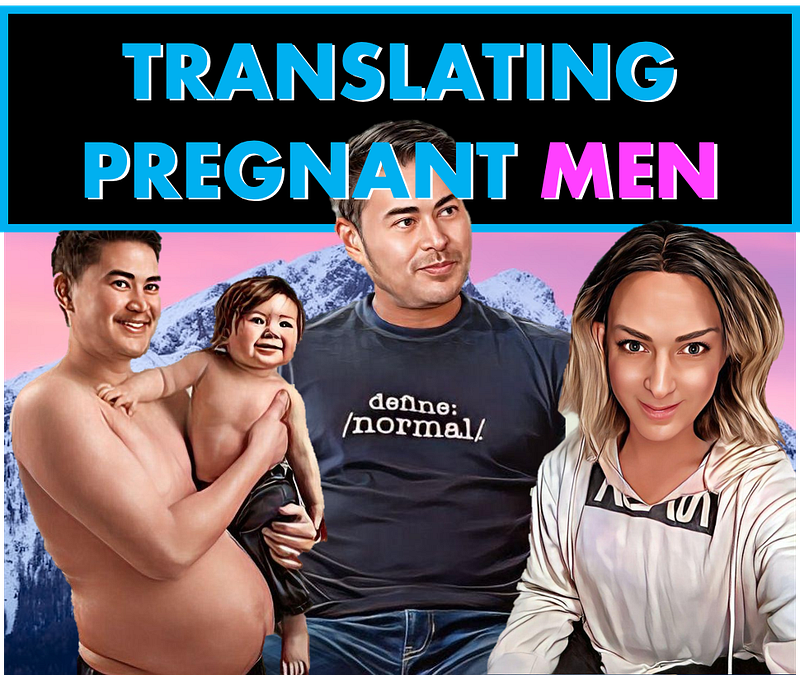
In 2008, Thomas Beatie became an international sensation as a trans man pregnant with their first child. They weren’t the first man to give birth, but suddenly, they were the most famous.
In the months leading up to the birth of their first child, Beatie wrote a heartbreaking essay for The Advocate, saying:
“Doctors have discriminated against us, turning us away due to their religious beliefs. Health care professionals have refused to call me by a male pronoun or recognize Nancy as my wife. Receptionists have laughed at us. Friends and family have been unsupportive; most of Nancy’s family doesn’t even know I’m transgender.”
The essay kicked up a firestorm that led to him speaking to no less than Oprah. In that 2008 interview, Thomas Beatie shared the same yearning for children that I couldn’t satisfy until I found my wife and daughter.
“It’s not a male or female desire to want to have a child […] it’s a human desire […] I’m a person, and I have the right to have my own biological child.”

What changed for Thomas Beatie from 2008 to 2021
Beatie’s father, of Korean and Filipino descent, raised Thomas in Hawaii. They could never have guessed Thomas would one day be a legendary trans activist. Beatie’s example shows us just how far trans representation can come if we empower each other to be strong in different ways.
In 2021, Thomas Beatie caught up with NBC’s senior lifestyle reporter Rheana Murray, revealing all that had happened since they’d continued to expand their family while getting remarried.
“When my story came out, there wasn’t a single person in the public eye as a transgender man — most people had never heard of it. It was a first exposure for a lot of people. And then on top of that, they can give birth! I think exposing the importance of fertility for trans people was a huge eye-opener.”
Some women can’t get pregnant. Fortunately, lots of men can.
As a woman without the ability to get pregnant, I faced similar questions about my identity vs external manifestation of that identity.
My family raised me to feel ashamed about letting anyone see that I was a woman. They forcibly converted me into the closest kind of boy they could. Under God’s orders, they tried to turn me into a copy of my twin brother.
Living in the fear that had been abused into me since before birth, I spent the next thirty years going to extraordinary lengths to hide that I was a girl.
That I had always been a girl.
And yet my body reminded me each day that it didn’t match my expectations.
“I think a lot of people are still pigeonholed, thinking that if you want to be transgender, you have to completely get rid of all your (reproductive) organs,” Beatie said. “There needs to be discussions about fertility, preservation. Being transgender, you shouldn’t have to lose your right of having a family. You’re entitled to be happy and have a family and be respected.” — Thomas Beatie
I found my greatest freedom from self-imprisonment by completing the Gender Identity Workbook by Dara Hoffman-Fox. In it, Dara posits: what would you accept about yourself if it had nothing to do with your gender?
“What do you like about how you’ve lived your life? What would you wish you could have changed? Do you project jealousy or anger toward people because of their gender? If so, why do you do this?”
Are you an asshole toward your own gender?
Page 164 of the workbook lists lots of stuff that might be motivating a person’s transphobia toward anyone they perceive as transgender (including ourselves!).
- Sexual orientation questions
- Childhood trauma and/or influences
- Mental illness (diagnosed and undiagnosed)
- The influence of learned gender stereotypes
- Physical discomfort with your gender
- Mental and emotional discomfort with your gender
- Social discomfort with your gender
- A sense of dislike toward certain genders
- A preference for certain genders
- Internalized transphobia and/or homophobia
- Personality traits
- Religious/spiritual influences
Just so, it was hard for me to explore what motivated me to pretend to be a man for so long. The answers weren’t hard. What was impossible was how unsafe I felt confessing everything that had contributed to my terror of being trans.
Once I did, the things that made me afraid I didn’t count as a woman didn’t matter so much to me anymore. Most cisgender people transition, too. They just don’t know it because their obstacles to gender affirmation aren’t so outside the norm that they’re labeled as something other than cisgender.
The future of pregnant people
Recent research into kids 3–12 years goes even further than this. A lot of kids only use binary gender labels because the adults around them insist on it. But when researchers asked the kids what labels they would use, their answers revealed that the future will be exponentially gender non-conforming.
[W]hen we asked children how they identify, a few transgender and cisgender children identified as something other than the gender aligning with their current pronouns.
Had we used children’s self-categorizations of gender to divide our groups, for example, into boys, girls, and people who prefer a different term, these categorizations would likely have resulted in groups that cross our boundaries of cisgender and transgender. How this approach might impact findings is unknown and has implications for an ongoing discussion on how gender identity should be assessed in research.
If I count, then so do you
Being a woman doesn’t have anything to do with being able to get pregnant, just like being a man doesn’t have anything to do with whether you can get someone pregnant.
If I count as a woman even though I can’t get pregnant, so do the cisgender women who can’t conceive.
If I count as a woman even though my body can’t menstruate, so do the other cisgender women who can’t menstruate.
If I count as a woman who can’t produce her own hormones, so do the cisgender women who need gender-affirming hormone therapy.
If I count as a mom who married into it, so do all of the other women.
I love my wife. I love my daughter. I love our fur babies.
Whether you’re a pregnant man or a non-binary uncle, I hope all of you discover the found family that helps you complete the place you call Home.
Men can wear dresses. Men can have genitals with the shape and function of a lot of women’s genitals.
And some men? Some men can get pregnant.
See also: TRANSlating That Time Arnold Schwarzenegger Showed What Happens When Men Can Get Pregnant
The end (of the article)…but the beginning of the fun!
Fun fact 1
Before he could get remarried, Thomas Beatie set gender non-conforming history again when the court debated for years whether to grant their divorce.
The basis? The judge said that since Thomas had retained the organs that allowed him to give birth, he didn’t count as a man. And since Arizona law at the time forbade same-sex marriage…
Summarized from Wiki:
The Beatie case was the first of its kind on record, where a documented legal male gave birth within a marriage to a woman, and the first time a court challenged a marriage based upon a husband’s giving birth.
Despite medical testimony stating otherwise, Judge Gerlach did not consider gender identity, hormone treatment, and chest reconstruction as a valid sex-change surgery, as grounds for successful gender transition. “If adopted, (it) would lead to circumstances in which a person’s sex can become a matter of whim and not a matter of any reasonable, objective standard or policy, which is precisely the kind of absurd result the law abhors.”
At the time, Arizona did not legally recognize same-sex marriage, so if Beatie were found to be female according to Arizona statute, the ten-year Beatie marriage would not be recognized in that state.
The court refused to recognize him as a man if he had also given birth. But if the court refused to recognize him as a man, that meant the marriage was between two women. But if the marriage was between two women, the state did not recognize the marriage as valid. But if the marriage had never been valid…
In 2014, an Arizona Appeals Court declared that the marriage of the Beaties was valid and therefore they can get divorced, stating that Beatie should not have had to be sterilized in order to be legally recognized as a man in Arizona or Hawaii.
Like the saying goes, transphobia is a solution in search of a problem.
Fun Fact 2
As reported by the Advocate, the Beatie appeals court decision granting their divorce came mid-August 2014, a week after the California Superior Court ruled that the marriage of Jake Miller — better known as Buck Angel, — and Elayne Angel was valid.
“In an effort to avoid having to pay Buck spousal support in the divorce, Elayne advanced the argument that the marriage should never have been legally recognized on the grounds that Buck’s birth certificate was not updated until after they were married. The Superior Court disagreed, ruling that Buck’s gender — and by extension, marriage — is legitimate and should be legally recognized.”
Fun Fact 3
Thomas Beatie’s first birth was documented in the BBC Select series The Pregnant Man, available for streaming here.
About Stephenie Magister

If you like my work and want to support it, buy me a cup of coffee! For more of my content, subscribe to my Substack newsletter: Translating Everything


