
This Terrible Father Inspired World’s First Programmer
Ada Lovelace was born into a world where her father’s name evoked both awe and scandal. Lord Byron, one of the greatest poets of the Romantic era, carved the path for Ada’s immersion into the fields of mathematics and science — becoming the world’s first programmer and laying the foundations for modern computing.
Lord Byron, born George Gordon Byron in 1788, emerged as one of the leading figures of the Romantic Movement in early 19th-century Britain. Renowned for his brilliant poetry, Byron also became infamous for his extravagant lifestyle and numerous controversies.

However, Byron’s personal life, marked by debt, numerous love affairs, and a scandalous separation from his wife, led to his self-exile from Britain in 1816, never to return. The marriage between Lord Byron and Anne Isabella Milbanke in 1815 was fraught with complexity from the start.
Despite initial hopes of Milbanke’s stabilizing influence on Byron, their union was turbulent, characterized by his infidelities and financial recklessness.
Born on December 10, 1815, Ada Byron, who would later be known as Ada Lovelace, was the only legitimate child of Lord Byron. Just weeks after Ada’s birth, Byron penned the poem “To Ada,” a gesture that hinted at a nuanced mix of affection and apprehension.
The marriage deteriorated rapidly, culminating in separation just a year after Ada’s birth. Byron left England, forever estranged from his daughter. Ada’s upbringing, therefore, was shaped in the absence of her father’s direct influence. Anne Isabella Milbanke, henceforth, took charge of Ada’s education, ensuring that her daughter was tutored in areas far removed from the poetic and often chaotic world of her father.
This decision set the foundation for Ada’s future contributions to computing and mathematics, steering her path distinctly away from the literary legacy of her father. Byron’s absence in Ada’s life, while profound, inadvertently paved the way for her to pursue a field that was, at the time, unconventional for women, marking the beginning of her journey as a pioneer in what would become computer science.
A Prodigy in the Making
Ada’s mother was acutely aware of the potential impact of Lord Byron’s scandalous legacy on their daughter.
Determined to avoid any semblance of moral or intellectual downfall that she associated with Byron, Milbanke focused Ada’s education on the rigorous studies of mathematics and science. This was a deliberate attempt to cultivate a disciplined mind, far removed from the perceived waywardness and emotional turmoil of Ada’s father.
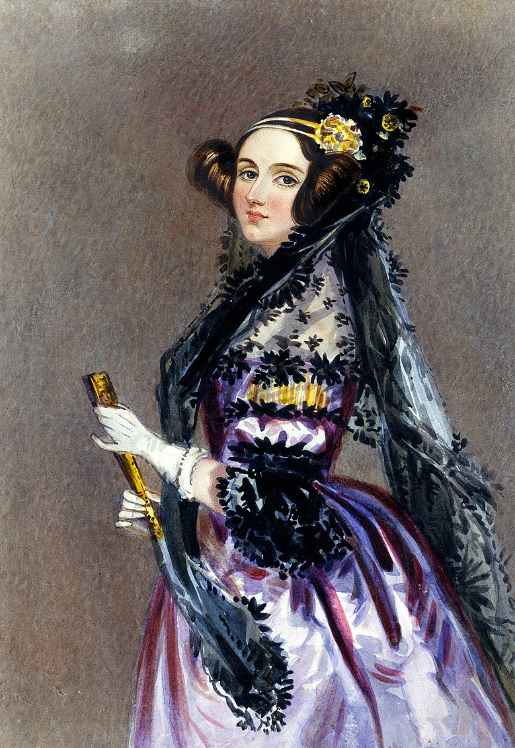
A key figure in Ada’s intellectual development was Mary Somerville, a renowned scientist and mathematician of the era. Somerville, recognized for her work in astronomy and mathematics, became an informal mentor to Ada. The encouragement and guidance provided by Somerville played a significant role in fostering Ada’s burgeoning talents.
Her intellectual path was significantly shaped by her mother’s influence, which ensured Ada’s access to some of the most distinguished tutors of the time, including Augustus De Morgan, a leading mathematician. Under the tutelage of these mentors, Ada honed her skills, laying the groundwork for her later contributions to the field of computing.
The educational environment crafted by Milbanke, enriched by the mentorship of figures like Mary Somerville, was instrumental in Ada’s development. It provided a foundation not just in the hard sciences but also encouraged Ada to think innovatively, blending her mathematical abilities with a creative approach that would later define her work on Charles Babbage’s Analytical Engine.
This blend of rigorous training and innovative thinking set Ada apart, enabling her to conceptualize the first computer program long before the advent of modern computing.
The Fruits of Absence
Lord Byron’s absence had a profound psychological and emotional impact on Ada Lovelace’s life.
Growing up without her father, Ada was left to navigate the legacy of a man more myth than reality, known to her through society’s eyes and her mother’s narrative. This absence likely instilled in Ada a deep-seated need to connect with the father she never knew.
In the 19th century, societal expectations for women were predominantly limited to the domestic sphere. Education for women was often superficial, focusing on “accomplishments” meant to enhance their marriage prospects.
Ada’s deep dive into mathematics and science not only defied these gender norms but also positioned her as a pioneer in fields dominated by men. Her decision to pursue these subjects was in stark contrast to the expected roles of women of her class and time, highlighting her exceptional determination to break free from societal constraints.
Ada’s awareness of her father’s illustrious but troubled legacy may have fueled her drive to achieve distinction in her own right, particularly in a domain as distant from poetry and literature as possible. This divergence could be seen as both a rebellion against and an homage to her father’s genius. By excelling in mathematics and the emerging field of computer science, Ada carved out a unique identity that both connected to and starkly diverged from Byron’s.
Her accomplishments in such a male-dominated realm underscored her exceptional intellect and determination, attributes that allowed her to transcend the shadow of her father’s reputation and make an indelible mark on history in her own right.
Contributions to Computing
Ada Lovelace’s most significant contribution to the field of computing emerged through her partnership with Charles Babbage, who proposed the Analytical Engine, a mechanical device intended for general-purpose computing. Ada became involved with Babbage’s work in the mid-1830s, intrigued by the possibilities of his designs.
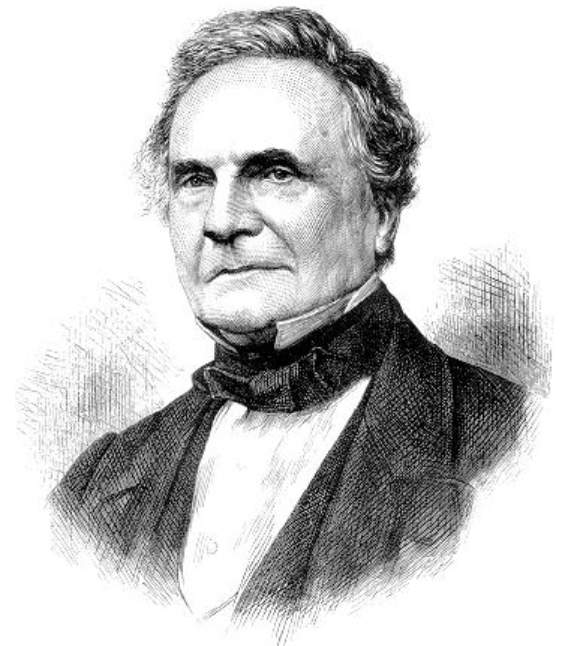
In 1843, Ada Lovelace made her most notable contribution by translating an article on the Analytical Engine, written by the Italian mathematician Luigi Menabrea, and appending her own notes, which were three times the length of the original document.
In these notes, Ada outlined the potential of the Analytical Engine to go beyond simple numerical calculations to perform any operation that could be logically represented. She envisioned a machine that could manipulate symbols in accordance with rules and that had the capability to be programmed with punched cards, an idea that predated modern computers by over a century.
Ada’s most celebrated achievement was her algorithm for computing Bernoulli numbers, considered the first computer program.
The significance of Ada’s work in the 19th century cannot be overstated. At a time when the potential of computational machines was barely recognized, Ada foresaw the impact such devices could have on the world. Her vision of computing extended beyond the mechanical arithmetic of her day to a future where machines could contribute to various fields of knowledge. Ada’s contributions laid foundational concepts for the field of computing, emphasizing the importance of algorithms and the potential for machines to go beyond calculation to general-purpose computation.
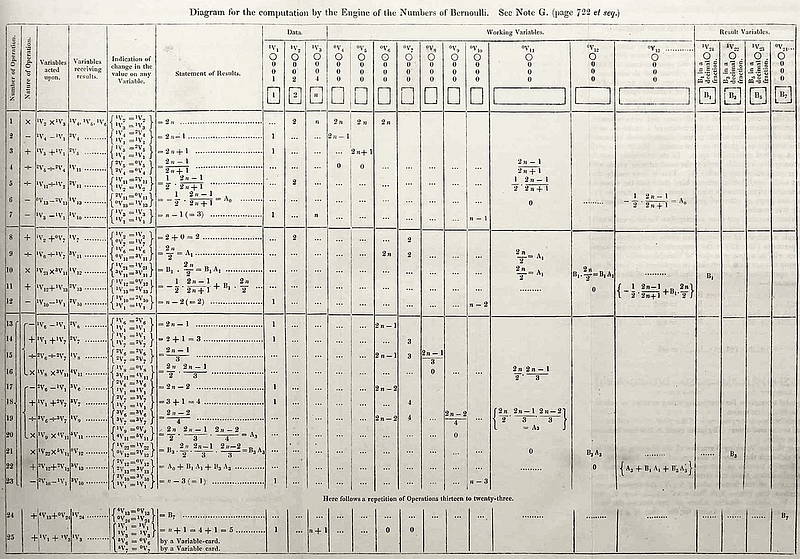
Her insights were far ahead of her time, predicting the development of computer science decades before its formal establishment. Her work with the Analytical Engine highlighted the potential for machines to execute tasks of great complexity, essentially conceptualizing the idea of programming.
The lasting impact of Ada’s contributions is evident in the recognition of her as a pioneering figure in computing, a field that has transformed every aspect of modern society. Her legacy endures not only as a testament to her genius but also as an inspiration for generations of scientists and engineers who followed.
A Legacy Worth Celebrating
In modern times, Ada Lovelace’s contributions to computer science are widely recognized and celebrated. Internationally, Ada Lovelace Day is celebrated annually to recognize her accomplishments and to emphasize the contributions of women in the fields of STEM.
Her work is seen as foundational to the development of computing and programming, underscoring the pivotal role she played in a field that has become central to the contemporary world.
Ada’s achievements represent a significant triumph over the challenges she faced, including societal constraints and the overshadowing legacy of her father, Lord Byron. Despite the complexities of her heritage and the expectations placed upon her as Byron’s daughter, Ada pursued her passion for mathematics and logic.
Her success in a domain far removed from the literary achievements of her father illustrates the power of individual determination and intellectual curiosity. Ada’s legacy is not just in her contributions to computing but also in her ability to forge a distinct identity that both transcended and transformed her father’s notoriety.
In conclusion, the story of Ada Lovelace is a compelling illustration of how personal adversity and societal challenges can be catalysts for innovation and discovery. Her pioneering work in computing was, in part, shaped by her efforts to navigate her identity and legacy amidst the shadow of a “terrible father.”
Ada’s life and achievements underscore the complex nature of inspiration, demonstrating that the pursuit of knowledge and the drive to contribute to society can emerge from the most unexpected sources. As the first programmer, Ada Lovelace not only laid the groundwork for the development of computer science but also left an enduring legacy that continues to inspire and influence the field to this day.


