
This Story Will Explode in 30 Seconds
Add a ‘ticking clock’ to your writing and make that next book unputdownable
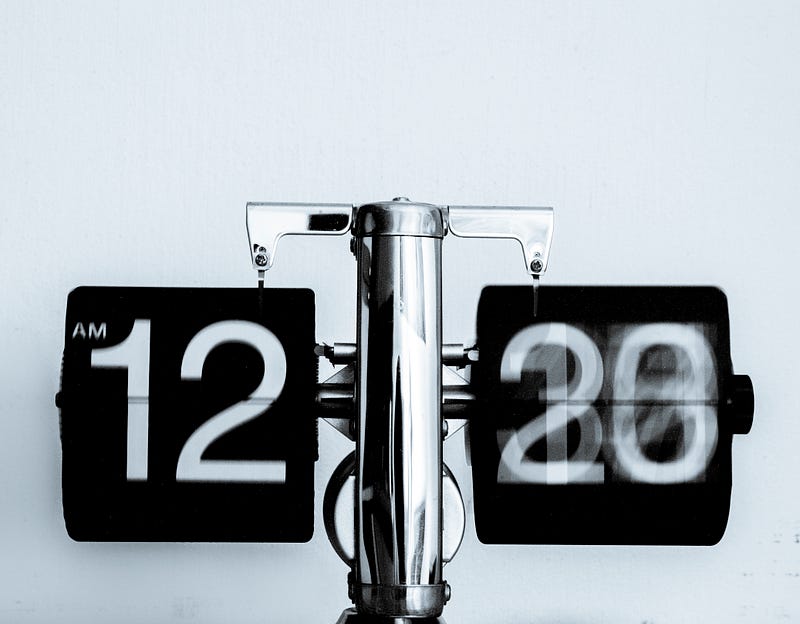
We’d all like to engage our readers as much as possible. People are reading fewer books, so we’d rather have them choose ours when they grab something from the ‘store.’ I talk about page-turners a bit, but if you’d like to juice your reader’s pulse to level 11 and keep her flipping the papyrus, add a ticking clock to your story.
…’the hell is a ticking clock?
Your ticking clock doesn’t have to be a literal clock. In thrillers and action-adventures, time-bombs are common. There’s a discovery. The bomb is strapped to some poor sap who doesn’t deserve to lose his head. The hero needs to cut the right wire (nope, not the blue one!) before the poor sap turns to pancake batter.
The time-bomb is the obvious, cliche choice.
But there are many options. Perhaps you write romance novels. The ticking clock might be a wedding date (or a first date on a calendar). Maybe you write sci-fi. The ticking clock could be a star about to explode and hit the ‘delete’ key on the entire galaxy.
Maybe you write a sports story and the ticking clock is the run-up to the ‘big game.’ See where I’m going with this?
Humans get all antsy with deadlines. Think of how your skin starts to crawl as you approach the day of the ‘big presentation’ at work. Maybe you’ve got a vacation coming up and you’ve X’ed each day on the calendar.
Ticking clocks make us anxious.
We want to make the clock stop to relieve a bit of tension.
What a great device to add to our writing, eh?
How to use a ticking clock
You can go extreme or subtle. Depends on the level of anxiety you want to raise in your reader. A cozy mystery might give a teaspoon of anxiety, while a full-blown thriller will bring a 55-gallon drum of quadruple bypass juice to the party.
You could head each chapter with a date or time as a reminder.
You could bounce between the tension of the clock/date/event and something calmer.
The idea is not to keep your reader at a level 11 for the entire book. We want to slowly ratchet-up the tension as we approach the peak of the story, but there must be moments of relief along the way.
Also, (side tip) remember that slow is fast and fast is slow. Speed through the boring parts like marbles on a staircase. But once you get to the explosion, the final battle, or the BIG EVENT, slow things down as long as you can. We want to live through the intense parts and savor them longer.
Clocks aren’t just for fiction either.
Some of the best non-fiction authors know how to arrange the information to read like a thriller. These folks add the clock and shuffle the events to keep the reader engaged.
I read a ton of scientific papers for my day job.
There’s nothing worse than reading scientific journals. Maybe lawyers will have an equal hand raised with legal cases, but I’ve got no experience there. What I can tell you is with technical information we get a vomited list of facts, data, and references. If you didn’t have sleep apnea before you read one of these bad-boys, you might have a mild case after.
Give your non-fiction a little kick in a gym bag.
Add some kind of ticking clock. We’ll all be grateful. Get creative. There are ticking clocks everywhere if you look hard enough. Dates, times, events, present, future, and past. There’s a clock in almost every story.
…and please skip the time-bomb unless you really must have it in there.
The blue wire has got to go.
We need your ticking clock
The ticking clock helps give the reader purpose to stick with the story. We’re distracted. We’re busy. Reading takes time and dedication. It’s your job as the writer to entice us to return to the story.
Don’t make it easy for us to put down.
Don’t let us add your writing to the bottom of the TBR pile.
We want you to make us late for work, late for bed, and late for every appointment we’ve ever set. We want your book to consume us so entirely we forget what day it is and where our family might be (OK, maybe not that one).
…and if you want a ‘pro tip,’ add a ticking clock to your email marketing. You’ll get a much better open rate and click-rate if you add time-sensitive deadlines for your readers.
We’re all naturally lazy. The clock lights a fire to get us moving.
You’ll sell a lot more books, courses, and coaching if you add a ticking clock to your reader’s decision-making process. Deadlines do the trick and help us click (I might cut that out and tape it to my monitor).
Tick-tock. The best time to start your reader’s list was ten years ago. The second best time is NOW.
We’re waiting for you.
>Free Indie Email Masterclass: Get Your First 1,000 Subscribers<
August Birch (AKA the Book Mechanic) is both a fiction and non-fiction author from Michigan, USA. A self-proclaimed guardian of writers and creators, August teaches indie authors how to write books that sell and how to sell more of those books once they’re written. When he’s not writing or thinking about writing, August carries a pocket knife and shaves his head with a safety razor.