avatarJulia Christina

Free AI web copilot to create summaries, insights and extended knowledge, download it at here

3225

Abstract

mazon, there are <a href="http://www.neip.info/novo/wp-content/uploads/2015/04/highpine_origin-of-ayahuasca_neip_2012.pdf">another estimated one million uncatalogued species</a>.</p><p id="2494">So how did ancient shamas know to combine precisely these two plants?</p><h1 id="3be0">Ayahuasca Has Been Used Ceremonially for Thousands of Years</h1><p id="b346">While it’s believed that shamans have used Ayahuasca for thousands of years, the first archeological evidence dates back around 1,000 years.</p><p id="e978">Researcher <a href="https://anth.la.psu.edu/people/juc555">José M. Capriles</a>, an anthropologist at Penn State University, found a small pouch in <a href="https://www.nationalgeographic.co.uk/culture-history/2019/05/ancient-hallucinogens-found-1000-year-old-shamanic-pouch">a cave in the Southern Andes that shows signs of human activity going back 4,000 years</a>.</p><p id="0200">The pouch, made from three neatly sewn together fox snouts, was found in a leather ritual bag that contained a decorated headband and small wooden platforms to inhale substances, <a href="https://www.nationalgeographic.co.uk/culture-history/2019/05/ancient-hallucinogens-found-1000-year-old-shamanic-pouch">among other things</a>. Researched were able to date the leather bag that contained the pouch to <a href="https://www.nationalgeographic.co.uk/culture-history/2019/05/ancient-hallucinogens-found-1000-year-old-shamanic-pouch">900 to 1,170 years AD using radiocarbon dating</a>.</p><figure id="683b"><img src="https://cdn-images-1.readmedium.com/v2/resize:fit:800/0*KU6oq8aSKTbkJXIO.gif"><figcaption>First archeological evidence of Ayahuasca (picture E), as <a href="https://www.pnas.org/content/116/23/11207">published by Penn State Researchers in 2019</a>.</figcaption></figure><p id="f418">In a <a href="https://www.pnas.org/content/116/23/11207">2019 paper</a>, researchers revealed that the pouch contained chemical traces of bufotenine, dimethyltryptamine (DMT), harmine, and cocaine.</p><p id="2483">This was the first archaeological finding that confirmed the combination of DMT (found in chacruna) and harmine (found in the carpi vine), which in combination creates the brew Ayahuasca.</p><p id="8285">The researchers further argue:</p><blockquote id="23a6"><p>“The presence of multiple plants that come from disparate and distant ecological areas in South America suggests that hallucinogenic plants moved across significant distances and that an intricate botanical knowledge was intrinsic to pre-Columbian ritual practices.”</p></blockquote><p id="126a">Hallucinogenic plants travel.</p><p id="9842">They’ve since traveled to North America and Europe, where Ayahuasca ceremonies are now held in yoga studios and private homes across big cities.</p><p id="05af">Many psychonauts argue that Ayahuasca moved beyond the Amazon because of the state our planet is in. It is said that the plant spirit is spreading to awaken human consciousness to the destruction of our environment.</p><h1 id="320f">Indigenous Amazon Communities Dub the Ayahuasca Vine As the “Mother of All Plants”</h1><p id="e200">In the native Amazonian language, Quechua, Ayahuasca translates to “vine of the soul”.</p><p id="9944">The indigeno

Options

us Napo Runa people believe that the Ayahuasca vine is “the mother of all plants”. <a href="http://www.neip.info/novo/wp-content/uploads/2015/04/highpine_origin-of-ayahuasca_neip_2012.pdf">It’s a mediator and translator between the human and plant worlds, helping humans and plants to communicate with each other</a>.</p><p id="31e9">The Ayahuasca vine by itself <a href="http://www.neip.info/novo/wp-content/uploads/2015/04/highpine_origin-of-ayahuasca_neip_2012.pdf">has long been known as a plant teacher and has been used by many Amazonian tribes</a>.</p><p id="a405">Shamans credit the psychoactive brew not only for healing ailments of the soul but also for the discovery of a wide range of other plant medicines.</p><p id="c2e6">Whenever a new illness would occur that healers didn’t have a remedy for yet, they would go on a strict fast, a <i>dieta, </i>to leave behind the physical world of flavorful food and pleasures such as sex to connect deeply with the spiritual realm. Ayahuasca would then communicate by <a href="http://www.neip.info/novo/wp-content/uploads/2015/04/highpine_origin-of-ayahuasca_neip_2012.pdf">sending visions to the shaman about the healing potential of specific plants and their locations</a>.</p><h1 id="c9c1">This Is How Shamans Say Ayahuasca Was Discovered</h1><p id="3202">The indigenous communities in the Amazon such as the Napo Runa have their own explanation about how the brew was discovered.</p><p id="4ed3">Through hundreds of generations, they’ve carried the myths by word of mouth and explained the mystery of Ayahuasca.</p><p id="b2e1">According to those myths, shamans <a href="https://www.samwoolfe.com/2014/04/the-mysterious-origins-of-ayahuasca.html">received instructions directly from the plant spirit</a>.</p><p id="458c">I’ve heard different stories about how these instructions came to shamans in dream states, other altered states, or through medicine songs commonly played during ceremonies called <i>Icaros.</i></p><p id="5742">To believe this requires a certain level of faith.</p><p id="1015">Not only must you believe that plants have consciousness, but you must also be convinced that they can communicate with human consciousness.</p><h1 id="d209">In Conclusion</h1><p id="328f">If you haven’t had a psychedelic experience yet, it might be impossible for you to accept that plants have consciousness and can communicate.</p><p id="c985">Once you do drink Ayahuasca, though, you’ll likely no longer question this.</p><p id="826f">I, for one, have had ceremonies where I was in direct dialogue with Ayahuasca. Whatever I asked, I’d receive an answer to. Ayahuasca knew <i>everything.</i></p><p id="8338">When I asked “how or what is the thing that’s responding to me”, I received a clear but simple answer:<i> the plant spirit.</i></p><p id="c89e">You might have to experience it to believe it.</p><p id="ab86">If you’re still skeptical, why don’t you just ask the plant yourself?</p><p id="3c99"><b>Ready to transform your well-being, explore consciousness and infuse meaning into your life? <a href="https://juliablum.substack.com/">Join <i>The Journey, </i>a free weekly newsletter</a> for psychonauts traveling inward with intention.</b></p></article></body>

This Story of How Ayahuasca Was Discovered Will Blow Your Mind

Diving into an ancient jungle mystery.
Photo by Kyle Cleveland on Unsplash

Psychedelics are a mystery.

They manipulate our brain chemistry to trigger visions, memories, mystical experiences, ego dissolution, emotional healing, and profound insights.

In nature, they can be found in the form of plants, animals, and fungi. The fact that psychedelics are abundant in nature itself is intriguing. There are mescaline-containing cacti such as Peyote and San Pedro, 5-meo-DMT containing toads, a psychoactive species of mint leaves called Salvia, ibogaine containing shrubs, and roughly 200 varieties of psilocybin mushrooms, just to name a few.

Then there is Ayahuasca.

Ayahuasca is different. For Ayahuasca to be vision-inducing and purgative, there’s some preparation required. The brew is actually made from two different plants. They are hallucinogenic only when combined.

How on earth did humans know to combine precisely these two plants, among 80,000 plant species in the Amazon?

Ayahuasca Is a Combination of Two Plants That Are Psychoactive Only When Consumed Together

To prepare Ayahuasca, you brew the leaves of the Psychotria viridis shrub (also called chacruna) and the stalks of the Banisteriopsis caapi vine.

It’s the shrub that contains the psychoactive ingredient DMT. Yet only when consumed together with the vine, which contains MAOIs, the human body is able to metabolize the DMT in a way that makes the brew hallucinogenic.

That’s because if you consume DMT-containing plants by themselves, the body’s store of the enzyme MAO (monoamine oxidase) quickly breaks down the DMT before it has any effect on your consciousness.

By combining the plants, the DMT becomes orally active before the MAO in the body can break it down.

It’s truly a chemical mystery.

With magic mushrooms, for example, it makes sense to assume humans stumbled upon them when foraging for edible mushrooms.

That’s not the case for Ayahuasca, though.

To assume that Ayahuasca was discovered by trial and error is hopeful at best, given that beyond the 80,000 registered plant species in the Amazon, there are another estimated one million uncatalogued species.

So how did ancient shamas know to combine precisely these two plants?

Ayahuasca Has Been Used Ceremonially for Thousands of Years

While it’s believed that shamans have used Ayahuasca for thousands of years, the first archeological evidence dates back around 1,000 years.

Researcher José M. Capriles, an anthropologist at Penn State University, found a small pouch in a cave in the Southern Andes that shows signs of human activity going back 4,000 years.

The pouch, made from three neatly sewn together fox snouts, was found in a leather ritual bag that contained a decorated headband and small wooden platforms to inhale substances, among other things. Researched were able to date the leather bag that contained the pouch to 900 to 1,170 years AD using radiocarbon dating.
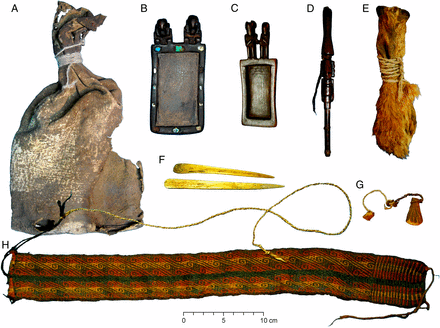
First archeological evidence of Ayahuasca (picture E), as published by Penn State Researchers in 2019.

In a 2019 paper, researchers revealed that the pouch contained chemical traces of bufotenine, dimethyltryptamine (DMT), harmine, and cocaine.

This was the first archaeological finding that confirmed the combination of DMT (found in chacruna) and harmine (found in the carpi vine), which in combination creates the brew Ayahuasca.

The researchers further argue:

“The presence of multiple plants that come from disparate and distant ecological areas in South America suggests that hallucinogenic plants moved across significant distances and that an intricate botanical knowledge was intrinsic to pre-Columbian ritual practices.”

Hallucinogenic plants travel.

They’ve since traveled to North America and Europe, where Ayahuasca ceremonies are now held in yoga studios and private homes across big cities.

Many psychonauts argue that Ayahuasca moved beyond the Amazon because of the state our planet is in. It is said that the plant spirit is spreading to awaken human consciousness to the destruction of our environment.

Indigenous Amazon Communities Dub the Ayahuasca Vine As the “Mother of All Plants”

In the native Amazonian language, Quechua, Ayahuasca translates to “vine of the soul”.

The indigenous Napo Runa people believe that the Ayahuasca vine is “the mother of all plants”. It’s a mediator and translator between the human and plant worlds, helping humans and plants to communicate with each other.

The Ayahuasca vine by itself has long been known as a plant teacher and has been used by many Amazonian tribes.

Shamans credit the psychoactive brew not only for healing ailments of the soul but also for the discovery of a wide range of other plant medicines.

Whenever a new illness would occur that healers didn’t have a remedy for yet, they would go on a strict fast, a dieta, to leave behind the physical world of flavorful food and pleasures such as sex to connect deeply with the spiritual realm. Ayahuasca would then communicate by sending visions to the shaman about the healing potential of specific plants and their locations.

This Is How Shamans Say Ayahuasca Was Discovered

The indigenous communities in the Amazon such as the Napo Runa have their own explanation about how the brew was discovered.

Through hundreds of generations, they’ve carried the myths by word of mouth and explained the mystery of Ayahuasca.

According to those myths, shamans received instructions directly from the plant spirit.

I’ve heard different stories about how these instructions came to shamans in dream states, other altered states, or through medicine songs commonly played during ceremonies called Icaros.

To believe this requires a certain level of faith.

Not only must you believe that plants have consciousness, but you must also be convinced that they can communicate with human consciousness.

In Conclusion

If you haven’t had a psychedelic experience yet, it might be impossible for you to accept that plants have consciousness and can communicate.

Once you do drink Ayahuasca, though, you’ll likely no longer question this.

I, for one, have had ceremonies where I was in direct dialogue with Ayahuasca. Whatever I asked, I’d receive an answer to. Ayahuasca knew everything.

When I asked “how or what is the thing that’s responding to me”, I received a clear but simple answer: the plant spirit.

You might have to experience it to believe it.

If you’re still skeptical, why don’t you just ask the plant yourself?

Ready to transform your well-being, explore consciousness and infuse meaning into your life? Join The Journey, a free weekly newsletter for psychonauts traveling inward with intention.

Ayahuasca
Psychedelics
Culture
History
Nature
Recommended from ReadMedium