avatarAlexander Nostromo

Free AI web copilot to create summaries, insights and extended knowledge, download it at here

2003

Abstract

ndustry experts to develop the foam technology, aiming to launch a first satellite by 2022 to test the behavior of the polymer foam in space. If it meet expectations, then a first functional Foam Debris Catcher could be launched in 2023.</p><p id="e53b">Other methods to clean up space have been proposed, such as satellites with nets and harpoons, but Sidnikov claims the Foam Debris Catcher is much more safe and affordable. “It’s basically a 3D printer latched on to a satellite.”</p><p id="1c7c"><b>Criticism</b></p><p id="0a1e">Some concerns were raised over the offensive potential of the Foam Debris Catcher — whether it could accidentally or deliberately bring down active satellites. It would not be inconceivable for civilian and scientific technology to have military potential. After all, the Space Shuttle had the capability of plucking satellites out of orbit.</p><p id="e078"><b>Notes:</b></p><p id="ac31">Want to know more about satellites? Check my other story and those of other contributors:</p><p id="ff8b">Frederik Debonné — <a href="https://readmedium.com/i-did-not-believe-what-i-saw-in-the-sky-last-night-609dfa7a3fd6">I did not believe what I saw in the sky last night</a></p><p id="f212"><b>Sources:</b></p> <figure id="57c1"> <div> <div> <img class="ratio" src="http://placehold.it/16x9"> <iframe class="" src="https://cdn.embedly.com/widgets/media.html?src=https%3A%2F%2Fplayer.vimeo.com%2Fvideo%2F427307955%3Fapp_id%3D122963&amp;dntp=1&amp;display_name=Vimeo&amp;url=https%3A%2F%2Fvimeo.com%2F427307955&amp;image=https%3A%2F%2Fi.vimeocdn.com%2Fvideo%2F906811809_1280.jpg&amp;key=a19fcc184b9711e1b4764040d3dc5c07&amp;type=text%2Fhtml&amp;schema=vimeo" allowfullscreen="" frameborder="0" height="1080" width="1920"> </div> </div> </figure></iframe></div></div></figure><div id="181c" class="link-block"> <a href="https://securingspace.com/"> <div>

Options

   <div>
            <h2>Let's clean outer space for our future generations.</h2>
            <div><h3>At present about half a million man-made objects are flying around the Earth. They move at a speed of 28,000 km/h and…</h3></div>
            <div><p>securingspace.com</p></div>
          </div>
          <div>
            <div style="background-image: url(https://miro.readmedium.com/v2/resize:fit:320/0*7hZOAKyFbDWRERmG)"></div>
          </div>
        </div>
      </a>
    </div><div id="a52c" class="link-block">
      <a href="https://www.kaspersky.com/blog/secure-futures-magazine/space-debris-start-rocket/36213/">
        <div>
          <div>
            <h2>One start-up's novel idea for cleaning up trash in space</h2>
            <div><h3>As part of Kaspersky's Bring on the Future series, we meet people and businesses around the world, changing the…</h3></div>
            <div><p>www.kaspersky.com</p></div>
          </div>
          <div>
            <div style="background-image: url(https://miro.readmedium.com/v2/resize:fit:320/0*L-YO1RanuaB7M5-s)"></div>
          </div>
        </div>
      </a>
    </div><div id="d40d" class="link-block">
      <a href="https://www.theverge.com/2018/3/22/17144208/rocket-lab-humanity-star-satellite-new-zealand-astronomy">
        <div>
          <div>
            <h2>Rocket Lab's disco ball satellite has plunged back to Earth - and some aren't sad to see it go</h2>
            <div><h3>US spaceflight startup Rocket Lab stealthily launched a small "disco ball" satellite into orbit as part of a cosmic art…</h3></div>
            <div><p>www.theverge.com</p></div>
          </div>
          <div>
            <div style="background-image: url(https://miro.readmedium.com/v2/resize:fit:320/0*kNxCihPArOm-xayb)"></div>
          </div>
        </div>
      </a>
    </div></article></body>
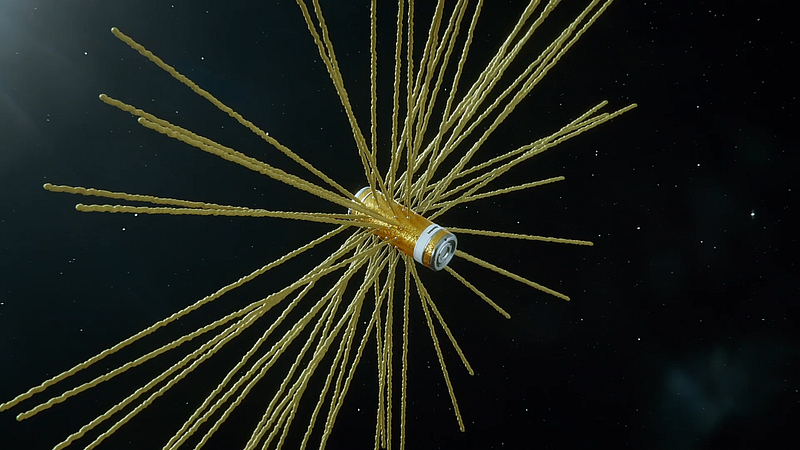
Foam Debris Catcher — StartRocket. A small satellite is delivered into orbit. When approaching a cloud of space debris, it releases jets of foam that absorb the debris. Later, the FDS falls from orbit and burns up in the atmosphere.

This startup wants to wipe space clean

With sticky satellites no less.

According to the European Space Agency, about 129 million pieces of debris are currently orbiting Earth. 34,000 of these are 10 cm wide or larger. Each one has the potential to damage one of the 2,300 active satellites that run humanity’s science, communications and navigation.

Inspired by prospects of future space travel, Vlad Sidnikov saw the need to prevent debris collisions. He founded StartRocket to develop the Foam Debris Catcher, a number of small satellites that catch junk with jets of polymer foam. The foam traps the debris, eventually burning it in the Earth’s atmosphere upon reentry.

The Humanity Star by Rocket Lab, which was the inspiration for Sidnikov to found a space startup.

This isn’t the first space related venture of Sidnikov. In January 2018, US-New Zealand company Rocket Lab launched the Humanity Star, a geodesic satellite engineered to be visible from Earth.

The Humanity Star lead Sidnikov to the idea of orbital billboards: massive displays of satellites visible from Earth. However, the backlash against both Humanity Star and Sidnikov’s own space advertising made him reconsider. Rather than polluting the night sky, he decided to do the opposite.

His next venture would become StartRocket. Sidnikov engaged a team of space and chemical industry experts to develop the foam technology, aiming to launch a first satellite by 2022 to test the behavior of the polymer foam in space. If it meet expectations, then a first functional Foam Debris Catcher could be launched in 2023.

Other methods to clean up space have been proposed, such as satellites with nets and harpoons, but Sidnikov claims the Foam Debris Catcher is much more safe and affordable. “It’s basically a 3D printer latched on to a satellite.”

Criticism

Some concerns were raised over the offensive potential of the Foam Debris Catcher — whether it could accidentally or deliberately bring down active satellites. It would not be inconceivable for civilian and scientific technology to have military potential. After all, the Space Shuttle had the capability of plucking satellites out of orbit.

Notes:

Want to know more about satellites? Check my other story and those of other contributors:

Frederik Debonné — I did not believe what I saw in the sky last night

Sources:

Satellite
Space Junk
Satellite Technology
Recommended from ReadMedium