
This Soviet Animated Film About Tolerance Made Me Cry
A 1976 musical short film about a blue dog is still relevant today.
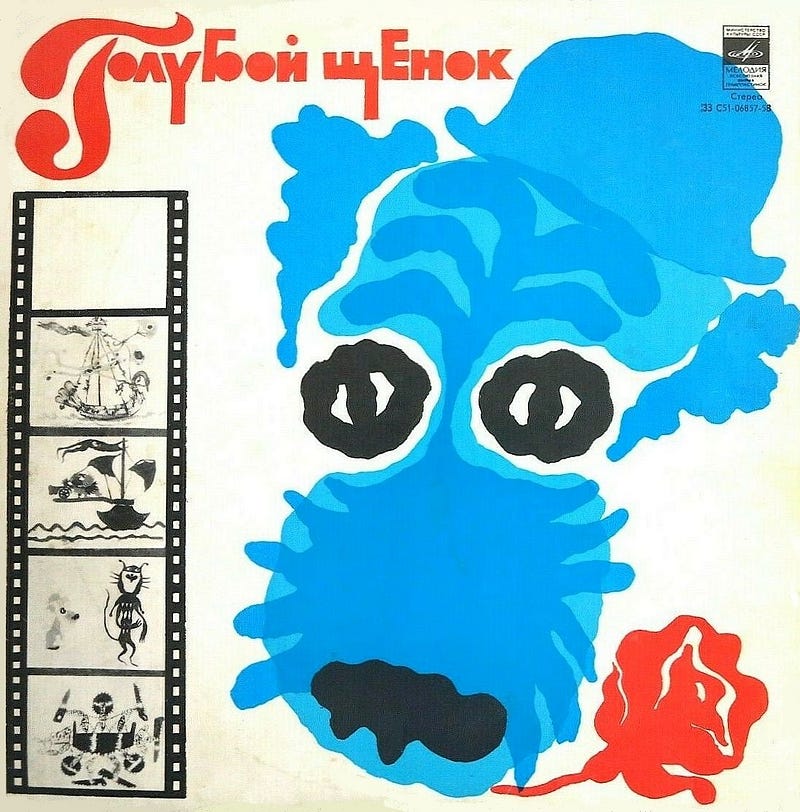
Maybe I’m swinging a bat at a wasp’s nest of neo-McCarthys by saying this, but I believe Soviet art gets a bad rap.
Yes, a good portion of it is propaganda. I hate to say it, but you can say the same thing about Western art. I trust myself to be a critical consumer regardless of where and/or when something is made. As a result, I have found numerous gems in unexpected places.
Soviet animation is something I find particularly interesting as someone interested in the intersection of art and culture. Animated films reinforced Soviet values, yes, but that does not mean they were always without the childlike charm associated with Western animation.
Sergei Eisenstein, one of the most famous figures of early Soviet film, was known to be a fan of Disney. For one thing, Disney’s reliance on fairytale elements provided a way to instill moral values in children. For example, Disney often employed symbols to represent situations and groups of people.
In the above clip, Mickey the Tailor is able to destroy a giant. It’s not hard to apply meaning to the film. Try, “bravery and cleverness can defeat any power,” or perhaps, “the common man has the power to overthrow his oppressor.”
I mean, considering Mickey defeats the giant at the request of his king, you can even read this as “allow the state to use you as a human weapon, and you’ll be rewarded.”
Whatever. The point is that characters can function as symbols for situations that require moral values. Now children are learning a sense of right and wrong through their entertainment. Clever, isn’t it?
Despite the repression within the Soviet Union, emphasis on comradeship and equality did not disappear. Starting in the 1930s, the Soviet Union offered itself to African Americans as an anti-racist alternative to the oppression in the United States. The “anti-racism” itself was far from perfect, but no one can say an effort was not made.
In the 1960s, likewise, the Soviet Union tried to boast of its progressive gender equality. The reality was that women did not necessarily fare better than they did in the United States, but it is true that the Soviet Union had claimed to be working toward women’s rights from the beginning.
All in all, the Soviet Union still functioned on the belief that people ought to accept each other as equals. Perhaps it’s not so surprising that in 1976, the short musical cartoon “Blue Puppy,” with its simple message that we should accept each other despite our differences, made its way onto television screens.
The blue puppy (sometimes translated as the “light blue” or even “very blue” puppy) in question is tossed around by his more conventional-looking neighbors. They make fun of his fur and declare they do not want to play with him.
The puppy, naturally, is depressed. He feels ashamed of his color and questions whether there is any happiness possible for someone like him. He sheds a lonely India ink tear.
Sobs.
The plot is set in place: a chaotic cat finds the puppy in his vulnerable state and sells him out to an evil pirate. The same cat then lets a very kind and colorful sailor know the puppy has been captured. Some people just want to see the world burn, I guess.
Through song and merriment, the sailor rescues the puppy. They become friends, and the blue puppy finds happiness at last.
Not too long after the cartoon came out, the word “goluboi,” or “blue,” became common slang referring to gay men. For this reason, it is sometimes believed that this film was meant to be an allegory for homophobia. It is unlikely this is true, as again, the slang came about after the film was created.
[EDIT: It is perhaps more accurate to say that “goluboi” became a common slur after the film was created, although this too is a matter of some debate. In any case, film writer Yuri Entin has stated that he did not create the film with the intent of using homophobic slang.]
Even so, “Blue Puppy” struck a chord with me. I know what it is like to be small and scared, feeling as if the world is against you. I also know how miraculous it feels to finally meet someone who accepts you as you are.
We are living in a time in which people are more isolated than ever. Reproductive rights are being lost, and transgender children are under attack. Violence is on the rise, and people of color remain vulnerable to white supremacist action.
Although “Blue Puppy” was made for children in the 1970s Soviet Union, I cannot help but feel a sense of hope when I watch it. What if we accepted each other regardless of skin color, ethnicity, gender, or sexuality?
What if we, like the sailor, were on the lookout for the blue puppies of the world? What if we found joy through taking care of each other?


