
Travel — Photography — Spirituality
This Rosary, Blessed by Monks in the Majestic Mountains of Trinidad, Brings Me Peace Everyday
A sacred souvenir from my visit to Mount St. Benedict Abby in Trinidad and Tobago
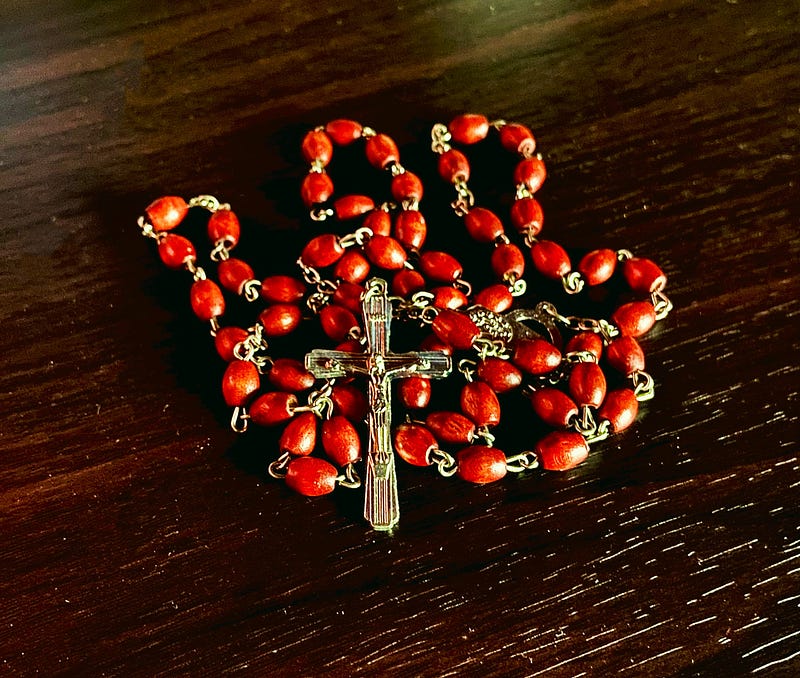
One day, my husband Andy and I decided to take a trip up into the Northern Range of mountains in Trinidad to see the infamous Abbey of Our Lady of Exile Mount St. Benedict monastery. I’d heard so much about it and was fascinated to see it. Andy, as a lapsed but nonetheless steadfastly declared Catholic, was well interested to explore this location as well.
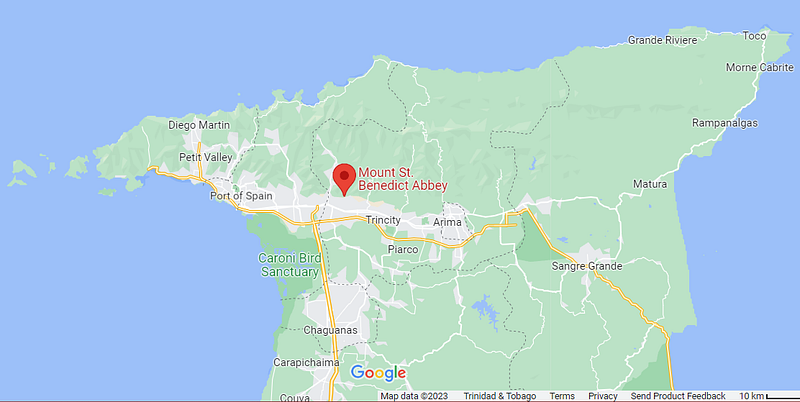
St. Benedict Abby is nestled between El Cerro del Aripo on one side, towering in its esteem as the highest most point on the island at 3,084 feet above sea level, and closer by on the other side, El Tucuche, the second highest mountain and point on the island at 3,071 feet.
A cool bit of trivia is that the monastery is located almost exactly halfway between Port of Spain and Arima, the two major cities in the northern part of the island, at a distance of twelve miles each way. Not sure if this was done on purpose, but it is a rather sublime fact, and means that a majority of people within the major metropolitan area of the north will have equal access to the monastery.
In addition, Piarco International Airport is roughly eight miles to the southeast.
These mountains house a heavily forested and biodiverse neotropical rainforest — home to waterfalls, caves, petroglyphs, old abandoned cocoa estates and such wildlife as the golden tree frog, red howler monkeys, river otters, collared peccary, ocelots, bearded bellbirds, orange-winged Amazon parrots, morpho butterflies and red brocket deer. Would love to catch a glimpse of all of these fascinating creatures one of these days.
Living in the valley of the Northern Range, these mountains loom large and can be seen peeking out and around from houses and buildings and the tallest of palm, mango and kapok trees. We see them when heading back and forth to the market, the pharmacy or the Trincity Mall. They are estimated to inhabit roughly twenty-five percent of the island territory as a whole.
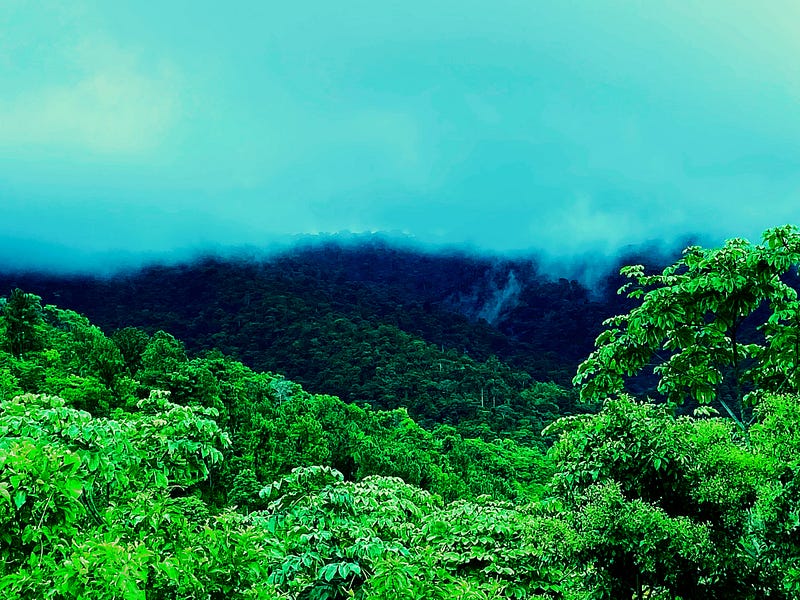
When we go to shop for groceries, or do anything else really, they are always there — looming large like the most caring of guardians, or perhaps like beloved gods and goddesses. Covered in thick trees and often shrouded in clouds and mist, especially during the heaviest days of the rainy season.
From where we live, the Abby can be seen as well in a much similar fashion — almost as if it is keeping watch on the people and keeping them safe from harm — as much as it possibly can anyway.
The journey
Any drive up into the mountains of Trinidad can’t be taken lightly, and is almost always typified by narrow, winding roads, hairpin turns and spontaneous appearances of small little villages and other establishments. If one isn’t careful, they just might mow down a person or a stray dog jutting across the road. Unfortunately, we’ve seen a few canine casualties on some of our trips — stiff with their poor legs sticking into the air or sometimes just limp and so forlorn looking — but, luckily, we’ve never seen any human ones. Heard plenty of stories from the locals though, of cars careening off steep cliffs from driving too fast or not paying close enough attention to the turns.
Clicking here, which will take you to the website for the Abby, you will be able to see in the cover photo an ariel view of everything and observe just how crazy those hairpin turns are.
On most any of our longer drives, Andy and I will usually stop at one of the local small markets to stretch our legs a bit and provide them some of our business. We like to support the local moms and pops — doing so is essential to the livelihood of our planet. If we can’t protect the little guy, the little guy will disappear, and the entire population of human beings will be taken over by greedy corporate monsters. I, for sure, do not want that to happen. What about you?
Typically, we buy potato chips or cookies or sometimes local favorites like roasted Channa in little white paper bags, tangy pineapple or mango chow, coconut sweet cakes or locally made fudge.
On this day, once we’d gotten our snacks secured and got back on the road, I noticed as we drove along that there were crosses with numbers in Roman numerals every so often to the side of the road. I found them oddly comforting.
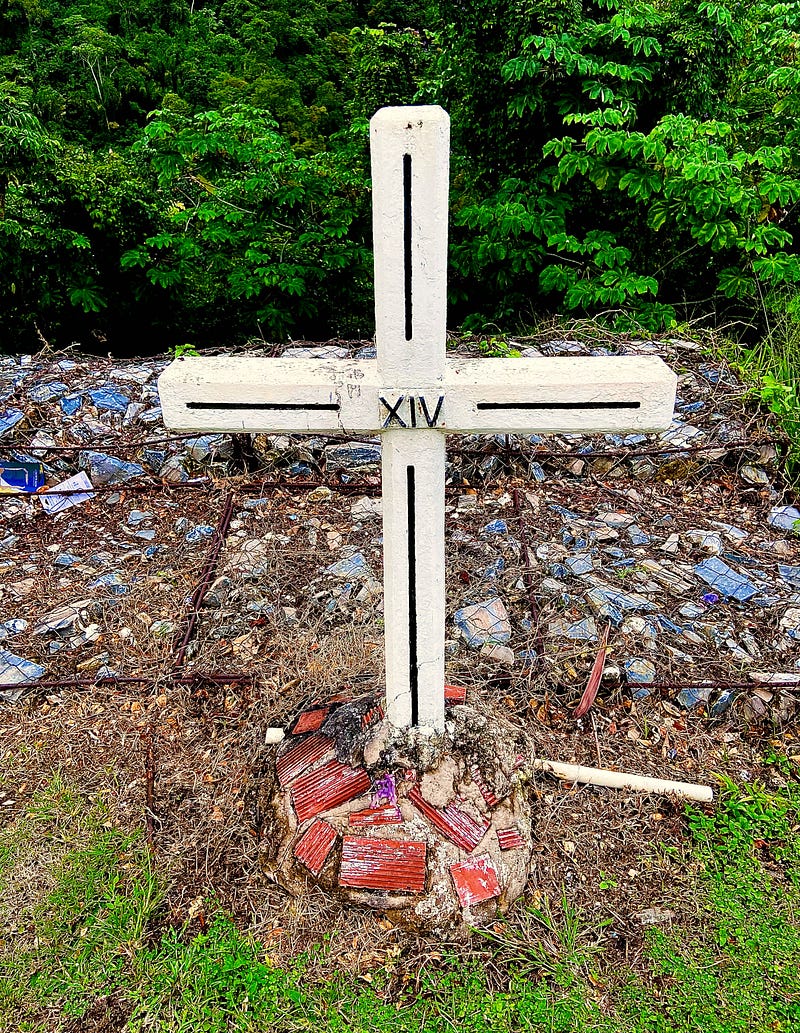
Odd because I’d been raised to believe that there was something inherently bad or perhaps evil with crosses such as this. The cult-like church I grew up in forbade us to wear them or even look at them really. Making a mistake such as this was always somehow equated, in my young mind, to burning in an eternal lake of hellfire.
Having formed my own mind by then, I left that cult-like church when I was sixteen and never looked back. I’ve spent many years since trying to unravel and rethink all the ridiculous junk I’d learned in those impressionable and formative years — that there was one true church and that anyone who did not believe what we believed would suffer the intense wrath of God.
It was “us” and it was “the world”. If you’re not with us you're against us.
Classic cult bullshit — all about control, control and more control via nefarious means.
This, in a nutshell, was my childhood.
What I’ve come to know in the years since, through intense study and much contemplation, is that crosses are not evil or bad, but rather it’s depraved humans who have used them as instruments of control to maintain power over other people and to spread falsehoods who are misguided or perhaps even downright evil. These days, I do not belong to any one religion, and because of that crazy cult church, probably never will feel comfortable doing so. However, I can visit a monastery, cathedral, mosque or synagogue and respect the institution and what it stands for. In a similar fashion, I can hang with the Hindus, Jews, Muslims, Christians or anyone of any other faith, and feel completely at ease as long as they are practicing their faith in an honest, good and positive way.
When it comes right down to it, all religions want the same basic things. Beyond that though, human beings have a million ways to just completely fuck it all up. Don’t you think?
So yes, seeing those crosses and understanding what they represent brought me much comfort as we continued to make our way to the Abby.
The destination
The Abbey of Our Lady of Exile Mount St. Benedict, the official name of the monastery, sits at an elevation of approximately 2,100 feet above sea level. At this elevation the air starts to cool and thin out a bit. The humidity drops and it’s often a welcome respite to the heat in the valley.
The air smelled fresh and clean, and, in comparison to the bustling metropolis down in the valley, it was indeed quiet as a church mouse.
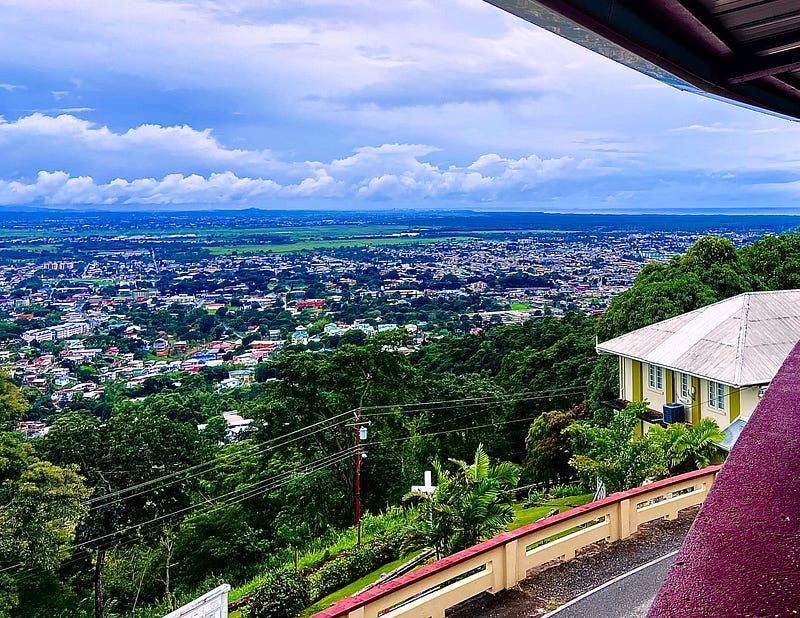
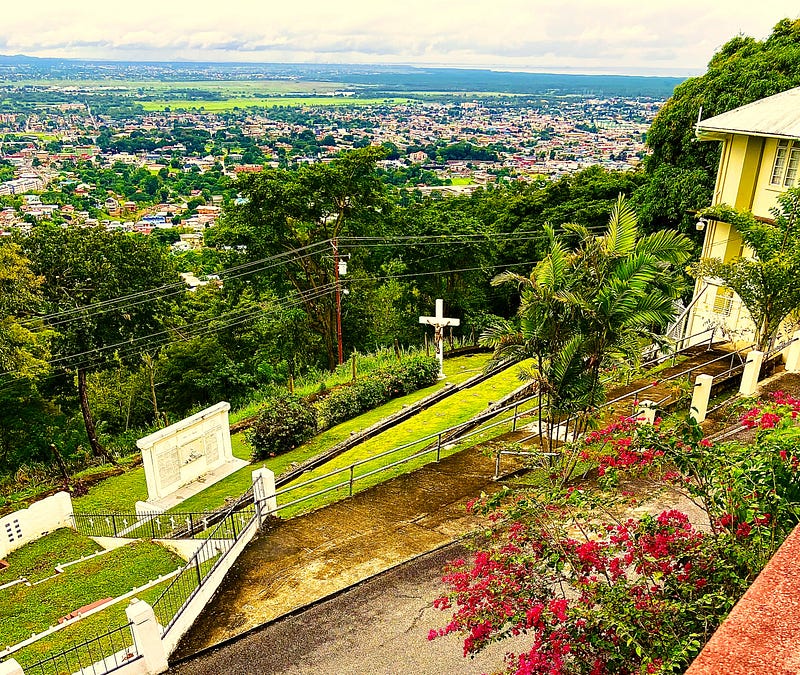
After our arrival, we enjoyed strolling around and taking in the lush green of the jungle forest and a magnificent view of the valley below, including a thin stretch of blue far off in the distant horizon that is the Caribbean Sea. My humble photos really don’t do it full justice at all.
Turning the other way, I was able to get a shot of the outside view of the main chapel-like church. Built in 1912, it is a modern looking building lacking the ornate architecture of many Catholic cathedrals.
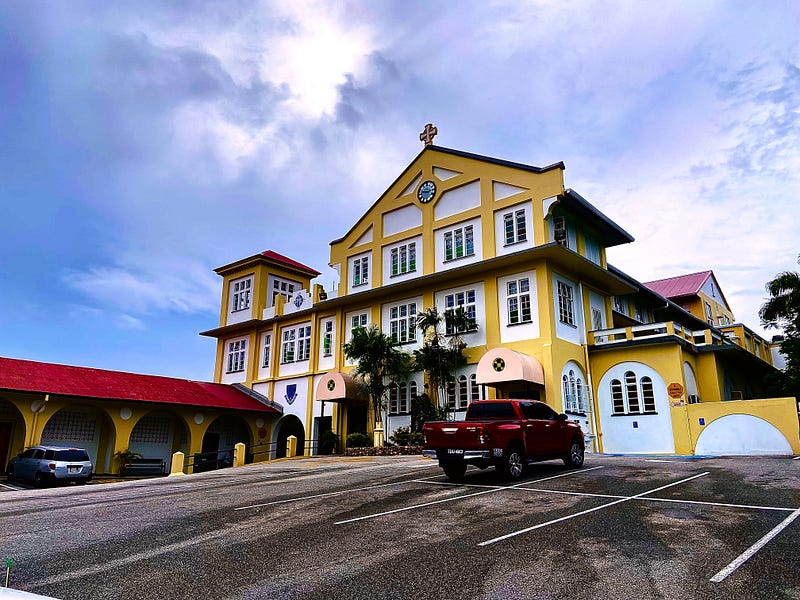
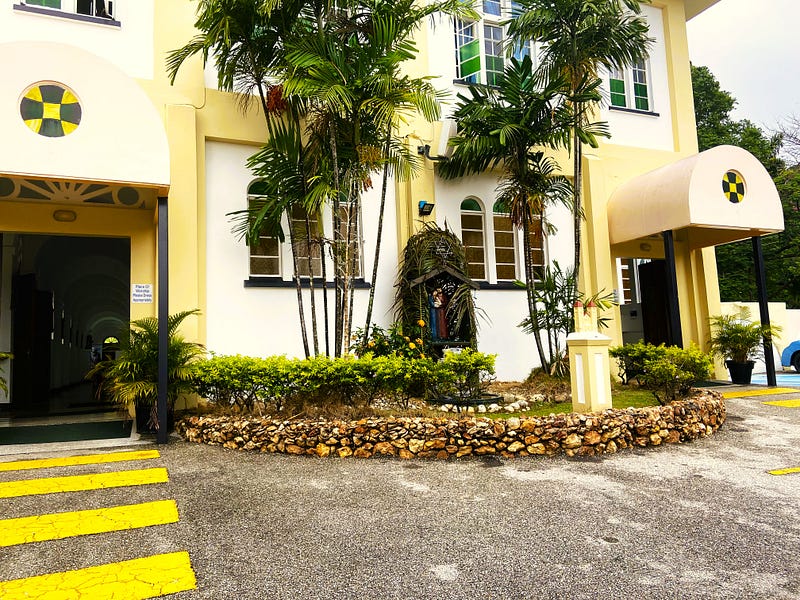
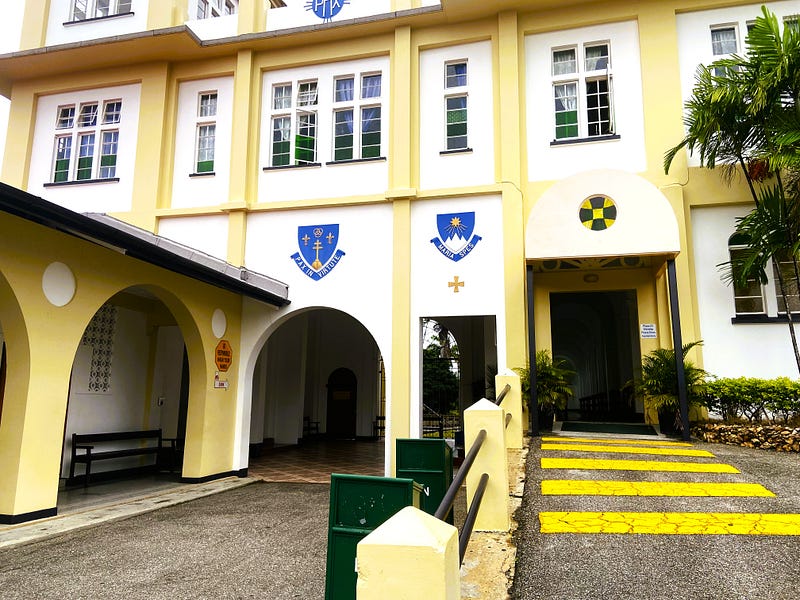
It’s important to note that while Benedictine monks in general are often connected with a higher order, in this case the Catholic Church (in other cases Anglican, Eastern Orthodox, etc.) they are also quite autonomous in their rules and adherence to their mother congregation. More specifically, they adhere to the Rule of Saint Benedict and the guidance of Our Lady of Exile, Mary, the mother of Jesus.
In accordance to this, the monks of Mount St. Benedict in Trinidad welcome people of all faiths and persuasions to practice open spirituality and to seek sanctuary here through pastoral counseling and spiritual direction, considering Trinidad itself is made up of a diverse population of people:
“After the conquest of the Spaniards by Christopher Columbus in 1498 and the decimation of a large portion of the Indigenous peoples, the re-population of the islands drew from a wide spectrum: African slaves, East Indian indentured labourers, French land-owners, English aristocrats, Spanish conquistadors, Chinese labourers, Portuguese, Syrians, Jews, etc.”
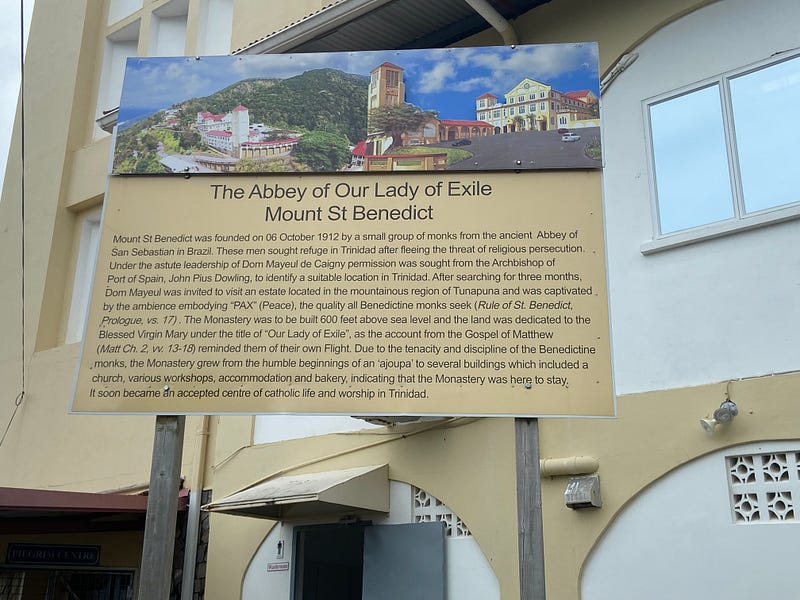
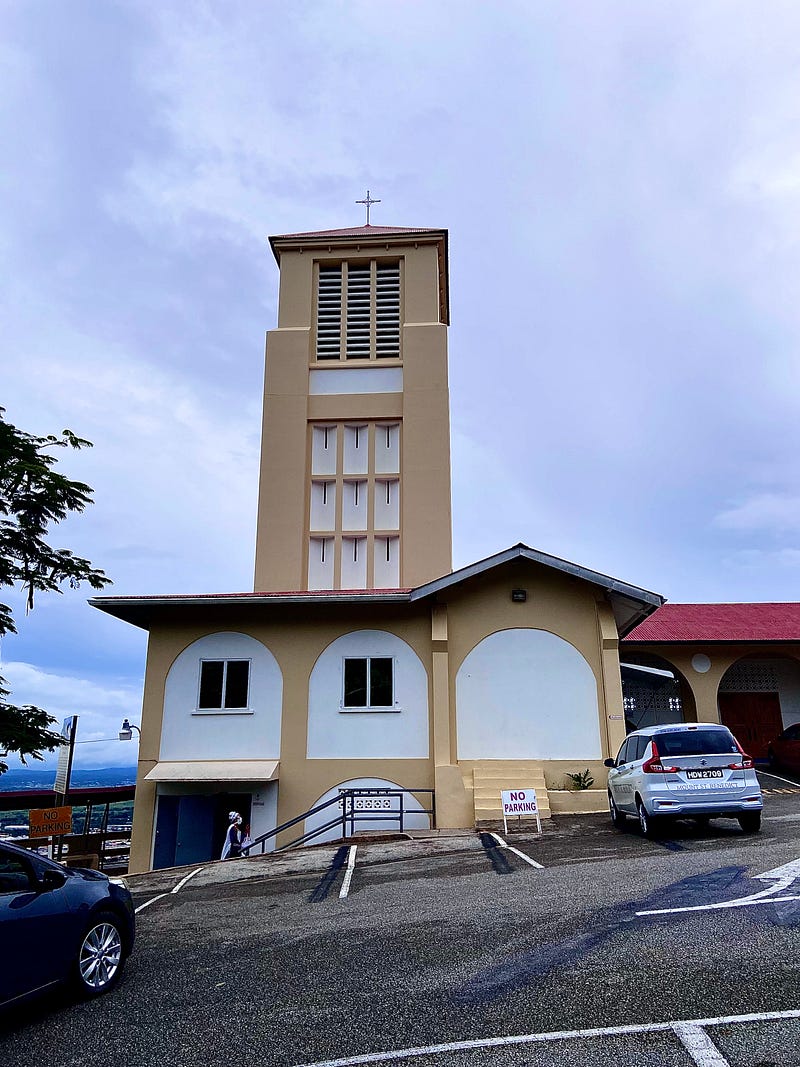
In addition to the main church, located on the grounds are offices, which the monks use to further counsel and bestow blessings, as well as a small shop selling bibles, rosaries, jewelry and more snacks (Trinis do love their snacks and I love them for that) as well as Pax Yogurt.
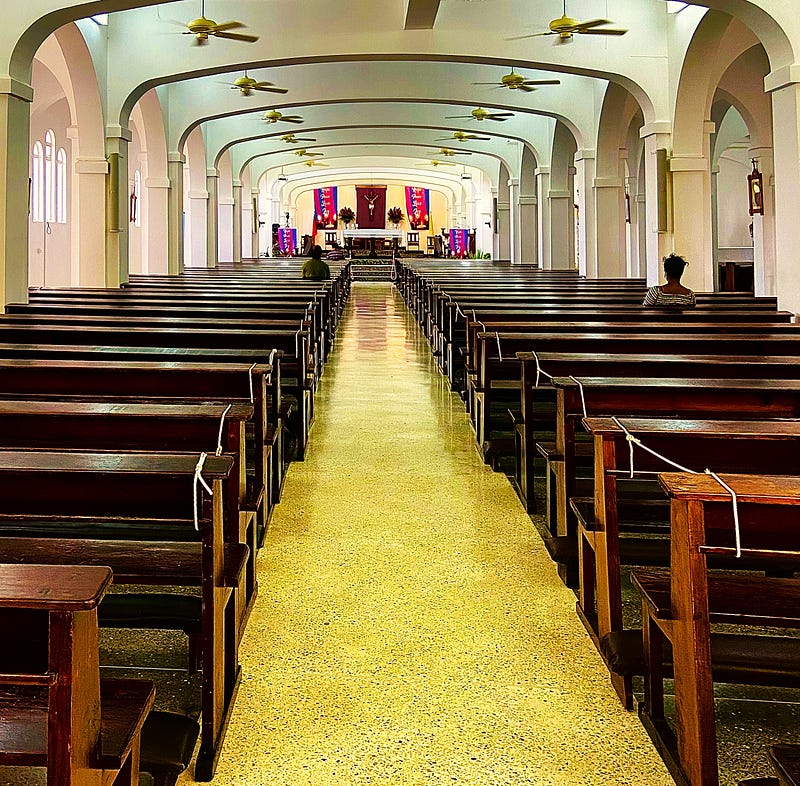
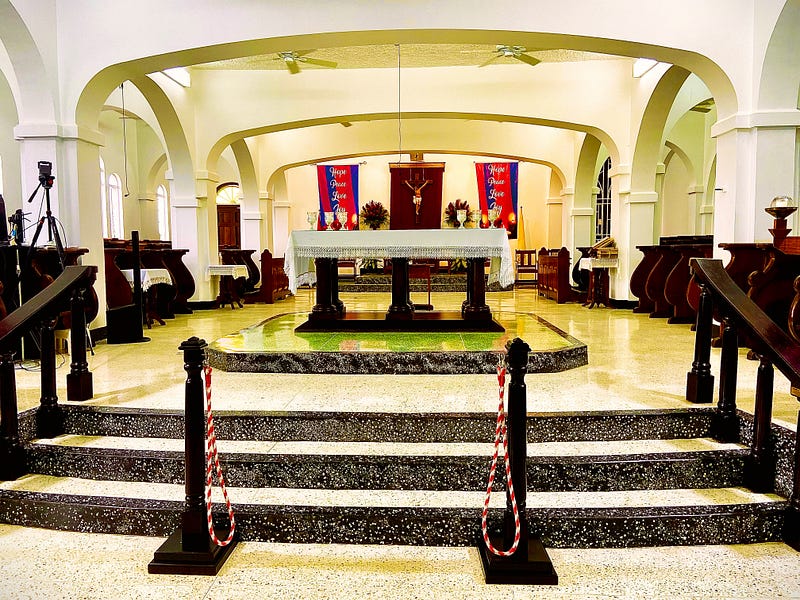
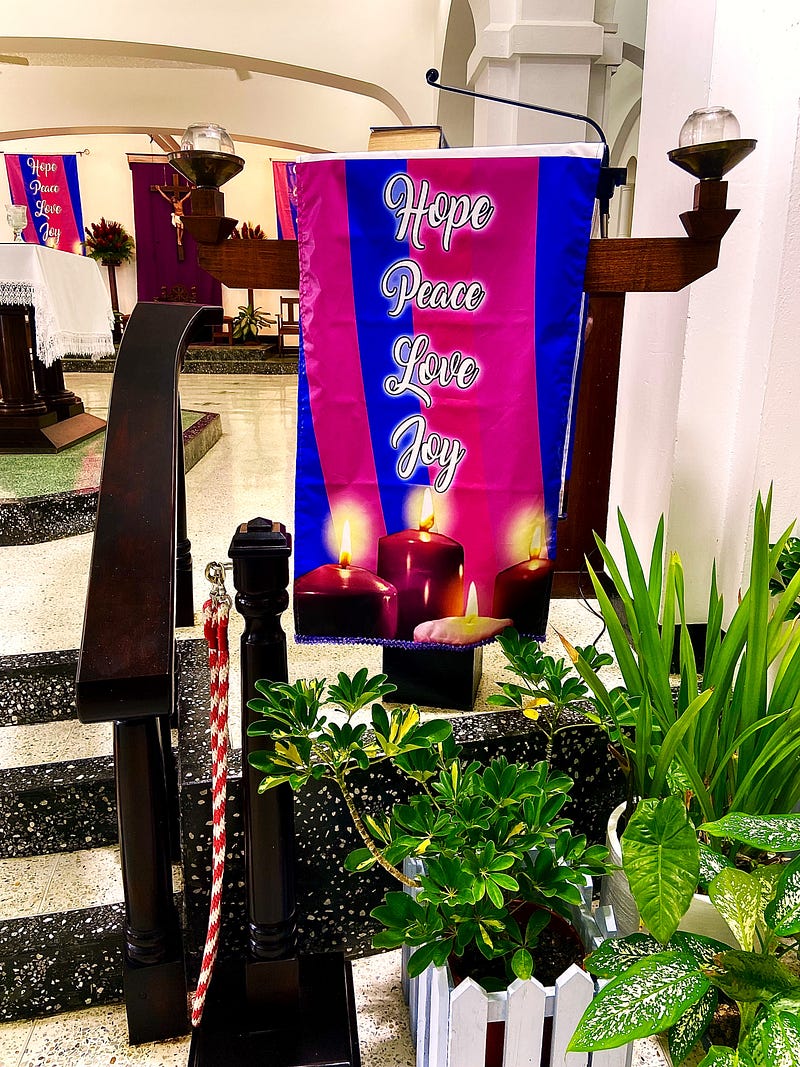
Inside the chapel several people could be seen quietly praying or in various states of contemplation. I took care to wait until no one was smack dab in the middle of my photos to take pictures.
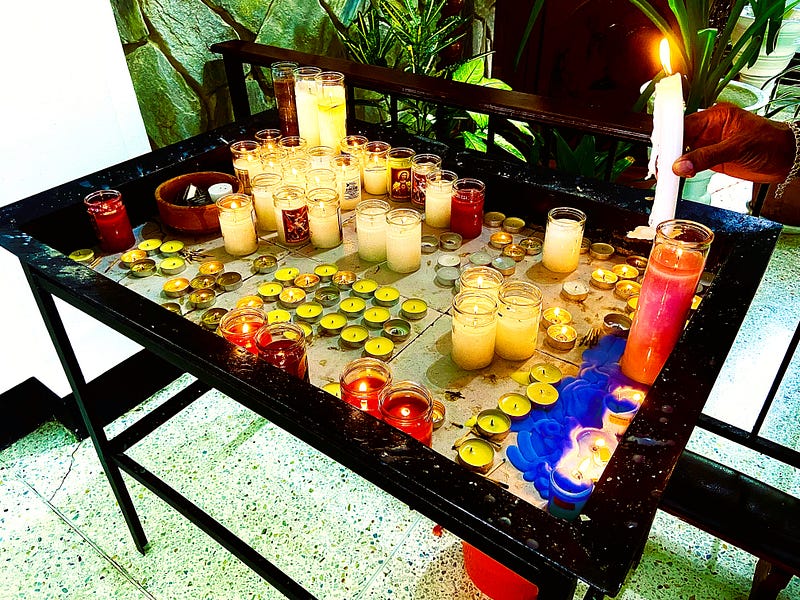
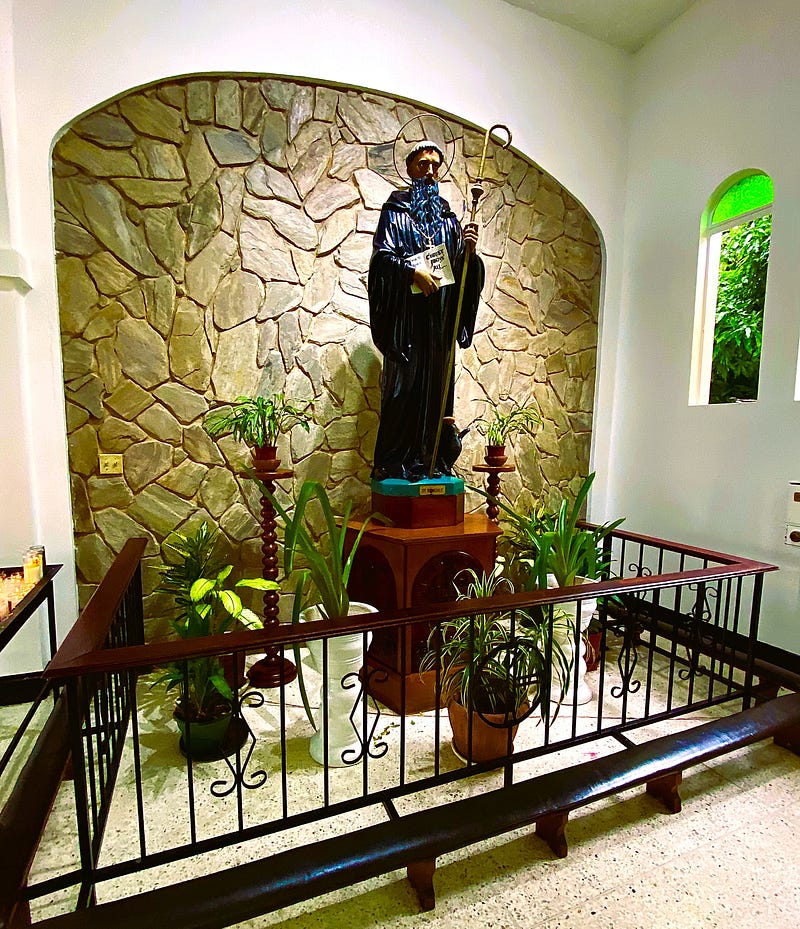
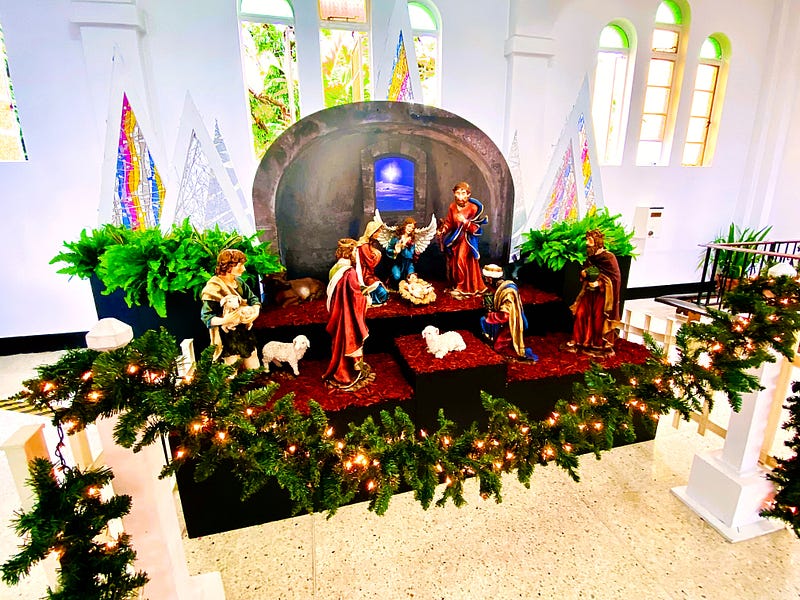
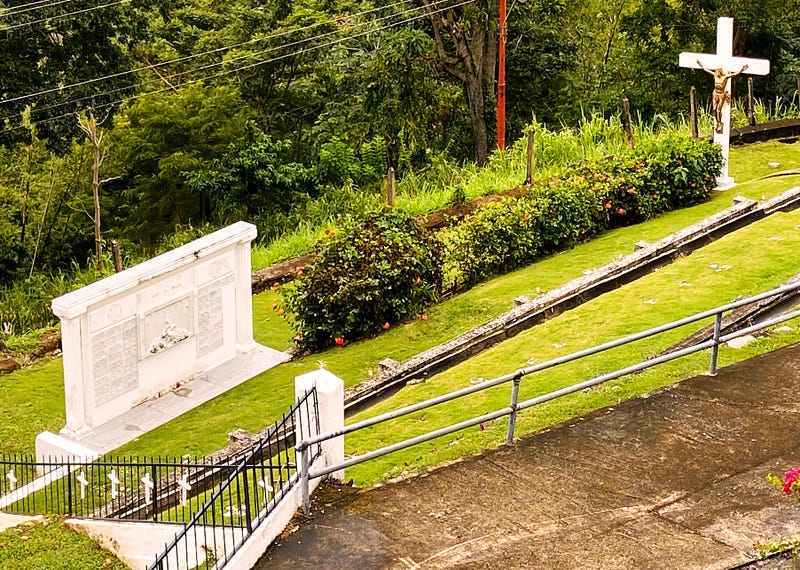
Located on the grounds outside is a cemetery, which my husband insisted I not take photos of out of respect for the dearly departed, and several memorials like the one below. Plus, there were many sources of holy water, which we collected in bottles and took home to bless our house.
We decided to each purchase a rosary and then we met with one of the monks to have them blessed. He took us into his office, spoke with us for a while and then blessed us and the rosaries. To this day, it is one of the most memorable moments of travel I’ve ever had. I do wish I would have remembered his name.
In the roughly two years since, I’ve traveled with that rosary everywhere I go, and sometimes wear it around my neck. When I’m feeling low, I hold it in my hands and send out a prayer. It goes with me when I travel back and forth from the United States. When I was in the hospital earlier this year with a life-threatening kidney infection, it brought me much comfort and it brings me comfort to this day.
My husband often points out that I do not use the rosary in the proper way with the proper sayings, prayers and meditations that one is suppose to do as a practicing Catholic. I’m much more of an open-form kinda person, expressing my thoughts and feelings to my higher power (God, universe, whatever it is) and since the Benedictine monks practice open spirituality as well, I think I’m ok in doing so.
What do you think?
Perhaps, though, this is why several times the rosary has broken. Not to be lamented exactly, a broken rosary can have much spiritual meaning, such as bad luck, an omen of needing to make some kind of change in life or a sign that the devil is trying to tempt us. Or it can have no meaning at all, only what we ourselves assign to it.
My husband, with all his handy watch repair and jewelry making tools, always patches it up and it’s good to go again.
After all, it is also said that the greatest power of the rosary is in keeping the devil away, and I am all for that! Here is where I enjoy some delicious Pax Yogurt, pray and leave the rest to that higher power.

Love travel stories? Check out these by two by my fellow editors at Globetrotters, who both constantly inspire me to step up my writing game:
Anne Bonfert writes about several favorite souvenirs from her travels, including one very special item:
Jillian Amatt - Artistic Voyages writes about her most cherished of souvenirs from her travels:
Follow Globetrotters on Medium for more great travel stories.


