
This Moment is All You Have (and all you need)
The Art of Mindfulness
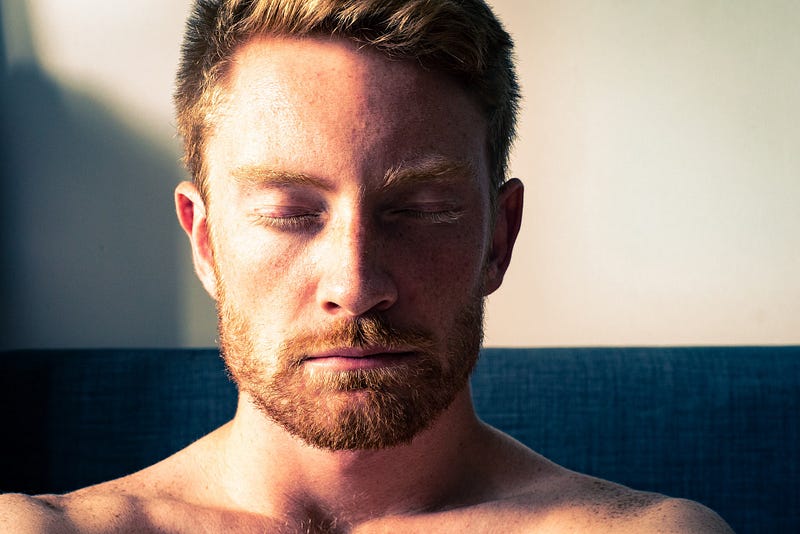
As a U.S. military veteran, I share issues that unfortunately have become commonplace amongst my brothers and sisters in the military: Anxiety, Depression, Traumatic Stress. Each of us has a different story and different experiences that brought about these conditions. But we all are forced to face the reality that each day begins yet another battle to overcome the debilitating effects of these conditions and to strive for some sense of normalcy in life.
While there are a myriad of techniques and methods to assist with Anxiety, Depression, Post Traumatic Stress Disorder, and other mental health conditions, I would like to present you with an option that is free of medications, counselling, or any time spent in a medical facility. I am talking about the gift of Mindfulness.
The practice of cultivating Mindfulness is not new. In fact, it comes from the ancient practice of Buddhism. Yet the use of this as a method of healing invisible wounds and helping individuals to re-focus has reached far beyond this one belief system. In fact, Mindfulness-Based Stress Reduction (MBSR) is a recognized and widely utilized system within the Department of Veterans Affairs in the United States.
I’m sure you are wondering, what is mindfulness? It is both a simple concept and a deeply philosophical one at the same time. Mindfulness means being aware of the present moment. It is said that the past does not exist, and the future has not yet happened, so the only true reality is that of the present moment. Mindfulness is bringing your focus into that present moment. It is freeing your mind of worry about past discretions or mistakes, of stressful thoughts of the future, and keeping yourself in the now. By doing so, you are teaching yourself to stop stressing over the past and future events, and keeping yourself focused only on the present.
So, just stop thinking about the past and future, sounds easy, right? Of course not. Our minds are a non-stop flurry of activity. Even as you are reading this, your mind is receiving signals about the temperature of the air around you, how comfortable or uncomfortable your seat is, the sounds all around you, the smells in the air, and on and on. That is only the mind dealing with your body’s senses. Now add in you remembering troubling experiences from the past, thinking about that phone call you had today that didn’t go so well, the meeting you have coming up later in the week, what you are going to eat for lunch, how your friends/family are doing, what you just heard on the news, why is that person over there looking at me right now, where is the nearest exit . . .
The point is that your mind has a very difficult time turning off. And mindfulness is not meant to do that. This method is not about reaching a state of emptiness or enlightenment, but rather continually re-focusing on the present as you let all the other thoughts pass by without judgment.
Such a powerful concept cannot be captured in a single article, and there are many methods to access this mindfulness. So, today let me offer a single exercise that is easy to do, and a good way to start you on the path to embracing mindfulness. There is no equipment or prior experience needed, so please give it a try.
One Minute to Mindfulness
This is a brief exercise that can be done virtually anywhere. It is a great way to get yourself re-focused and to remain calm throughout the day.
1. Find a place to sit comfortably. This can be in a chair, on the couch, in the seat of your parked vehicle, or even on the ground.
2. If possible, set a timer on your phone or watch for 1 minute. It is difficult to gauge time in this meditative state, so having a timer is helpful. If time is not an issue, feel free to continue this process as long as you feel it is needed.
3. Close your eyes, let your hands rest loosely on the tops of your thighs. There is no need for any specific pose or position, just that you are comfortable.
4. Take a moment and recognize all that you are hearing, feeling, and experiencing around you.
5. Now, pull your attention away from those sounds and feelings, and begin to focus on your breath. Feel the breath as it enters your body. Follow its path as it travels into your chest and then back out again.
6. Take a slow deep breath in through your nose, drawing the breath down deep into your lungs. When you breathe deeply, your abdomen will expand as the lower lungs are filled.
7. Just as slowly breathe out gently through your mouth.
8. With each breath, think only of the breath. If this is too difficult at first, use a word or phrase to accompany the breath such as: “I am here, in the moment.”
9. As your mind brings thoughts or images forward, acknowledge them, and then let them go, bringing your attention back to your breath. Do not judge anything that you’re thinking, as many thoughts come unbidden. Just recognize the thought and then go back to your breathing. Any sounds or sensations that arise, do the same thing, simply bring your attention back to your breath.
10. Continue breathing until the timer tells you a minute has been reached. Slowly open your eyes and enjoy the relaxed state you have achieved.
This technique can be done in both shorter and longer periods of time. If you find yourself feeling anxious, frantic, stressed, or upset and have too many thoughts whirling around inside, close your eyes, and focus on your breathing. Slowing your breathing has a calming effect in itself, and then focusing your mind on the present moment of your breathing will help you to re-focus and move ahead.
This is but one of the many approaches to mindfulness. May it serve to help you today and set you on a path to better mental health. Just remember to breathe.