
IT’LL BE FASCINATING TO SEE WHAT HAPPENS NEXT
This May, MAY, MAY! be the Wildest Boost-Related Thing I’ve Seen
Notice I’m emphasizing the May, MAY, MAY!
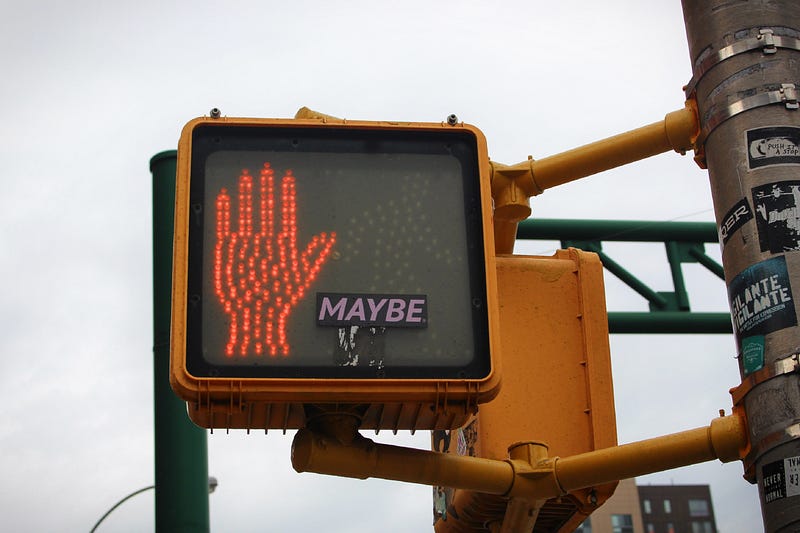
I can’t prove anything with my musings, but I’m going to tell my story and you can decide, or at least think about, how wild/crazy/interesting/thought-provoking (or not) this is.
Extreme pains have been taken to NOT call out the writer or his stories.
Like lots of writers, author XYZ, had a recent story boosted.
And, like a lot of writers, myself included, author XYZ wrote a follow-up story about the experience of being boosted.
XYZ’s follow-up story — details and observations
I got tagged in the follow-up story.
I read the follow-up story, repeatedly and carefully.
The follow-up story content is strictly garden variety material.
- There’s a screenshot of Medium’s congratulatory note.
- Writer XYZ expresses his joy about being boosted.
- There are a couple of self-help type tips for other writers.
- A “thank you” is included along with a modest tag cloud.
Again, standard issue stuff.
What’s not standard issue is the following:
- In the title/subtitle area there are two capitalization errors and a punctuation error. (Note that Medium does not have rules about formatting titles and subtitles, in spite of the fact that many writers think they do, so XYZ may be simply “going rogue”.)
- More striking still, the follow-up story is simply a series of poorly organized, minimally-related, thoughts. The material does not flow.
- Inappropriate and unnecessary caps are sprinkled throughout the story’s body.
- There are run-on sentences.
- Most of the material is awkward at best and not well written at worst.
In short, the follow-up story reads like marginal unedited work possibly from someone — perhaps someone trying hard but ultimately not succeeding — who is not a native English speaker.
It is also entirely possible that XYZ is simply a new writer working to improve his craft.
But, how does a story from this writer, XYZ, get boosted?
So, I turned to the boosted story.
XYZ’s boosted story — details and observations
- The boosted story title is also incorrectly capitalized. (Again, perhaps XYZ — and the pub editor — is/are going rogue. I understand going rogue and applaud it if that’s what’s happening here.)
- More to the point, the title is incorrectly constructed and makes no sense.
- Within the body of the story I detected three typos or word omissions, one word used incorrectly, and a run-on sentence. This in a pub-published story with editors who carefully review stories and refer them to the boost program.
- What is most notable however is the story arc. The boosted story flows and is captivating.
What are my takeaways?
1️⃣ One can characterize the five general boost criteria with a variety of descriptors, but: enriching, original, expert, well-crafted and impactful would seem to sum them up reasonably well.
So how is it that a pub-published piece, presumably edited, but containing many mistakes, would pass the “well-crafted” test and qualify for boosted status?
2️⃣ How is it possible that within a two-week span the same writer wrote a wonderfully wrought flowing story THEN followed it up shortly thereafter with an error-filled disjointed extended thank you note?
I almost hesitate to think this, but are these two stories the work of the same writer? Worse thought still, did this writer lift his boosted material from another source and claim it as original?
3️⃣ Everyone is entitled to a rough writing patch. I’ve had them, often, to the point where I cringe mightily when reading some of my old stuff.
But, I thought to read one of XYZ’s recent pinned stories for comparison’s sake. They too do not in any manner measure up to the quality of the boosted story.
I fully realize I’m working with incomplete information, hence my caution at drawing firm conclusions and my unwillingness to “call out” a Medium writer who may be completely legitimate, blameless and worthy of the boost he received.
I also fully realize that errors can and do happen even in carefully written, edited and reviewed literature.
Further, I know that the boost program is evolving and improving.
Finally, it was pointed out to me that perhaps XYZ’s account is a shared one, with two or more authors, all writing under the same name. This seems shady somehow, unethical perhaps, but I can’t recall seeing that it’s forbidden.
Tagging Buster Benson, Tony Stubblebine, and Ariel Meadow Stallings because they may be interested in my musings.
I’d also welcome input from Kristina God and Robin Wilding 💎.


