This makes me think of the video game Call of Duty!
This story was originally published in Areas & Producers
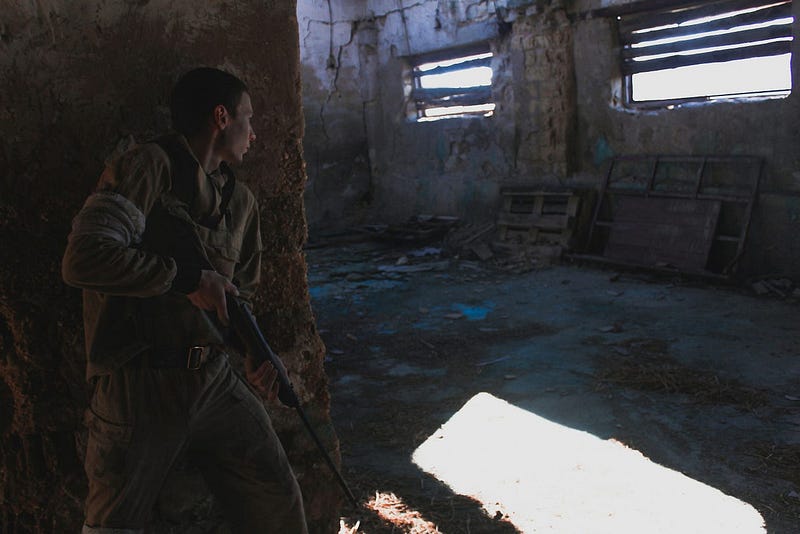
War and energy are on the minds of so many people right now. Conflict rages on from the Gaza Strip between Israel and Hamas to the Black Sea between Russia and Ukraine, as well as between armed groups in several countries such as Myanmar and the Democratic Republic of Congo (DRC). Meanwhile, the Saudi-led OPEC+ meetings are stirring up the pot of international politics by cutting output of global oil supplies during Red Sea attacks.
That’s why I encourage everyone to join in this discussion. We should be talking more about world affairs these days!
I even wrote a previous opinion for [The Weekend Brief] newsletter on Russia’s invasion of Ukraine — Is Russia willing to go to war with NATO forces? — which includes some commentary from other Medium writers discussing the fate of Europe’s strategic dilemma and NATO forces.
George Friedman is founder of Geopolitical Futures and author of many books on geopolitics. This latest writing by Friedman about the outcomes and historical context of the Israel-Hamas War is insightful and a little controversial. Have a look at it here.
Now, here are my thoughts about the article.
“No Arab or Islamic country or movement was prepared to ally militarily with Hamas. The group thought that while a direct, combined attack on Israel would not succeed, it was still possible to force Israel into an untenable position. We now know that this was the line of thinking because Hamas did indeed attack Israel and, in doing so, isolated it from other potential allies. This decision shows Oct. 7 was more complex and, to an extent, more successful than initially thought.”
In hindsight the attack on October 7 was successful in getting the world’s attention; in other words, shifting the international perception from the Russia-Ukraine War to the Middle East Conflict. Using foresight will tell a completely different story about the big picture in International Relations. My meaning is that I do not think Hamas will survive to see a Palestinian state, because the group’s future depends on strengthening cooperation with state-actors that can supply arms. And, as Friedman pointed out here, the attack has made the group less attractive on the international stage.
The Houthis have succeeded where Hamas has ultimately failed — the Houthi rebels are organized around an area where they hold a major advantage. And that, my friends, is maritime warfare. There isn’t a NATO of the Red Sea, nor any other type of nascent coalition like the Quad in the Indo-Pacific, that can be present near the Houthis at all times. State-actors like Iran know this, and by supporting the Houthi rebels, it ensures that US and UK interests in the Red Sea and Persian Gulf do not go unchallenged by Tehran’s own geopolitical objectives.
“Wars are political affairs, and the Israeli Cabinet had to decide to attack from the air to calm the situation and mollify the growing hostility to the government. Israel hoped that airstrikes and special operations would break Hamas. But Hamas was fighting urban warfare on its own terrain — a terrain where disengagement and sudden counterattacks were practical choices.”
Friedman’s words are said like a true political geographer. Talking about political affairs, air attacks, urban warfare and terrain, is another way of saying that we are witnessing global modern warfare at its finest. This makes me think of the video game Call of Duty: Modern Warfare (it was very popular version of the Call of Duty series). I wonder if all those gamers realize that what they are playing is actually being carried out in real-life scenarios like Israel and the Gaza Strip. Psst, I seriously doubt it!
Anyways, Friedman indicates that we should be thinking of this Israel-Hamas war in terms of geographical terms. The initial attack on October 7 was a surprise element, one which was poorly defended and has made Israel appear at its most insecure position since the contemporary era. Israel might have the military advantage, but its political will is constantly being tested as it carries out increasingly more severe attacks on Hamas and innocent civilians in the Gaza Strip. The Israeli political will is not as strong as its military might, and the Houthis are likely to step up attacks from maritime areas until this is proven true.
“Israel is now caught in a war in northern Gaza with a rigid Cabinet that won’t accept a strategic retreat and a media ecosystem criticizing its approach…At this point, Israel’s military options are limited, thanks in no small part to the shift in public opinion in its most important ally, the United States. The possibility of a successful assault on Hamas is dwindling, and even Israeli citizens are demonstrating for a deal to be made for the remaining Israeli hostages.”
The US wants a solution to this Israel-Hamas war — asap. The US cannot appear to be too conciliatory to the Israeli enemy, while it also cannot sit idly by as Israel pummels innocent civilians and infrastructure into oblivion. I think, what the US really wants to do, is wait for the right moment to step in as peacemaker to this conflict. However, that role isn’t going to be prioritized during the month of China’s National People’s Congress (NPC) and the Australia-ASEAN 50th anniversary.
The US knows that it must play a leading role in the Indo-Pacific strategy. But that doesn’t mean that it will continue to play a leading role in the world. As everyone following current affairs should know by now, the US is slowly disengaging from the role as world peace diplomat. This makes certain countries happy (like Iran) but displeases others (like China) who do not want to become the targeted attention of a US military strategy (like Russia).