
This King is Called a Wise Fool. Can You Guess What He Did to Earn this Tag?
Is he the most terrible innovator?
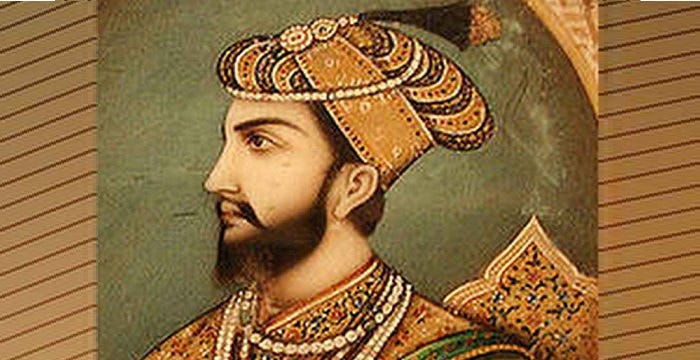
Muhammad Bin Tughluq, once the Sultan of Delhi, ruled many parts of northern and central India from 1324 to 1351 AD.
He had a keen interest in astrology, medicine, and mastery over several languages. Despite all his achievements in other fields, the king is tagged as a ‘wise fool’.
What could he have possibly done to deserve an oxymoron like that?
Well, the attributes don’t stop at ‘wise fool.’ Here is what Stanley Lane-Poole, a British archeologist said about Muhammad Bin Tughluq:
“With the best intentions, excellent ideas, but no balance or patience, no sense of proportion, Muhammad Tughluq was a transcendent failure”.
Surely the Delhi Sultan must have done something terrible to be called such names. Let’s look at some of his terrible decisions.
The stupidest shift ever?
Muhammad Bin Tughluq once had an interesting idea: to shift his capital from Delhi to Daulatabad, a place currently in the Indian state of Maharashtra.
You are looking at a distance close to 1000 kilometers in an age where horse-driven carts were the fastest means of transport. This wasn’t going to be easy.
The sultan then made it even more difficult by ordering the entire citizens to be shifted from Delhi to Daulatabad. The public shriveled at this order but still had to abide by their ruler’s words.
During the long and arduous journey, many people died from hunger and exhaustion. Check out how Muslim political thinker Barani explained the predicament of the people.
“Many, from the toil of long journey, perished on the road and those who arrived at Deogiri, could not endure the pain of exile. In despondency, they pained away to death. All along Deogiri, which is an infidel land, there sprang up graveyards of Musalmans.”
Did the shift to central India leave Delhi a ghost town? Barani adds that ‘not a cat or dog was left’ in Delhi after the migration.
“All was destroyed. So complete was the ruin that not a cat or a dog was left in the buildings of the city, in places or in its suburbs.”- Barani
Even Moroccan explorer Ibn Battuta’s words paint a similar picture, although such statements could have been exaggerated.
However, there is no denying that Delhi suffered a dent in its stature.
If shifting was all mess and no gains, why did the king want this?
The reason behind the shift
Muhammad Bin Tughluq shifted the capital purely for administrative convenience.
Delhi is a region in northern India, and Daulatabad was placed more towards central India. Since the sultan’s reign extended over significant portions of India, he figured that ruling from a central part would give him easy access to most places.
Some also argue that Tughluq wanted to shield his capital from foreign invasions; the Mongols did have an eye on Delhi.
Professor Habibullah and Dr. Mehdi Husain feel that the sultan yearned to convert the Deccan region as a center of Muslim culture, and therefore ordered the shift.
Whatever be the reasons, It was a herculean task to shift that big a nation to that long a distance. The convoy included the royal house, the soldiers, courtiers, philosophers, saints, nobles, and the common person.
He did try to alleviate the enormity of this venture by setting up halting stations, shady trees, and provisions for edibles on the way. As it turned out, it wasn’t enough.
People were too attached to their land, and it is with the greatest of hesitation that they obeyed their sultan.
The U-Turn that made it worse
As if the toil of shifting wasn’t enough, Tughluq hit the undo button soon after he established his capital at Daulatabad.
In other words, he said, “let’s shift back to Delhi”!
This decision was propelled by the outbreak of plague, of which the sultan himself was a victim, as well as the revolts in Bengal. Sultan feared that he might lose Delhi if he didn’t make it back in time.
The royal convoy had to pack again for one long journey back to Delhi. At least this time, they were returning to a familiar place.
The sultan had thus made an erroneous shift of capital that cost him and his citizens.
The coin system
One among the other innovations of Muhammad Bin Tughluq was the introduction of token currency.
For the first time in India’s history, the sultan introduced brass and copper coins considered equal worth to silver and gold coins.
This was an innovative idea, but it equipped the commoner with the power to mint their own currency. Counterfeits soon outnumbered royal mint coins, and the nation plunged into one great economic crisis.
Muhammad Bin Tughluq had envisioned something far ahead of his times, but his execution failed him. It is believed that Tughluq’s plan to annex kingdoms like Persia and Iraq had to take a back seat due to this counterfeit-induced inflation.
The unfair taxation
Muhammad Bin Tughluq had lofty ambitions about expanding his territory. He had raised a huge army for the same, and to pay them, he decided to increase the tax on farmers.
This was a tough ask on the farmers, and the policy created a huge discontent among them. There was less production as people turned towards other means of occupation. Food scarcity soon became rife.
In yet another instance, Tughluq had increased the taxes on Ganga and Yamuna(both rivers in India) alluvial lands. People could not bear this burden, and some even resorted to theft and robbery.
The sultan wasn’t a callous person oblivious to the needs of citizens. But by the time he realized his mistakes, it was too late. He did try to repair the damage by providing agricultural loans to farmers, but it wasn’t enough to salvage them.
Final thoughts
Do you see the ‘wise’ in ‘wise-fool’ now?
It is not as if Muhammad Bin Tughluq was a terrible ruler who did stupid things. Compared to many other kings of the Delhi sultanate, he could be called a visionary.
He was far-sighted and innovative and tried implementing steps that his counterparts couldn’t envisage.
Yet, he could not see the pitfalls in his path-breaking actions and ended up earning a tag that nobody likes: the wise fool.