
This Japanese Practice Could Be the Key to a Longer, Happier Life
How to practice shinrin-yoku to keep your body and mind healthy.
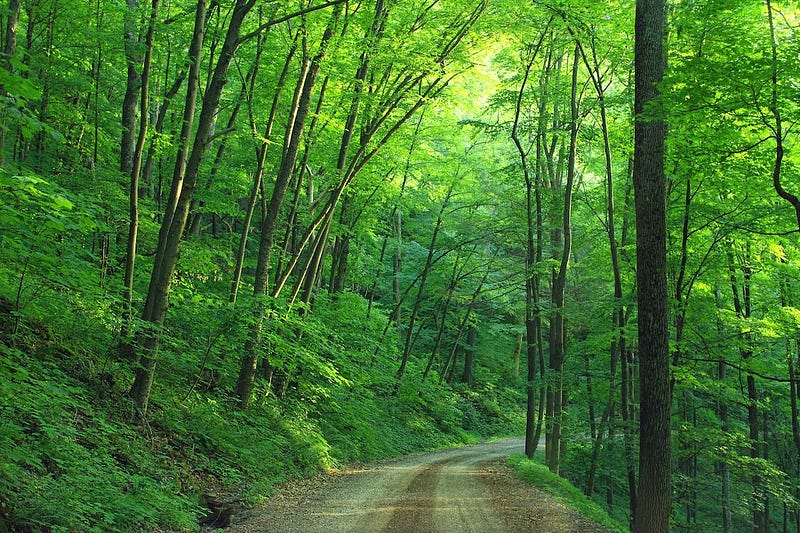
I’ve always thought of the Spanish Pyrenees as a magical place, but it wasn’t until this summer that I fully understood why.
After finishing a grueling and disappointing writing program, I was completely burned out. I couldn’t write. Couldn’t concentrate. I was barely able to half-ass my job.
The mental exhaustion, though, was only half of it.
I got sick easily with both respiratory and gastrointestinal problems. Not to mention the mental fog.
Then I went to La Cerdaña, one of my favorite places in the world.
Nestled between the Spanish and French Pyrenees, it is a valley filled with picturesque towns, free-range horses, and acres upon acres of forested mountains. The air there is fresh with traces of dirt and pine. Woody. And the views… I have to constantly remind myself that what I’m seeing isn’t a painting.
Spending two weeks trekking, eating local food, and basking in nature was rejuvenating. The diseases and mental fog were gone. Better yet, my fingers soon found their way back to the keyboard. After seven months, I was finally able to write again.
I was healed — thanks to the power of shinrin-yoku.
What Is Shinrin-Yoku?
“Shinrin-yoku is like a bridge. By opening our senses, it bridges the gap between us and the natural world. And when we are in harmony with the natural world, we can begin to heal.”
— Dr. Qing Li, Chairman of the Japanese Society for Forest Medicine.
Shinrin in Japanese means ‘forest’, and yoku means ‘bath,’ so shinrin-yoku means ‘forest bath.’ It means immersing ourselves in nature and absorbing it with all our senses, a healing practice since time immemorial.
As American biologist E. O. Wilson explained in his Biophilia hypothesis, we have an intrinsic need to connect with nature because we evolved in it. Because it’s where we’ve lived for most of our life on earth. Connecting with nature is as necessary to us as oxygen and sunlight.
However, we’re more removed from nature than ever.
In the past decades, we’ve become an urban species, living in crowded cities and suffering from chronic work and technological stress. Anxiety, depression, mental fatigue — they’ve become our new reality. The World Health Organization (WHO) calls stress the health epidemic of our time.
That’s why Japan launched a campaign in 1982 to promote shinrin-yoku, a measure taken based on our intuitive connection with nature. It wasn’t until 2004, though, that scientific proof was first found of this practice’s effectiveness against stress. Now, after almost two decades and dozens of research studies, countless other benefits have been discovered.
Turns out, trees could be the key to a long and happy life.
What Are the Health Benefits of Japanese Forest Bathing?
“Forests reduce our stress, boost our immune system and help us to live longer, better and happier lives. Our health and the health of the forest go hand in hand. When trees die, we die. If our forests are unhealthy, then so are we. You can’t have a healthy population without healthy forests.”
— Dr. Qing Li
The health secrets of the forests seem to lie in two things: the higher concentration of oxygen, as compared to an urban setting, and the presence of plant chemicals called phytoncides, natural oils that plants produce to defend against bacteria, insects, and fungi.
As shown in Dr. Qing Li’s book about forest bathing, several studies have proven their connection to a healthier, happier life.
To be precise, shinrin-yoku can:
- Reduce blood pressure.
- Lower stress (cortisol and adrenaline).
- Enhance sleep quality. “The average sleep time of participants after a two-hour forest walk increased by 15 percent, or fifty-four minutes.”
- Improve cardiovascular and metabolic health.
- Lower blood sugar levels.
- Improve concentration and memory. “Spending time in nature can boost problem-solving ability and creativity by 50 percent.”
- Boost the immune system with an increase in the count of the body’s natural killer (NK) cells. “A forest-bathing trip once a month is enough to maintain a high level of natural killer cell activity.”
- Improve pain thresholds.
- Energize.
- Decrease anxiety, depression, and anger. One study found that regular forest bathing is more effective than antidepressants for lifting mood and ensuring emotional well-being.
- Increase anti-cancer protein production.
- Help you to lose weight.
- Boost longevity. “People who live in areas with fewer trees not only have significantly higher levels of stress, they also have higher mortality rates than people who live where there is a good density of trees.”
In short, the health benefits of shinrin-yoku extend beyond the physical. Forest bathing can also ease our minds and promote long-term well-being.
As Dr. Qing Li says, “There is something in nature that can make us happy that is separate from the happiness we get from other things, like friends or family, or music. Our relationship with nature is unique, and it can make us uniquely happy.”
How To Practice Shinrin-Yoku
“The key to unlocking the power of the forest is in the five senses. Let nature enter through your ears, eyes, nose, mouth, hands and feet.”
— Dr. Qing Li
According to Dr. Li, the steps to practice shinrin-yoku are the following:
- Find a good source of nature. This doesn’t mean you need to journey deep into a forest. Just look for any green area, even an urban park. Forests with conifers, though, are thought to be particularly beneficial.
- Indulge all your senses. Listen to the singing birds and rustling leaves. Marvel at the shades of green and the sunlight filtering through the branches. Inhale the healing fragrance of the trees and the earth. Taste the freshness of the air. Feel the trunk of a tree, walk barefoot on the grass, or dip your fingers in a stream.
- Take your time. Slow walking is recommended for beginners. And it’s good to spend as much time as possible. According to Dr. Li, you’ll notice positive effects after twenty minutes, but a longer visit, ideally four hours, is better.
- Try different activities. Trekking, yoga, meditation — find one that suits you. One that helps you connect with nature. And it doesn’t have to be active either. Simply going to read a book, write or paint is effective.
- Appreciate the silence. One of the downsides of urban living is the constant noise. If you’re lucky, you’ll find a wooded area free from human-produced sounds. Silence is restorative, and a forest can have its own healing sound — rustling leaves, a trickle of water, birdsong.
Now, you may be wondering: What if I can’t go outside?
Easy.
Bring shinrin-yoku into your home or workspace. In fact, even if you can also regularly visit parks or trails, applying the following strategies to indoor spaces can magnify the benefits of the practice:
- Plants. Besides making your home or office look more like a forest, adding plants can up the oxygen and phytoncide content of the space. Moreover, it also helps purify the air. The top-ten plants for that purpose are: peace lily, golden pothos, English ivy, chrysanthemum, gerbera daisy, mother-in-law’s tongue, bamboo palm, azalea, red-edge dracaena, and spider plant.
- Essential oils. You can also reap the phytoncide-related health benefits with essential oils (conifer, pine, …). One option is to buy a candle or incense, but a diffuser is best as you avoid breathing smoke.
- Images of nature. Simply watching documentaries or breathtaking pictures of nature can induce some of the mental-related benefits of forest bathing.
- Sounds of nature. “We know that listening to the sounds of the natural world has a restorative effect on our cognitive abilities when we are in the forest, so it is not surprising that studies have found that listening to the sounds of nature when we are at work can help us to focus and get more done.” You can achieve this either through Spotify or perhaps by buying a small burbling fountain.
As you can see, the key is to engage your senses as though you were outside. If we can’t go to nature, we should bring nature to us.
Embrace Nature’s Healing Power
“The forest is like our mother, a sacred place, a gift to us humans from the divine. It is a paradise of healing. Mother Nature fills us with wonder and curiosity and invites us in. All we have to do is accept the invitation. Mother Nature does the rest.”
— Dr. Qing Li
It’s no secret that anxiety, depression, and loneliness are on the rise. Our unnatural urban lifestyles, grueling workloads, and excessive screen times rob us of our much-needed connection with nature. In turn, this makes us more stressed and unhealthier, a vicious cycle.
So why not try shinrin-yoku?
At worst, it’ll take some time before you find an activity or place that suits you. At best, you’ll enjoy nature’s healing power.
Other stories you might enjoy:
If you enjoyed this story and would love to read more, you can sign up to become a Medium member. If you use this link, I’ll also receive a tiny commission at no extra cost to you. Thanks!