
This Is Your Brain on God: The Neuroscience of Spirituality
Proving that spiritual practices bless us in many ways
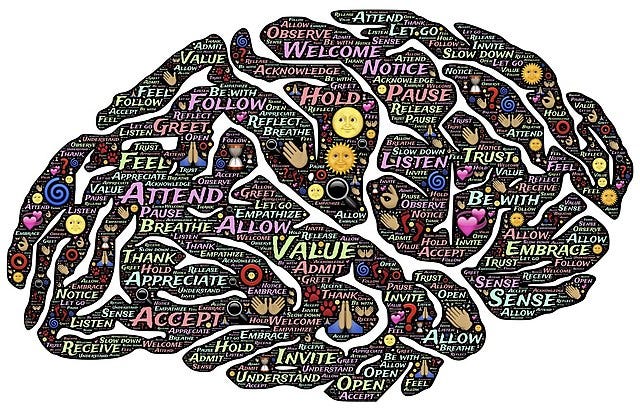
Thank God for neuroscience.
I always sensed that practices like prayer, chanting, meditation, and others have good effects on us. They help us calm down, slow our heart rate, relieve tension, and clear away negative thoughts, at least for a while.
Last week, in my story, How Does Prayer Fit with How We Treat Ourselves and the Earth? I shared how after praying, my spirits lift, my vibration raises, and my burdens lighten. I also shared how I’m using prayer beads to anchor me in prayer, chanting, and gratitude.
I’m here to report, I feel a whole lot better. Stress and worry are down, joy and enthusiasm are up. Is that because my neuropathways got rewired? And if so, will that change stick around?
This reminded me of a book I’d read a while back. Andrew Newbert, MD, and his partner Mark Robert Waldman’s, How God Changes Your Brain.
I decided to read it again. And the gems I’m learning are too bright to keep to myself.
So let’s dive right in.
Newberg and Waldman work at the University of Pennsylvania’s Center for Spirituality and the Mind. They study people meditating, chanting, and praying. People with a wide variety of beliefs and practices. Some self-defined as religious, even fundamental.
Others self-define as spiritual. Some as atheists or agnostics. They wired these folks up, did brain scans, and studied the results.
Their conclusions may not surprise you:
“If you contemplate God long enough….neural functioning begins to change…New dendrites are formed, new synaptic connections are made, and the brain becomes more sensitive to subtle realms of experience. Perceptions alter, beliefs begin to change, and if God has meaning for you, then God becomes neurologically real.” (How God Changes Your Brain)
In their work, Newberg and Waldman refer to contemplation as a specific spiritual practice. It’s like meditation with a specific intention. It can be, for example, the desire to connect with Spirit or grow in compassion for others.
Or it can focus on a meaningful quote, poem, or passage, possibly from Scripture. Contemplation can be supported by other spiritual practices, but this is its essence. This is the brain-changer!

The Shadow Side of Belief
They found that not all spiritual beliefs are healthy for our brains.
If we see God as a vindictive deity justifying harming others, this belief can damage our brains while it motivates destructive behaviors. It does this by activating the emotional center of the brain, the amygdala, while suppressing the rational cerebral cortex.
That explains a lot. Especially when coupled with the kind of fear-based mindsets that do things like ban classes on critical thinking as was done in Texas. Scary.
Outside of that caveat, most religious and spiritual practices have a healing effect on us. Even stripped of religious beliefs, they enhance the neural functioning of the brain in ways that improve physical and emotional health.
Newberg and Waldman found that contemplative practices in particular “strengthen a specific neurological circuit that generates peacefulness, social awareness, and compassion for others.”
This is in addition to enhancing cognition, communication, and creativity.
Slowing Down Aging and Dementia
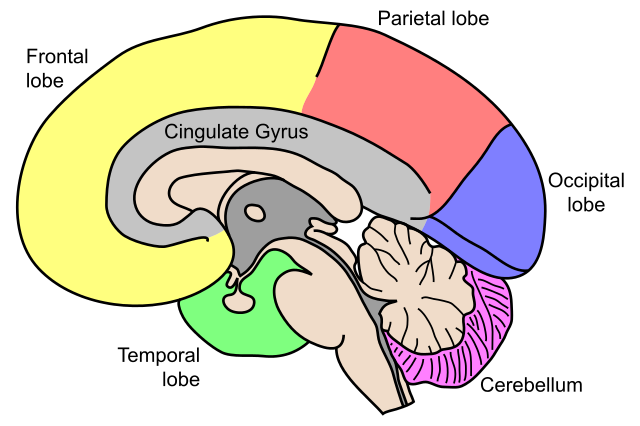
They obtained a grant from the Alzheimer’s Research and Prevention Foundation to study the effect of meditation practices on aging and dementia. They found that practices that engage the brain’s prefrontal cortex and anterior cingulate improve memory and cognition.
They also counter the effects of depression–a common challenge for people with aging disorders. This is good news for all of us, no matter how old.
FYI, the prefrontal cortex controls our conscious mind–logic, reasoning, attention, language, and motivation. The anterior cingulate processes social awareness, intuition, and empathy. It contains a type of neuron unique to humans and a few primates.
Newberg and Waldman write: “Spiritual practices specifically strengthen the anterior cingulate and when this happens activity in the amygdala slows down.”
Trauma and the Amygdala
This is key because the amygdala governs our ‘fight or flight response to real or perceived fear and danger. When it’s turned on, we have little to no access to our higher brain functions like the rational cortex. This often happens when we get triggered and thrown back into an old trauma.
An excellent book that explores this phenomenon in relation to racial fears and violence is Resmaa Menakem’s My Grandmother’s Hands. An African American trauma therapist, his work and studies include how trauma can trigger thoughtless racial violence like police shootings of innocent people of color.
Newberg and Waldman’s study of neuroplasticity–the ability of our brains to structurally rearrange themselves in response to a wide variety of events — backs up the idea that spirituality can help us respond to life’s stressors with less anger and more compassion.
Isn’t this what Jesus, Buddha, and sages throughout the ages taught? As well as practices to enhance our connection with God.
Whether it’s prayer, meditation, chanting, or others, these activities do indeed create not only shifts in consciousness but changes in our neural pathways to enhance those shifts. Hallelujah! Can I get an amen!
Here’s what Newberg and Waldman say about this:
“When you intently and consistently focus on your spiritual values and goals, you increase the blood flow to your frontal lobes and anterior cingulate, which causes the activity in emotional centers of the brain to decrease.
“Conscious intention is the key, and the more you focus on your inner values the more you can take charge of your life. Thus mediation–be it religious or secular–enables you to more easily accomplish your goals.” (How God Changes Your Brain)
Now in addition to prayers and mantras, I have issues to pray over, and beads to pray with and poetic passages to contemplate. With my suspicions about how it all works confirmed, I have more reasons than ever to practice consistently.
This means I can have a God-blessed life infused with joy, rather than run by fear, worry, and depression.
Not just me. All of us. Happy contemplation. Illuminaste!
Marilyn Flower’s the author of Creative Blogging: Ninja Writers Guide to Character Development and Bucket Listers, Get Your Brave On. Clowning and improvisation strengthen her resolve during these crazy times. Follow her Sacred Foolishness and Stay in touch!


