
This Is Why I Cringe at People Saying This Is “Me”, “My Style”, “My Type”…
Harsh words here but it might save you from some persistent stress and mental issues.
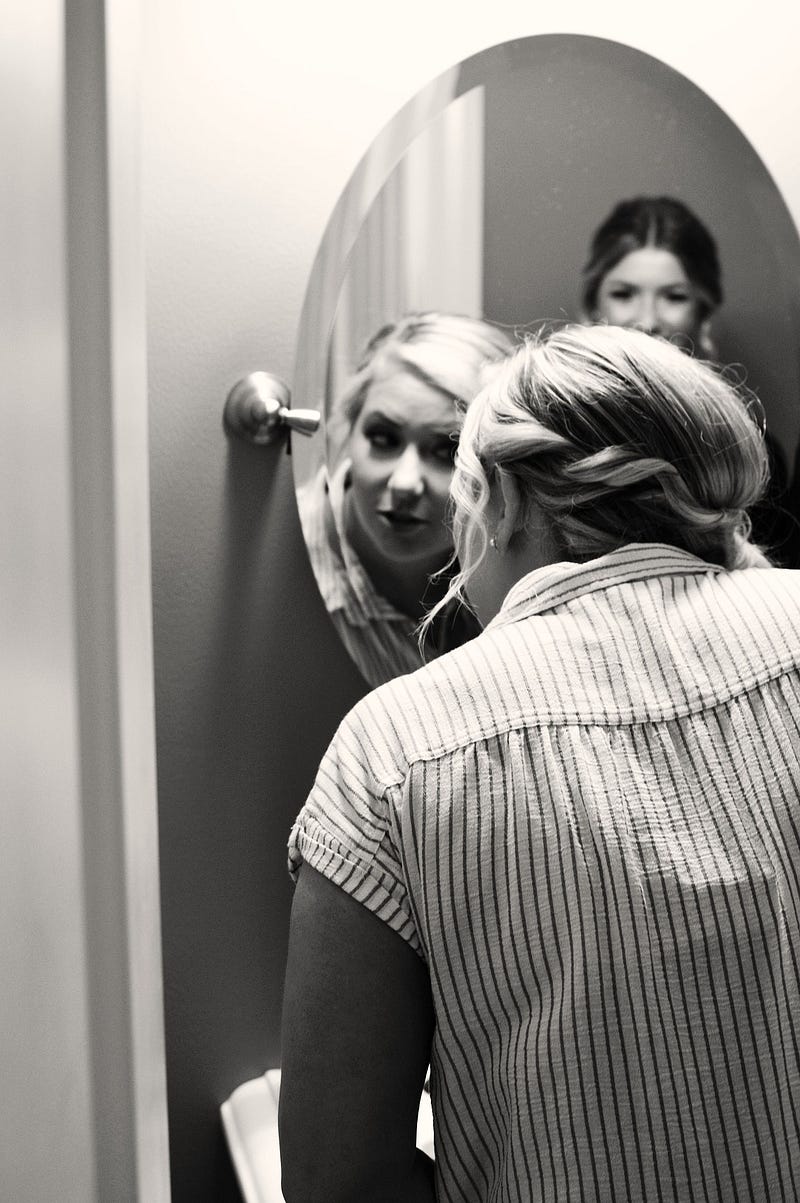
The modern world romanticizes “finding” yourself, your style, your type, etc. This quest is even glorified to the point that you would feel compelled to lie about what is “you” all the time, just so you could gain a foothold in society, and not be considered a pushover since all your peers have “personalities” and “styles” early, apparently.
But here is the inconvenient truth: “I am a party/career, coffee/tea, outdoor/indoor, [insert any description] person” is largely a function of the desire to fit in some social groups, to follow what is considered socially “cool”, or the fear of being asked what you like and not knowing how to answer.
I would go far to say that the so-called “me” for any young person is likely some combination of hormonal influence, peer pressure and external validation, internalized cultural ideals, and subtle imprints by movie stars and influencers, which are all simultaneously amplified by individualistic indoctrination and conditioning since childhood. That is, such premature “identity” is much more of a manifestation of the uncontrollable forces than there is genuine autonomy, self-reflection, and deep exploration.
Let’s explore deeper together. An eternal truth of life is that we all evolve. The older (assuming also wiser) you get, the more likely you would realize that there are so few things about your characters and aspirations that are constant and consistent throughout life.
For myself, I could only think of fewer and fewer things that can really be considered as “my nature or character” as I grow older, e.g., things that can be categorized as instincts, an adherence to fairness and reciprocity, a general distaste of large crowds, and a general drive of seeking truths to do good for the world, that’s about it. That’s probably not specific enough to fill out a dating profile, nor to decide how I will live my life in the next 10 years. Recalling from my memory, I was once tested as an INTP 10 years ago, an INFJ 5 years ago, and just months ago when I re-test out of boredom, I got an ENFJ. So, maybe I do have no personality, but does it matter?
Of course, these are just minor illustrations of my “lost self”, but I bet many of you have a similar experience, feeling that the 10-years-ago “younger you” is hardly the same person, at all.
(Now, be honest with yourself, is that “me” you so often touted and internalized actually defined by your social comfort zone and habit, or a genuine result of self-reflection?)
It goes far beyond my own anecdote. Biology and Ecology found the same truth. Niche partitioning — the process of adapting to distinct ways of life, is an invariant evolutionary outcome of all life. It consistently occurs in the same individuals of different ages in the same species, not just between distinct species. This means “me” is never a solid concept or identity, it must actually change to make way for new life to continue through the lens of evolution. Adaptation and plasticity are the defining, and arguably most powerful characteristics of most, if not all life. So, you ARE probably more versatile and adaptive than you think. (Look here to see what even “measly” single cells can do!)
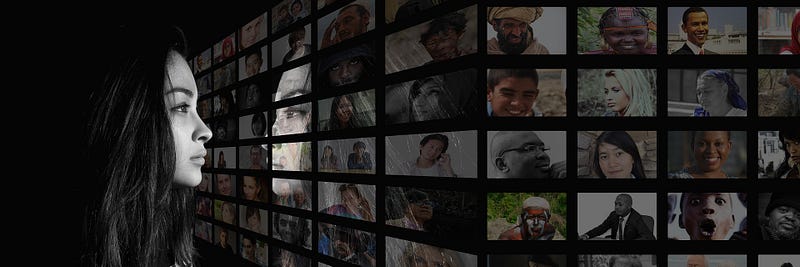
Buddhists also agree. Dwelling on the concept of a unitary “self” is foolish because this will lead you astray from the true essence of existence, which is selfless and relational. They also consider it as a source of suffering, because such beliefs lead to attachment, and the attachment to something impermanent and untrue must cause suffering. Jay Garfield, professor of Buddhist philosophy explained the illusion of self this way: (rephrased) The entirety of you is your mind and body, but it is perfectly conceivable that you can “steal” the body of (e.g., Usain Bolt), or the mind of (e.g., Stephen Hawking) and still retain the constructed image of self who “owns” these two things. But when you replace the whole person (mind + body) altogether, this mental construct of “self” physically vanishes — it is thus not “you”, it is largely a product of external information gradually woven into your mind and body via heaps of dopamine and serotonin conditioning.
“From the Buddhist perspective, the idea of ‘individual self’ is an illusion. It is not possible to separate self from its surroundings. Buddha in Lankavatara Sutra states, ‘Things are not what they seem… Deeds exist, but no doer can be found’ (Majjhima Nikaya, 192).” — Oh, 2021
Objectively speaking, the idea of “me” mainly stems from the continuous string of internal monologue you are having. Your brain is subconsciously analyzing what words get used often and which simultaneously lights up dopamine circuitry. Here is the thing, the inclination to use certain words to describe things likely has no valuable basis, it is simply a habit of mimicking what others have been saying (this explains why the “now you” and the “child you” feel completely different as your information circle changes). Essentially, this is an exercise of building a mental model out of bad data — a model calibrated and validated by the same internal data. Useful data comes from genuine real-world effects of your actions — an experimental kind of data instead of generating a dummy dataset with a “for-loop” inside your head.
This shifts the emphasis to the importance of your actions and endeavors, rather than your belief of you being a good person in your head. Remember, you are what you do to the world (a verb), not who you think you are (a noun). Nature is completely blind to the latter, it only reacts to the former.
Focusing on what you do is the ultimate antidote to mind-behavior dissonance. It also fosters moderation and distancing from extremism, because you are both conscious about the real-world effect of your actions, as well as the consequence of “all thought, no action”.
Ask any elderly about their regrets, the chance they would say “I wish I had done something” is pretty high. Don’t follow the cliché of “love yourself”, instead, love what you do. If you are doing something truly great and proud of, how else would you not feel loved?
“Don’t let the saying define you, do it instead.” — Marmotian
Consciousness and the image of “self” are no companions. The latter limits the former.
Solidifying your “self” — what kind of person you are, your ideal preferences, your becoming, is always dangerous. That’s how Hitler went his own way and destroyed a whole “race”.
Of course, you might not have as much ego and political power as Hitler. Still, insisting on solidifying a particular self means you either stop learning from others or you think you have found out the ultimate truth about your deepest nature, which is a rather arrogant position to take. Even if you believe in yourself to be a moral, humble person, your deeds would be carried out to fulfill that image, instead of acting by virtue of the goodness of the action itself — it takes away the purity of intention.
Reality is not just about you, when there are several billion people believing in this myth, the Earth and the rest of its inhabitants are truly f__ked. The ego of solidifying “me”, “us”, the “one true God” is the leading cause of the extinction of diversity — it is a gateway to forgetting how interconnected and interdependent each and every one of us is (Buddhists call this Pratītyasamutpāda). Wars and conflicts will never stop as long as ego prevails, it is the nature of cancer cells, invasive plants, and deadly plagues.
To end, always keep a pinch of doubt in your mind about your true self. Whenever you encounter a personal identity problem, always ask: does it really matter? Does it matter if you call me by “Marmotian” or “松” (My Chinese Name), so long as you treat me with respect and genuinely read what I have to say here? The minimal useful concept of “self” is simply recognizing that one is an amazing, versatile being capable of doing great things. Labels and identity are such hype, bring good to the world with your actions and endeavors.
I hope you enjoy this story. If you like my writing, you can subscribe to me here and support me here. New to Medium and want to discover all mind-bending stories? Go here.