
This is Why Great Artists Steal
The Secret of Making Great Art
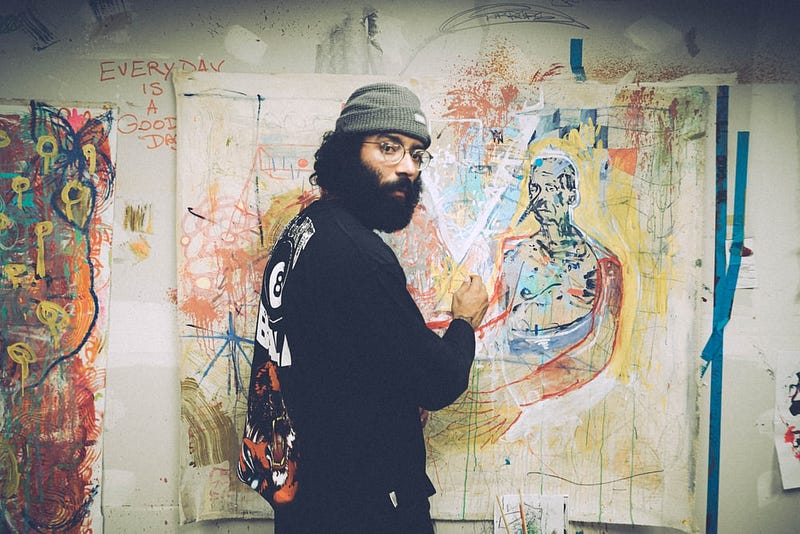
Philosopher Immanuel Kant argued that since there is no objective rulebook for great art, existing works of art act as a blueprint for us to create our own beauty. Or, to put it in layman’s terms: You should rip off the artists you love.
We all know the cliché aphorism that gets thrown about when it comes to artists, “Bad artists imitate, great artists steal.” Where did this quote originally come from? It can be traced back to the great poet T.S Eliot. The full quote reads:
“One of the surest of tests is the way in which a poet borrows. Immature poets imitate; mature poets steal; bad poets deface what they take, and good poets make it into something better, or at least something different. The good poet welds his theft into a whole of feeling which is unique, utterly different from that from which it was torn; the bad poet throws it into something which has no cohesion.”
What exactly does T.S Eliot mean when he says, “The good poet welds his theft into a whole of feeling which is unique, utterly different from that from which it was torn”? In modern day culture, the most prevalent examples of ‘artistic stealing’ can be found in music.
Take for example, Spanish singer Rosalia’s new song titled ‘CANDY’. The song lifts its melody for the hook from the future garage classic ‘Archangel’ by Burial. Rosalia replaces the original lyrics with her own and allows for the melody to take on its own emotional tone, utterly distinct from the song it takes from.
This is a particularly interesting example because the original ‘Archangel’ melody is made up of samples from Ray J’s ‘One Wish’, so we have a whole chain of stealing to track! From Ray J’s original song to Burial’s ‘Archangel’, the sample takes on a whole different moody world in Burial’s remix compared to Ray J’s love-filled R&B hit. These cases of sampling/interpolation in music goes to show how people can steal artfully to create entirely new experiences.
Stealing is also commonplace in film. I recently watched Martin Scorsese’s highly underrated character study of Rupert Pupkin in ‘The King of Comedy’. I couldn’t help but notice the character’s obsession with a famous talk show host being directly used for the 2019 film ‘Joker’.
The writers of ‘Joker’ managed to totally reimagine this character arc within the context of the DC universe, having the Joker inspire a countercultural anarchist movement. Both films use this plotline as a means to criticise celebrity culture, but the Joker takes it a step further from its inspiration. Yet again, we can see an example of artists stealing aspects from another work, and totally transform it into a new thing.
The interesting thing that this all uncovers is the nature of how we enjoy art. We can’t just point at one aspect of a work of art and argue that’s what makes it great. That would be like looking at a car and declaring that the car was identified by solely by its wheels, or it’s doors. It wouldn’t make sense, because all the individual parts of the car make up the object. If we saw a door used in another context, like in a house, we wouldn’t say “they stole that idea from a car!”
This is why artists are allowed to steal; in fact, we should encourage it! If someone gets a wave of inspiration from a work of art and decides they have a way to transform It into its own new thing, it should be celebrated as a mark of great artistry.
However, it’s also important to consider that artists walk a fine tightrope when stealing from other works. If the way they steal is merely to imitate another piece of work, then an artist may fall flat on their face. To steal artfully is to transform what you have stolen, not just to take it and place in the same context it was originally found; that would be straight plagiarism!
Have you encountered any forms of artful stealing recently? Or have you encountered examples of art that completely fail at stealing? Please let me know in the comments!