
This Is The Time To Ask: Am I Anti-Black?
As a child, colorism and racism existed all around me. Now I ask the uncomfortable question: How did it influence me?
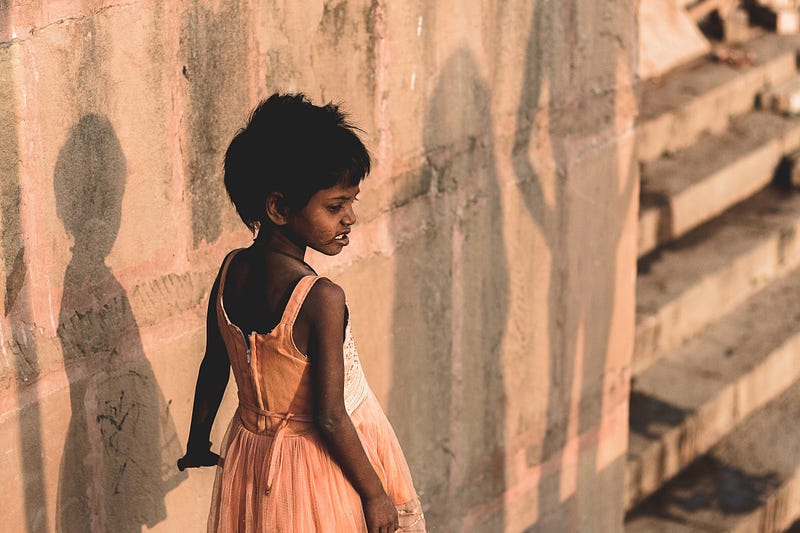
The other day I was talking to my family in India on Zoom when my grandad brought up my little sister’s trip to Tanzania. She’d gone there to do a fellowship a few years ago and returned when the political situation became unstable. Soon the conversation took an unexpected turn. I sat there listening to the disturbing colonial imagery of Africans in his mind; the poverty, the violence, the mention of dictators.
“But how would you feel if white people talked about us that way?” I asked in Tamil. To which he shrugged and replied casually, “Well, they do that too — “
We were suddenly a babble of voices trying to make a point about Africa’s beauty. My cousin shared photographs he googled of wildebeest and persimmon-colored sunsets. My mother talked about the beauty of the Tanzanian landscape. I tried to gather my thoughts, but I couldn’t. Did he really believe what he said? Did he mean it? How could I tell an elder he was wrong to think that, to believe that?
I was aghast at my own inability to counter him.
A week later, when news of George Floyd’s murder trickled through the news, I thought about this conversation and felt myself slump into a strange emptiness.
Anti-blackness is not new to me. In India, it is a language of its own. It smolders in hushed whispers. In jokes during family gatherings. In gentle, quiet endearments. In the seething rage of politics. If there was an ‘anti’ for blackness, it was starkest in India — blackness in its range of shades was something to be ashamed of.
To be ridiculed and condemned.
Right until the time I graduated high school there were always endless jokes about the dark-skinned kids from the deep south. The darker you were, the more likely you were to be teased. I remember balking at the number of products that the girls around me were using back then. Ponds White Beauty. Fair and Lovely. Emami Herbal Fairness Cream. I was fascinated with Vicco Turmeric, an Ayurvedic antiseptic ointment that promised ‘bright skin’. It was a soft, yellow cream that had the fragrance of turmeric and incense. My grandmother had tubes of it on her bedside table. I was in fifth grade when I decided it was too much work to change the color of my skin.
Dark skin also invited ridicule. When my friends regularly self-deprecated themselves — one referred to himself as a ‘shadow’, another routinely joked that he was so dark that no one could see him at night — I’d cringe but giggle. I didn’t take this seriously because these comments were never uttered maliciously, but later, in college, I sensed in them undercurrents of something troubling: regret.
Did they hate the skin in which they were born? I didn’t know the answer. A part of me didn’t want to. I felt too sad to ask.
Most people know that colorism, a kind of inter-minority social and cultural prejudice based on skin color, plagues the Asian community. But often, they don’t have how it is to live it. To breathe it. To have it turn your insides and morph your body.
I recall countless moments in my life when pregnant aunts announced their new babies. The cries of “What a beautiful baby!” were often followed with whispers about the child’s skin: Is he too dark? (which is okay if he’s a boy) Is it a dark girl? (God help the parents). In my early twenties, so many friends — all of whom I saw as liberated, fierce women — were groomed and bullied by their parents into meeting young men who had a list of demands, the usual being that their brides were fair-skinned and subservient. When my own mixed-race daughter was born last year, my grandmother called me from India and gleefully told me that “ava nalla nerama irruka” (she’s nice and fair-skinned). When it came to color, found that it always circled back to one thing and one thing only: the darker you were, the more you were seen as a burden.
And no simple burden.
Dark skin was seen as a curse that affected an entire family. Now, I wonder if my aunt, who used to hide her daughter behind curtains when guests visited, felt that she was saving herself and her little girl from the cruel eyes of society. I wonder if my classmate — ethnic Tamil like me — who slapped on globs of Vaseline on her lips before bedtime nursed a fantasy that she’d wake up feeling different because she now had the kind of lips White girls had in European children’s fiction.
Colorism, to me, always betrayed something greater, more sinister than post-colonial lethargy and self-loathing within the Indian community: it alluded to the belief that racial and ethnic lineage determined fate. Worse, it fed one of India’s existing pillars of systemic oppression: Caste.
The year I turned sixteen, I ferociously took it upon myself to unlearn and reject the notion of anti-blackness. I noticed it everywhere. Billboards, commercials, movies, friendships. Still, I read, I fought, I argued, I dismissed, I protested.
In 2015, when I moved to Washington DC, Baltimore was burning after Freddie Gray died in police custody. I began to read voraciously about African American history. I knew my own knowledge about the US was inadequate. My home filled with books by black writers: Maya Angelou, Tony Morrison, Ta-Nehisi Coates, Fredrick Douglass, Jesmyn Ward, Roxane Gay, James Baldwin, Colson Whitehead. I visited memorials and historical sites. I immersed myself in reading about the open, festering wounds left behind by apartheid, indentured labor, the Trans-Atlantic slave trade, and European colonization.
Then, in 2016, I woke up to the news about Alton Sterling. I sat wondering what to do. I was on an H1B visa. I wasn’t sure if I’d get in trouble. But the next day after watching the video of Philando Castile getting shot in the chest, I grabbed my bag and joined a Black Lives Matter protest and marched towards the capitol. I came home and uploaded some photos on my feed on Facebook.
My Indian friends had to know the reality of anti-blackness and racism. Had. To.
Instead of support, my post attracted debate among my Indian friends. Don’t all lives matter? Wasn’t he a criminal? So many arguments made me tired and angry. It saddened me further when I woke up one morning in 2017 to the news that mobs of Indians attacked African students in Delhi based on a rumor that they’d sold drugs to an Indian student.
That was the day I fully reckoned with how anti-blackness shaped me, and so many people I knew.
I understood then that regardless of what I did or felt about anti-blackness, I was guilty. I was guilty of shrugging at my friend’s descriptions of themselves, of looking at myself in the mirror and hating that I’d become tanned and brown. Of fearing the warmth of sunshine on my skin. I am guilty of snickering about the stereotype when friends made jokes and clutching my bag too close when I walked alone at night from Penn Station all the way through 7th St. Where did I get these images from? From the world I lived in and the community I called my own. I couldn’t escape it.
And I desperately wanted to be rid of it.
Even now, as I write this, I feel obsessed with the idea of squeezing those learned prejudices out of me. But is that easily done? It wasn’t until I started college that I revisited my own post-colonial afflictions. It wasn’t until then that I reassessed the vocabulary and literature of my youth within the context of structural power and whiteness: coolie, golliwogs, eskimos, Uncle Tom, Kaffir, Untouchable.
Like me, I find that a lot of South Asians are well aware that racism is wrong. But I also know our anti-racism endeavors will always be inadequate and incomplete without self-contemplation.
If you’re reading this, please know that your actions matter.