
This Is The Only Trident You Need To Be A Better Fisherman In Your Life
Harness The Power Of Shiva.

“True rewards — wealth, knowledge, love, fitness and equanimity — comes from ignoring others and improving ourselves.”
— Naval Ravikant
Growing up, we learn a lot of things from observing other people. We learn from doing.
We also learn from trials and errors, from our parents, from our community, and from society as a whole.
We get a lot of value. Yet often, when it comes to soft skills, we fall short. At school, we mainly focus on S.T.E.M. (Science, Technology, Engineering, and Mathematics).
I have never attended a class about continuous improvement at school, at home, or in my community.
Yet, if one thing can help us grow as individuals, I believe a mindset of continuous improvement is one of them.
The techniques I will share below are more applied in organizations. Yet, no rule says we cannot implement the same framework in our personal lives.
Are there other techniques, easier to implement?
Absolutely yes!
Here are the three main techniques used within big organizations:
- Problem-Solving Techniques
- PDCA — Plan, Do, Check, Act
- Lessons Learnt and Feedback Loop
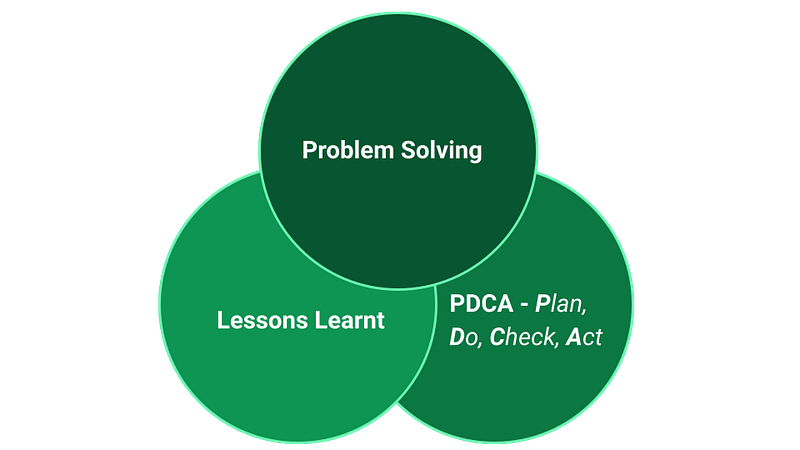
Let us embark on the journey of Kaizen attitude to reach the highest altitude.
1. Problem-Solving Techniques
a. 5 Whys
a. The Five Whys
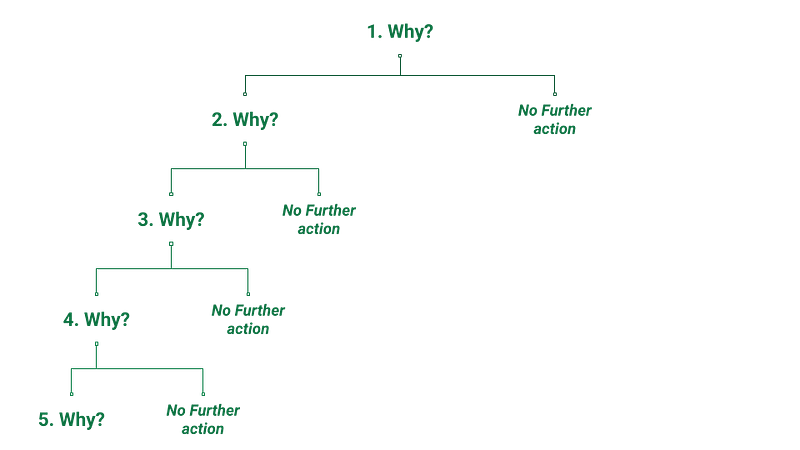
This technique consists of asking questions. And the best question to ask to go deeper into the root cause of many issues is why.
Why do I write? Because I want to share.
Why do I want to share? Because I want to have an impact.
Why do I want an impact? Because I want to contribute.
Why do I want to contribute? Because I believe that my voice matters.
Why do I think that my voice matters? Because I believe in my uniqueness.
You get the drill. I could dig deeper. By doing this exercise, I can say that I write because my experience is unique.
b. The Ishikawa Diagram
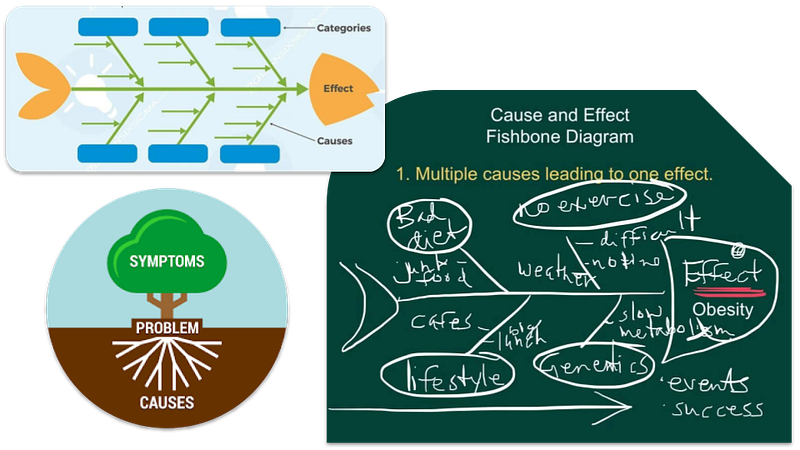
This diagram is another way to go deeper into the root causes of any issue.
Often in life, we are faced with the visible symptom: the effect.
If we want to take the appropriate action, the fishbone diagram is an excellent way to visualize all potential root causes.
We can cluster them, rank them, and identify the right levers to act upon.
2. PDCA — Plan Do Check Act
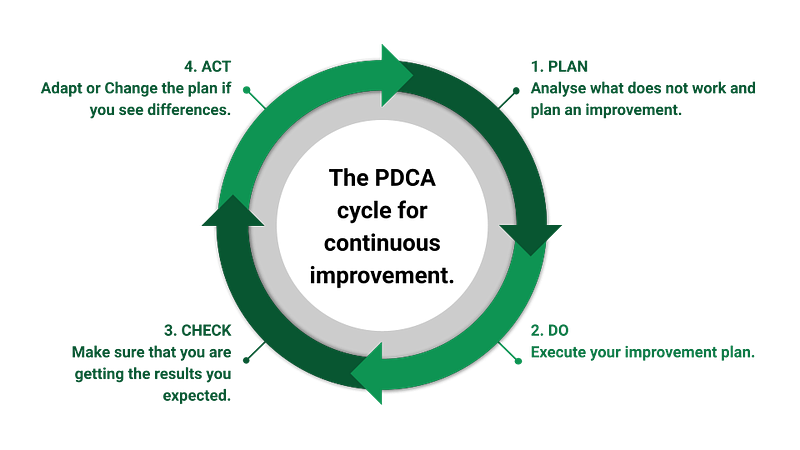
The PDCA cycle is another way to implement continuous improvement in our lives.
It is the implementation at scale of the Kaizen (Improvement in Japanese), which Toyota made famous in their production system.
I believe we can also implement a version of this cycle into our personal lives.
There are four steps:
- Plan — Analyse what does not work and plan for improvement.
- Do — Execute your improvement plan.
- Check — Make sure that you are getting the results you expected.
- Act — Adapt or change the plan if you see any difference.
The fifth step is simple: start over again as much as necessary.
Indeed, the PDCA approach is a cycle meant to be alive and yield the best results.
3. Lessons Learnt and Feedback Loop
Most of us spend our whole lives yelling at the universe. When the universe sings back to us, we continue yelling.
Most of us never take the time to consider feedback as a gift. Instead, we let our egos prevent us from improving.
If we want to improve, one of the best ways is to learn from our failures and setbacks and from others who have already gone through the same journey.

Implementing the feedback loop in everything we do is one of the best hacks of life, if any.
Final Thoughts
By implementing problem-solving techniques, we can get to the root of things bugging us.
We can implement the change we want to see in our world with the PDCA approach.
Listening to the universe’s music more closely, we can better dance at the right tempo.
In life, every single day, either we downgrade, or we upgrade. This is the way!
What are your best tips for continuous improvement?
Are you taking feedback as a gift?
Are you asking the right questions to identify the correct issues?
Leave a comment below.
If you find this article of value, please like it and share it within your sphere of influence.
#Dare2Care #Dare2Share
#BIOS #BringInyourOwnSoul #LeadHeartship #Leadership
You can read my previous article (Friendly link):
Photo by Ankit Dandhare on Unsplash