
This is the Most Important Economic Theory to Come from Pop Culture
From a book that came out nearly 30 years ago.
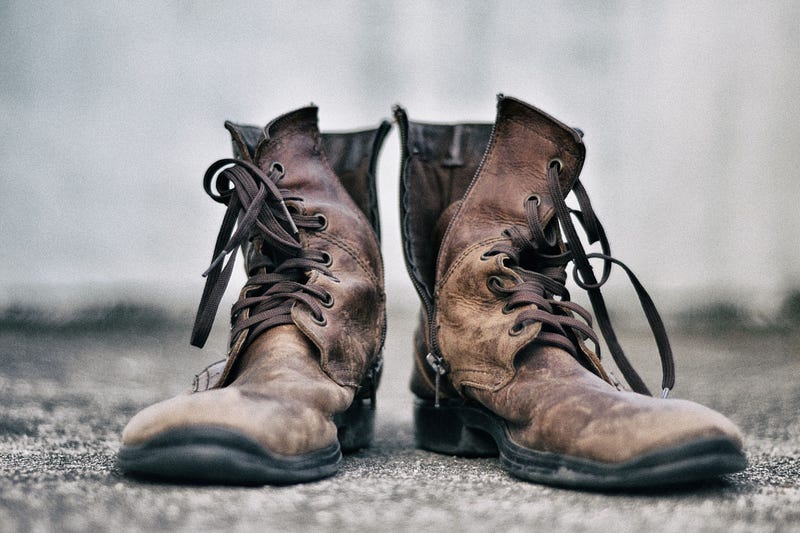
The other day, I wrote about how you should read anything you want and not let people bother you about it. In that article, I mentioned Vimes Boots Theory and lamented that I hadn’t written about it properly. Today, I fix that.
The Sam Vimes “Boots” theory of socioeconomic unfairness, generally just called “boots theory,” is from the 1993 book Men at Arms by Terry Pratchett. For those unfamiliar, Terry Pratchett wrote a series called “Discworld” that has been popular for decades and has numerous adaptations and a huge fanbase. It is often considered a bit lowbrow in the humor department by those who don’t know any better.
You see, Terry Pratchett was a man who addressed any and every social issue he could wrangle into his comedy high fantasy novel series. Racism, sexism, classism, LGBTQIA+ rights, pretty much anything that would be considered “social justice” these days was in there. Beneath the simple surface of his novels, which were full of base humor and dumb jokes, is a deep world full of lore and characters that are just similar enough to our own to make it hurt when those goofy novels call it out.
Sam Vimes, the originator of boots theory, is the head of the Night Watchmen. He is a cynical old bastard who has been doing this far too long and has an oversized sense of justice that is often too big for him to ignore. He is ridiculously practical in a lot of ways while also being incredibly idealistic, two traits that find themselves at odds quite a lot.
Those two traits smash themselves together into boots theory. I could try to explain it, but let’s let Mr. Pratchett speak for himself:
The reason that the rich were so rich, Vimes reasoned, was because they managed to spend less money. Take boots, for example. He earned thirty-eight dollars a month plus allowances. A really good pair of leather boots cost fifty dollars. But an affordable pair of boots, which were sort of OK for a season or two and then leaked like hell when the cardboard gave out, cost about ten dollars. Those were the kind of boots Vimes always bought, and wore until the soles were so thin that he could tell where he was in Ankh-Morpork on a foggy night by the feel of the cobbles. But the thing was that good boots lasted for years and years. A man who could afford fifty dollars had a pair of boots that’d still be keeping his feet dry in ten years’ time, while a poor man who could only afford cheap boots would have spent a hundred dollars on boots in the same time and would still have wet feet. This was the Captain Samuel Vimes “Boots” theory of socioeconomic unfairness.
Boots theory lays out a whole bunch of stuff about consumer culture and how those with wealth can save so much money. It also manages to be a commentary on fast fashion that came decades before the term “fast fashion” existed.
One of the things that this theory highlights is what has become known as the “poor tax.” When you don’t have a lot of money, you tend to shop at places like Walmart to save what you can. However, Walmart isn’t known for carrying the highest-quality goods, so very often you wind up buying cheap stuff that you can afford now but will have to replace sooner than later.
On the flip side, those with wealth and resources can afford to buy higher-quality clothes that will last for a long, long time, and in the long run, they pay less for the same item because they don’t have to replace it every year. This isn’t limited to clothes, either — pretty much any durable consumer good you can think of works like this, aside from technological stuff maybe.
Then, with many of those goods, simple maintenance and upkeep can keep those items going much longer than something from Walmart. Boots are a great example. If you have a well-fitting pair of boots that are well-made from quality leather, you can wear them for years until the soles wear out, at which point it’s relatively cheaper to just replace the soles. A good, high-quality pair of boots will last decades if you are able to do that.
On the flip side, you can’t replace the soles on a pair of $30 sneakers, so you’ll spend hundreds of dollars replacing them year after year while the wealthy person with solid boots bought them once 15 years ago. Inflation only drives up those costs as time goes on, so you’re out even more money in the long run.
The latest twist on this is “fast fashion,” which has been around for a while now but has gotten a lot of attention recently. It’s that $5 shirt or $15 pair of jeans that you only wear for a few months before replacing them with a new pair because they fall apart. However, that is a feature rather than a bug — you don’t want to fall behind on the latest fashion, so you need to keep buying cheap but stylish clothes to keep up with the trends.
Places like Shein and Wish have capitalized on this, selling trendy clothes with minimal durability at rock-bottom prices. Considering that they’ll only last a couple of wears before disintegrating, you’re lucky to get your money’s worth, even at the low cost, but the price of style is just that high. Meanwhile, the executives and investors of these fast fashion companies get rich while pushing hard and fast consumerism, the environment suffers from all of the waste produced, and we all are worse off for it.
None of this is to say that wealthy people don’t fall victim to this in their own way, nor is it to say that they’re just that much smarter than us. Rather, it is to say that because they can afford premium products, they ultimately can spend less in the long run than somebody living paycheck to paycheck. A $2,000 computer lasts much longer than a $300 computer, a $5,000 sofa is more durable than a $500 sofa, and $500 real leather boots will get way more mileage than $50 pleather boots.
The point of all of this is that it’s expensive to be poor. Just about every high-quality product is generally out of reach for someone living paycheck to paycheck. Whether it’s technology, clothes, cars, or housing, unless you’re well-off it can be hard to get quality, long-lasting products. Even eating well is expensive — fresh produce and other fresh foods are often much more expensive than processed junk foods.
Yes, you could hypothetically go to a thrift store, farmer’s market, or other places with lower-cost products, but there are issues there too. Thrift stores are trendy now, so getting quality stuff is hard when you’re competing with DIYers, vintage clothing hunters, and anyone who is into shabby chic. Farmer’s markets are generally only open during certain times and you have to ensure that (a) you’re off during those times and (b) you have the time, energy, and transportation to get there and back. It can sometimes be more expensive and time-consuming just to get there and back than it is to run to the corner store to pick up a can of soup.
When you work a low-wage job (or several low-wage jobs, as the case may be), you often don’t have the luxury of being able to afford a big expense. For people who need to track every single penny they bring in and can’t afford to miss a day of work lest they be destitute, trying to save for a nice pair of boots can be an impossibility. They could hypothetically put it on credit, but then the exorbitant interest rates will likely keep them from ever getting ahead, a trap that many fall victim to each year.
None of this takes into account things like overdraft fees, bank fees, check cashing fees, late fees, and all of the other fees and charges that are common when you don’t have a lot of money. When you budget down to the penny and time bills to the day, one misstep can mean hundreds of dollars in expenses that you can’t afford.
If you have a bunch of money in your accounts, though, overdraft fees and bank fees aren’t a concern. I had an account at a banking institution that charged $5 at the end of the month if your balance ever dropped below $2,000. I was thankfully able to ensure that rarely happened, but a lot of people I know that used to bank there changed banks because they didn’t have $2,000 they could just keep in an account permanently to avoid that monthly fee.
Being poor is an expensive proposition, to say the least. And, way back in 1993, Terry Pratchett was onto something, something that would become even more relevant as time went on. Boots theory was meant to frame this issue in a way that people could understand from the perspective of a common man.
In many ways, Samuel Vimes is a character that embodies justice within the novels of Discworld. Vimes isn’t perfect — he’s grizzled, he’s seen way too much bad stuff happen to people around him, and he’s got a huge chip on his shoulder. However, he knows what’s right and what’s wrong, and he also knows that life is full of complexity and nuance that, often enough, he doesn’t have a lot of time for.
When you are someone like me — sitting here in the home that I own, writing an article on a Thursday morning while I’m on vacation — life can be very complex. There are complicated things going on in the world that I have the time, patience, and energy to attempt to understand, and I get to write my half-baked opinions about them to boot.
When you live paycheck to paycheck, constantly on the edge of ruin, life tends to get a lot simpler and so much of that nuance fades away. The many complexities that exist in life and the world, in general, are easy to ignore when your primary objectives are to pay the bills and get food on the table. Even still, you don’t always get the luxury of staying out of those things, either.
Pratchett understood this in a way that so many don’t, and he wrote it — and many other social justice issues — into his books. If you have never read Terry Pratchett, or only read Good Omens because of the series that came out not long ago, I encourage you to give the Discworld series a shot. It is full of magic and wonder while also being thoughtful and introspective, full of things that will make you go “huh, I never thought of it like that.”
Just…be aware that the first two books, The Colour of Magic and The Light Fantastic, are a bit different and Sir Terry was still getting his stride. They’re both good, but Equal Rites is where he starts catching his stride. If you’re interested in knowing more about Sam Vimes, his first appearance is in Guards! Guards!, the eighth Discworld book.
Be well out there.
If you appreciate my work, why not join Medium as a paying member, which allows you access to unlimited stories (not just three free stories per month), using my referral link. You could also hit me up on KoFi if you’re feeling nice, or send a tip using the button below.
If you liked this, please subscribe to my publication, Thing a Day. I publish something every day on a variety of topics, so you never know what you’re going to see! You can also follow me on Facebook.
Here’s an oldie but goodie about what it means to be poor:


