avatarJazzFeathers

Free AI web copilot to create summaries, insights and extended knowledge, download it at here

3025

Abstract

id="3414">In short, we’ll have a stronger story structure and therefore, a stronger story.</p><div id="1085" class="link-block"> <a href="https://readmedium.com/how-do-we-know-we-have-a-story-to-write-before-we-write-it-1a4d91116f2c"> <div> <div> <h2>How Do We Know We Have a Story to Tell Before We Write It?</h2> <div><h3>Knowing whether an idea is good for a story may make the difference between writing that story and writing just the…</h3></div> <div><p>medium.com</p></div> </div> <div> <div style="background-image: url(https://miro.readmedium.com/v2/resize:fit:320/0*EO3LGNbUPYIoXENY)"></div> </div> </div> </a> </div><p id="b341">There are many ways in which knowing the end will help make our story stronger:</p><ol><li><b>It gives us a sense of what the story structure will be</b>. The story is a section of a longer existence, and it has a very specific structure, which comprises a beginning, a climax and an end. If that structure is open because we don’t have any idea of how and when the story will end, the plot will try to stretch until we find an ‘illumination’. It is very likely, then, that the beginning will drag and the end will be too quick.</li><li><b>It will allow us to disseminate the story with hints of the ending</b>. To create a story that feels harmonious and balanced — therefore easy to read and absorb — all the elements need to be there, even when it looks they are not. Foreshadowings, allusions, symbolisms connecting with the end will help the reader being in the right zone when the end comes. Having an idea of the ending will help us writers placing the right hints at the right moment.</li><li><b>It will give us direction. This is maybe the most important thing</b>: if we know where the story starts and where it ends, we will always find a way to connect the two dots.</li></ol><p id="3ca2">Anything can be fixed in the revising process, but we write a first draft that already pins down the right elements and the right pace, the story will be easier to write, and the end result will be stronger and more harmonious.</p><h1 id="3e89">How do we work out the ending?</h1><p id="33eb">Having an idea of what the ending will be doesn’t mean that ending is set in stone. On the contrary, it’s likely that, even when we have a clear idea of how the story will end, that ending will change or evolve over the drafting and revising process.</p><p id="7575" type="7">Having an idea of what the ending will be doesn’t mean that ending is set in stone</p><p id="1858">This is very natural. As we work at the story, we’ll learn new things, and sometimes things evolve to the point that substantial changes might happen in the structure or in the themes. Our initial idea, then, may end up being inadequate to the new situation and we need to adjust it.</p><p id="7224">We should always keep in mind that:</p><ol>

Options

<li><b>The ending must make sense with the rest of the story</b>. The beginning must seamlessly flow into the climax, and the climax must seamlessly flow into the ending. It should be one, smooth movement that will carry the reader from beginning to end. This is why we need harmony and consistency. Even when the ending is unexpected, it should still be the logical thing to happen.</li><li><b>It must give a sense of closure even when it is open</b>. When readers reads the word ‘The end’, they must feel that they really have had an answer to all the important questions. That’s what makes for a satisfying ending. Even when a story has an open ending, it should still give an answer to the core theme of the story. While the subplots may remain open, the central structure of the story should always find closure, the feeling that we as readers know everything that it is possible to know.</li><li><b>It must hook into the theme of the story</b>. The theme is what readers really care about when they read a story. It is the reason why they read it. The theme is what touches the heart of the reader, and if we don’t give it closure, if we don’t give all the possible answers, the reader will feel cheated. Of course, there may be questions to which there is no answer. Realising this may be part of the closure.</li></ol><h1 id="e05d">Conclusion</h1><p id="8427">We all know that the beginning of a story is crucial to hooking a reader into our invented world. We all put special effort into crafting the perfect hook.</p><p id="1212">But crafting a good ending is just as important. It’s our farewell to the reader, and if we give them the right feelings and the right sense of accomplishment, those readers will wont to travel with us again. They will want our next story.</p><div id="312a" class="link-block"> <a href="https://readmedium.com/7-things-to-consider-before-you-write-your-novels-first-line-c5fc7e055473"> <div> <div> <h2>7 Things to Consider Before You Write Your Novel’s First Line</h2> <div><h3>Don’t let excitment swapt you away. Make a few deliberate decisions before you ever write your novel’s first line and…</h3></div> <div><p>medium.com</p></div> </div> <div> <div style="background-image: url(https://miro.readmedium.com/v2/resize:fit:320/0*VVObYSPl-dkGjxRQ)"></div> </div> </div> </a> </div><p id="aa50"><b><i>Sarah Zama</i></b><i> wrote her first story when she was nine. Fourteen years ago, when she started her job in a bookshop, she discovered books that address the structure of a story and she became addicted to them. Today, she’s a dieselpunk author who writes fantasy stories historically set in the 1920s. Her life-long interest in Tolkien has turned quite nerdy recently. She writes about all her passions on her blog <a href="https://theoldshelter.com/">https://theoldshelter.com/</a></i></p></article></body>

This Is the End! Give Your Story the Best Chance at Being Completed

Surprising the reader with a strong ending never comes from surprising ourselves with an ending we knew nothing about
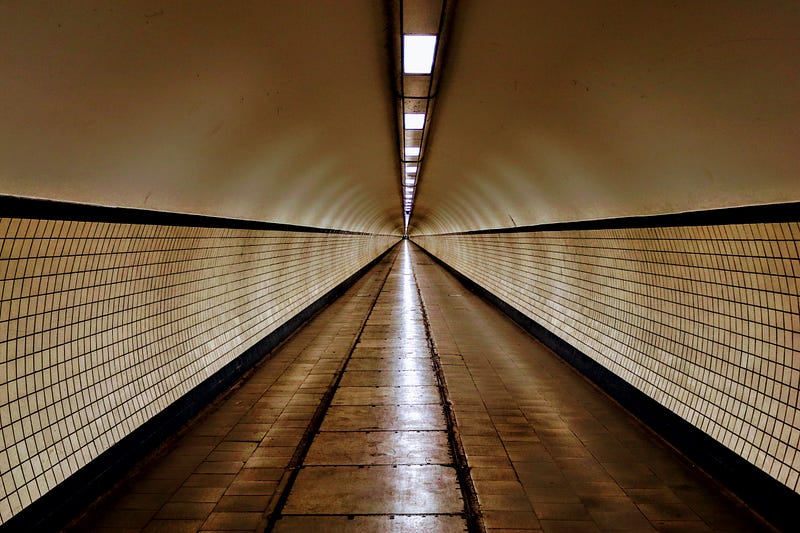
Photo by Matteo Paganelli on Unsplash

Have you ever thought that the important part is starting a story? Having a hook, knowing who’s the protagonist, and everything will come consequently?

I did. When I first started writing, I thought that having the larva of an idea was enough to embark in the perilous journey that is writing a story that doesn’t yet exist.

Back in my early days of writing, I always thought about beginnings, never at endings.

That may be the reasons why my stories’ endings were usually quite lame.

Starting off is half the job. Some would-be authors who have an idea, never actually write it down. But over the years, I’ve learned that starting is not enough if I want to have any chance at actually finishing that story.

Stories get started every day, but only a small number of them come to an end, a competition.

Having an idea of how the story will end is one of the most crucial info in the process.

We don’t need to know precisely what happens in the closing scenes of our story. It’s very helpful if we do, and some strong planners will know it. But for discovery writers like myself, it is sufficient to see how the arc that opens with the Inciting Incident will find closure in the end.

How knowing the end will help the beginning

It may be tempting to think that the ending will present itself when the time comes.

Sometimes it happens. But if we have at least an idea of how the story will end, we’ll be able to build a better, more coherent beginning that already tides in with the end, and also build a narrative structure that works well for both the beginning and the end.

In short, we’ll have a stronger story structure and therefore, a stronger story.

There are many ways in which knowing the end will help make our story stronger:

  1. It gives us a sense of what the story structure will be. The story is a section of a longer existence, and it has a very specific structure, which comprises a beginning, a climax and an end. If that structure is open because we don’t have any idea of how and when the story will end, the plot will try to stretch until we find an ‘illumination’. It is very likely, then, that the beginning will drag and the end will be too quick.
  2. It will allow us to disseminate the story with hints of the ending. To create a story that feels harmonious and balanced — therefore easy to read and absorb — all the elements need to be there, even when it looks they are not. Foreshadowings, allusions, symbolisms connecting with the end will help the reader being in the right zone when the end comes. Having an idea of the ending will help us writers placing the right hints at the right moment.
  3. It will give us direction. This is maybe the most important thing: if we know where the story starts and where it ends, we will always find a way to connect the two dots.

Anything can be fixed in the revising process, but we write a first draft that already pins down the right elements and the right pace, the story will be easier to write, and the end result will be stronger and more harmonious.

How do we work out the ending?

Having an idea of what the ending will be doesn’t mean that ending is set in stone. On the contrary, it’s likely that, even when we have a clear idea of how the story will end, that ending will change or evolve over the drafting and revising process.

Having an idea of what the ending will be doesn’t mean that ending is set in stone

This is very natural. As we work at the story, we’ll learn new things, and sometimes things evolve to the point that substantial changes might happen in the structure or in the themes. Our initial idea, then, may end up being inadequate to the new situation and we need to adjust it.

We should always keep in mind that:

  1. The ending must make sense with the rest of the story. The beginning must seamlessly flow into the climax, and the climax must seamlessly flow into the ending. It should be one, smooth movement that will carry the reader from beginning to end. This is why we need harmony and consistency. Even when the ending is unexpected, it should still be the logical thing to happen.
  2. It must give a sense of closure even when it is open. When readers reads the word ‘The end’, they must feel that they really have had an answer to all the important questions. That’s what makes for a satisfying ending. Even when a story has an open ending, it should still give an answer to the core theme of the story. While the subplots may remain open, the central structure of the story should always find closure, the feeling that we as readers know everything that it is possible to know.
  3. It must hook into the theme of the story. The theme is what readers really care about when they read a story. It is the reason why they read it. The theme is what touches the heart of the reader, and if we don’t give it closure, if we don’t give all the possible answers, the reader will feel cheated. Of course, there may be questions to which there is no answer. Realising this may be part of the closure.

Conclusion

We all know that the beginning of a story is crucial to hooking a reader into our invented world. We all put special effort into crafting the perfect hook.

But crafting a good ending is just as important. It’s our farewell to the reader, and if we give them the right feelings and the right sense of accomplishment, those readers will wont to travel with us again. They will want our next story.

Sarah Zama wrote her first story when she was nine. Fourteen years ago, when she started her job in a bookshop, she discovered books that address the structure of a story and she became addicted to them. Today, she’s a dieselpunk author who writes fantasy stories historically set in the 1920s. Her life-long interest in Tolkien has turned quite nerdy recently. She writes about all her passions on her blog https://theoldshelter.com/

Writing
Creative Writing
Story Structure
Self Improvment
Before The First Line
Recommended from ReadMedium