
This is Sparta
A few things about Sparta outside of 300
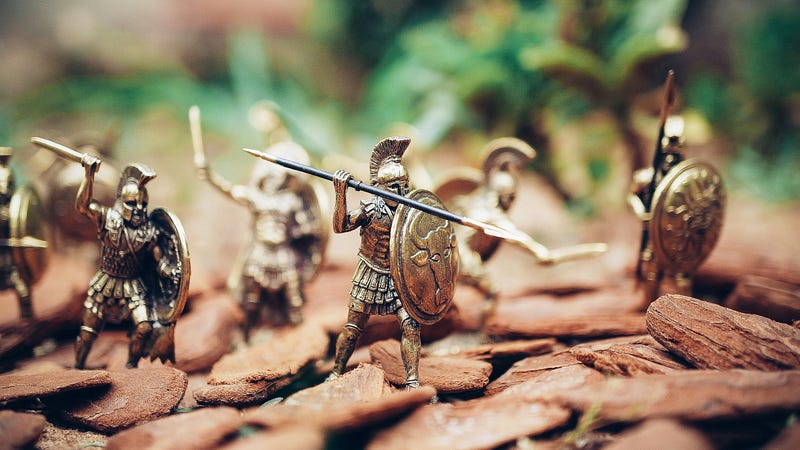
Lately, I’ve been reading Plutarch on Sparta. Plutarch was one of these old Greek historians and biographers who liked to write aside from praying to Pagan Gods at the temple of Delphi.
There were ten things I liked about Sparta, though I had little chance of reaching adulthood there due to my puny build.
- Education was the state’s responsibility, the how and what of it.
- Humor was an essential part of life. You can make fun of anyone, and if it is too offensive, you can request the person not to make it.
- Gold and silver were banned. The iron coinage had no value outside Sparta, so dreaming about money didn’t exist.
- They loved brevity and hated verbose.
- Spartans loved the gravy more than the meat; the gravy was a black broth of pork meat and blood.
- Land was equally distributed among citizens; ownership went from father to child so that no one could own more than the others.
- Spartans didn’t want to fight the same enemy multiple times in a short span; otherwise, the enemy would learn to fight.
- Spartans loved long hair, making them look like horses in motion.
- Procreation was for the state, so it was okay to have relationships outside marriage if the gene pool was promising.
- They didn’t bury artifacts with the dead.
In Sparta, a mess was a group that stayed together and ate together, typically young men in training. The groups were made of fifteen.
“anyone desiring to join a mess was vetted in the following way. Each member would take a piece of soft bread in his hand and in silence would throw it, like a ballot, into the bowl which a servant carried on his head. Those in favor threw the bread as it was, while those against squeezed it hard with their hand. The effect of a squeezed piece is that of a hollow ballot. And should they find even one of these, they do not admit the would-be entrant because it is their wish that all should be happy in each other’s company.”


