
This is My Vanity — Shot!
What my scars try to teach me.
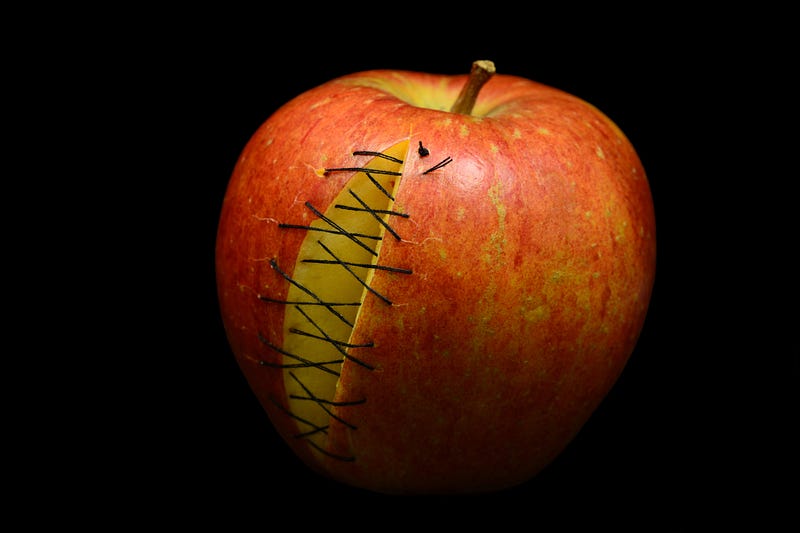
I have a three-inch scar below my left ear. It traces my neck like a reclining question mark and curls up under my chin. I earned it during a surgery three years ago to remove a cancerous tumor from my jaw.
Lower on my neck, like the question mark’s lost point, there’s a scar from a tracheotomy that allowed me breath for ten days following surgery.
The largest scar is on my left leg — stretching mid-shin to ankle — a wide pocket where surgeons extracted fibula bone, tissue and blood vessels to graft my replacement jaw.
What are the lessons my scars try to teach me?
This is my Vanity — Shot!
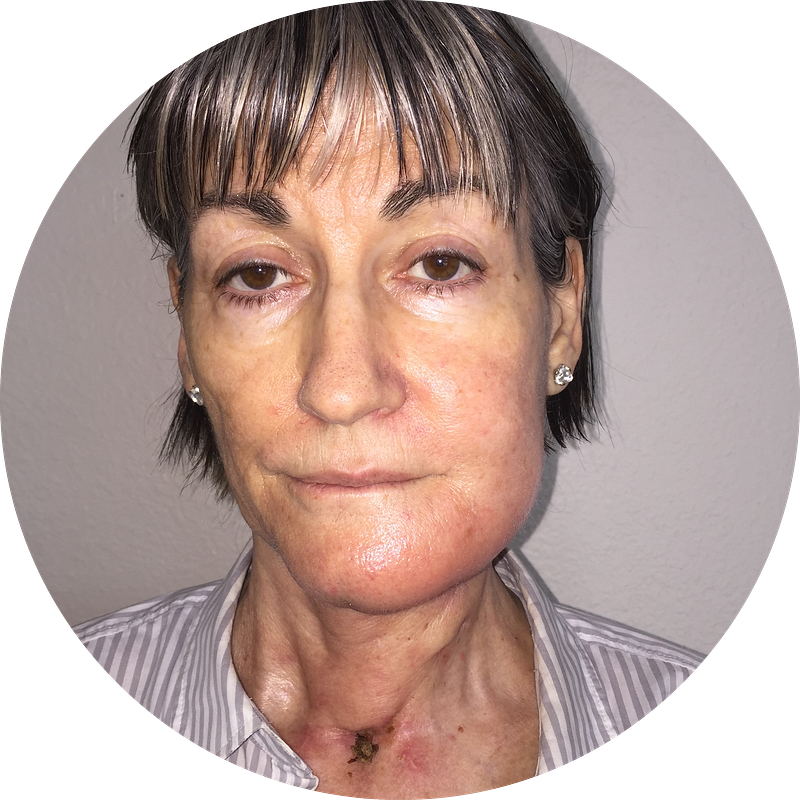
On account of my vanity, I avoided photos during treatment. I only have one shot of misshapen misery a few weeks after surgery, before the scars got inflamed by radiation.
When this photo was taken, I had dropped twenty pounds and lost my sense of humor. At the time I believed this was my peak-misery moment. But over the next few months, I proceeded to lose more weight, my sense of taste, the ability to swallow and the power of speech.
Today, this photo makes me smile. Not everyone is fortunate enough to get a return ticket from a cancer diagnosis — I’m hoping for an extended stay.
Having a visible scar is an exercise in losing face
Some scars are visible, like mine. Some are hidden. One way or another we all get them.
In my case, my scars have faded to silvery symbols of hope and healing. They remind me I got my sense of humor back and my ability to taste; that I can balance on my left leg even though I don’t have a fibula; that I can talk, eat, laugh and swallow — but not all at the same time.
For months after surgery and radiation, the scars on my neck were red and misshapen. Although most of the surgical war zone was tucked under my chin, there was no missing the scarring — though I did my best to disguise it. This is why I have 22 scarves in my closet.
As well as being visible, scars can be audible. Mine are. The surgery affected my speech. Now, the hiss of my s isn’t the same. My t’s are blunt. I work hard to deliver a worthy th. I try to speak clearly, but my words are blurred. It’s frustrating. But my scars teach me to think carefully about what I want to say. They remind me to say it more clearly.
By far the biggest blow to my vanity was losing teeth during surgery. I miss those beige gems, all eight of them. Unfortunately, the teeth were attached to the jawbone extracted during surgery. Inconveniently, the grafted fibula did not come with its own set of teeth.
So, let’s summarize, shall we?
Take a vain woman, give her a giant neck scar, extract eight of her teeth and add a speech impediment. Don’t you think that crosses the bloody line? I do. But if scars teach nothing else, it’s that life isn’t always fair. There are no guarantees.
So let’s keep exploring the vast hinterlands of my vanity… It wasn’t just my physical vanity that took a hit, it was professional too. I was a communications and PR executive for a health system. Then I got cancer, a messed up face, a speech impediment and I lost some teeth.
My job included writing about the health system’s ‘superior clinical outcomes, advanced medical care and improved patient experience’. Having marketed healthcare for several years, I experienced it firsthand, as a patient.
I received the best possible care — it just hurts more in practice than theory.
The silent treatment
Following treatment, the sensation in my face was like a bee sting, sunburn and nerve-damage-numbness, combined. The inside of my mouth was ulcerated. I was unable to speak for a couple of weeks after surgery, and again during the later part of radiation treatment.
During my recurring bouts of silence, I communicated by writing notes. Although spoken words were painful, I could still share a series of hm hmm’s, an ah oh, or a grateful mm mmm. Sometimes, as I dragged my sorry bones round the house, I indulged my misery by emitting little groans with each step. Try it some time — it’s quite therapeutic.
During my silent spells, I missed the plump words that once rolled off my tongue. I longed for solid food. And flavor. For several months, my taste buds were extinguished by radiation. Everything tasted like cardboard. It is a statement of fact and an emotional truth that the reawakening of my taste buds was bitter-sweet.
Three months after surgery and treatment, I returned to work. I was anxious to get back as soon as possible. In retrospect it was the right thing to do. Returning to the office meant I had to talk, all day. I didn’t like talking, it hurt. It was humiliating. But I needed to talk to reclaim the power of speech.
I tried to disguise the scars with a scarf, but when I spoke, something was clearly amiss. My words were muffled and misshapen. Colleagues said my speech was ‘understandable’. Ouch, that seemed like a low bar. But scars teach you to salvage what you can.
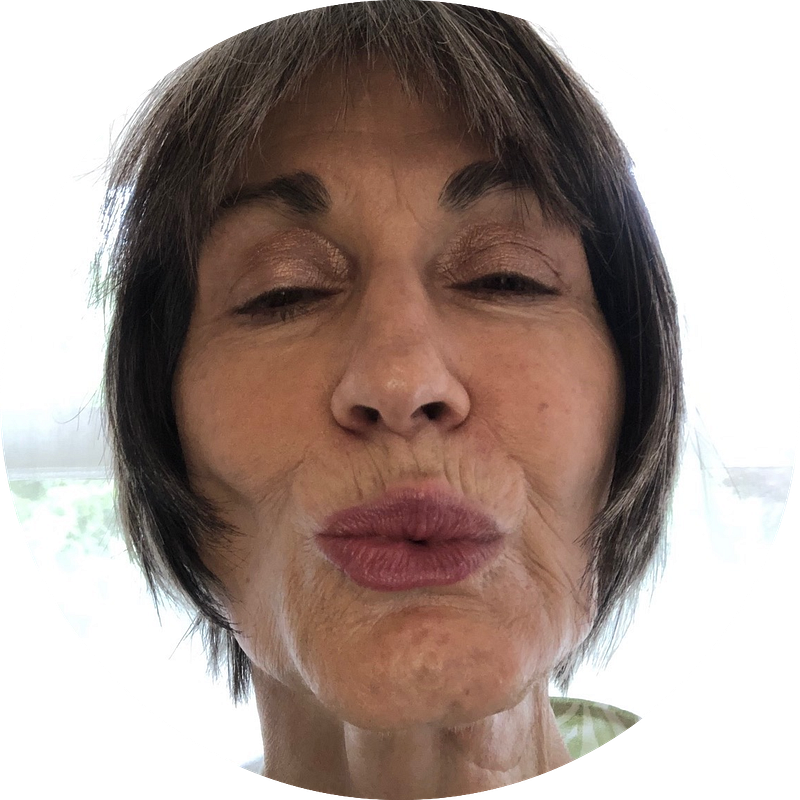
Some nerves were severed during surgery, so I lost sensation in the lower part of my face. At home, I practiced the lost arts of pouting and grimacing in the mirror. It took me months to re-master ‘duck-face’ and achieve a lop-sided smile. I practiced humming and swallowing. I poked out my tongue. I opened my locked-jaw wide. I practiced the shapes of words in the mirror, then I strung them together, slowly.
My job involved plenty of meetings — talking and listening. I talked because I had to, but each word came at a price. My throat was damaged by radiation, so turning up the volume was a strain. My scars reminded me to listen more — which shows that scars may be wiser than they look.
I would rather not talk about my teeth
Bear with me though, because I’m not done eulogizing my eight dearly departed teeth. I would rather not tell you that I had to wait nine months after surgery for the inflammation to subside, before being fitted with a prosthetic denture. I was gutted about the Grand Canyon-sized gap in my smile, but for six months I showed up to work without a full set of teeth. Some people think that’s unprofessional.
Fortunately, back at the office, colleagues were heart-stoppingly kind. Plus, they generally treated me like ‘normal,’ which helped me believe I might feel that way again, one day.
Before the surgery I explained to my boss that, best case scenario, I would return to work in a few months — but without all my teeth. I was filled with shame and dread. There were some tears.
My boss paused thoughtfully, then said, “When I talk with you, I look into your eyes.”
The compassion and dignity embedded in that answer helped me to show up again.
Scars are too hard
Initially, my scarring was thick and immobile. In physical therapy I learned how to massage the barricades my body had erected, post surgery. Touching the injured areas felt deeply unpleasant. But, my scars needed me to partner with them, softening them gently by pressing into my own ragged edges. I taught my scars how to let go of rigid self-defense and move into more fluidity. Either that, or my scars taught me.
My vanity got a consolation prize
Eventually, after being fitted with a denture, I was able to face the world with a less disturbing smile. Quietly content in my new ability to almost pass as normal, I was washing my hands in a restroom at work, beside another woman, a stranger. She looked over and said, “I wish I was as skinny as you.”
I was flattered. What can I say? I hope cancer is easier to cure than vanity.
But I had another impulse. I wanted to tell her the whole medical epic, and say, “Are you sure? — Because I had to get cancer to look this hot.”
But I thanked her and returned to a meeting shaking my head. Before I lost thirty pounds, eight teeth, half a mandible and one fibula, I was like that — blind to my own voluptuous wellness. Why is it difficult to love a perfectly imperfect body, without a second glance at the living miracle of your well-being?
Which makes me wonder about the other lessons my scars have been trying to teach me — teasing my tender gratitude from each tangled fiber.
How to cherish the lop-sided miracles my body still delivers.
How to show up for healing conversations and listen more.
How to weigh the value of each word, making my meaning clearer.
How to accept that I can’t hide every scar — pain is not shame.
How to show up with compassion, so when we talk, I look into your eyes.
Thank you for reading. You can find more of my stories and poetry here.