
This Is How Wolves Are Fixing Yellowstone National Park
What Lessons On Sustainability Can We Learn From This Amazing Story?
Imagine a Jenga tower teetering on the edge of collapse. Pull out the wrong block and the whole structure comes crashing down.
Removing a keystone species from an ecosystem causes a chain reaction of cascading effects that can destabilize the natural order and lead to irrevocable damage.
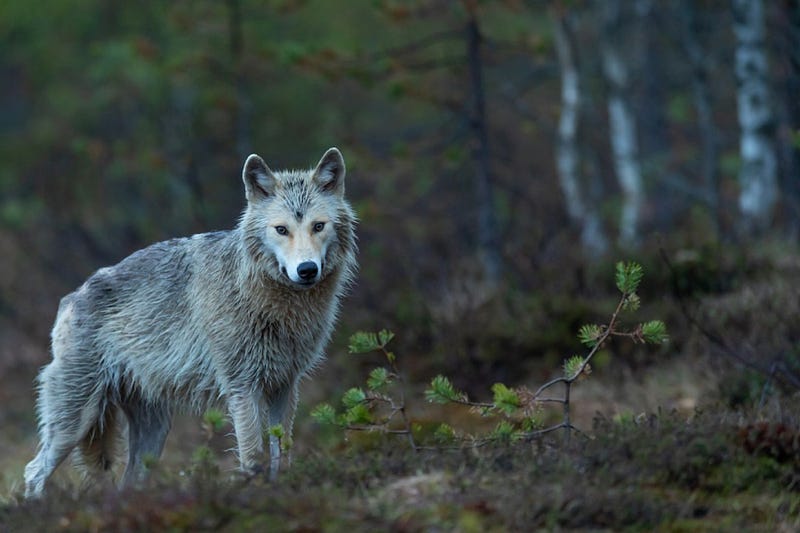
Wolves are a keystone species.
Their extermination from Yellowstone National Park and subsequent reintroduction after 70 years is a classic example of a top-down trophic cascade. A waterfall of knock-on effects through a food chain when the populations of top predators are disrupted.
The reintroduction of wolves at Yellowstone is beginning to restore equilibrium to the region and might even be altering the geography of its rivers.
The History of Wolves in Yellowstone
Humans have a sour relationship with wolves. Our perception is exacerbated through our history and culture, from folklore to movies.
The howl of a wolf is enough to send a cold shiver down your spine. For me, it brings up a sense of aloneness, of intelligent eyes watching and waiting for me to make a mistake.
This mistrust between our species stretches throughout our history. Interactions with wolves represent the line upon which humans come into contact with the wilderness.
This metaphor was genuine for European colonists after settling in the Americas. Grazing livestock — essential for a colony's survival — was an easy meal for wolves, and the inevitable contact sparked a centuries-long conflict that would culminate in the near-complete eradication of wolves from the USA.
The human-caused diminishing of elk and bison populations — a staple diet of wolves — and ever-growing grazing land requirements forced wolves into further conflict with the civilized world.
Federal-sponsored culling, by any means, including poison and biological weapons throughout the 19th century, brought the population of wolves — while also decimating species like bears and eagles — from the tens of thousands to virtually non-existent across western America.
The path for the potential return of the Wolf became possible after the signing into law of the Endangered Species Act (1969) in 1973, which meant that the federal government had a responsibility to protect and enhance endangered species, and provided a legal framework for a possible re-introduction.
In January 1995, 69 years after the last reported culling of wolf pups in the Yellowstone region, 14 Canadian Gray Wolves were re-introduced into the Park and a further 17 were introduced in 1996.
What Happened After The Wolves Vanished?
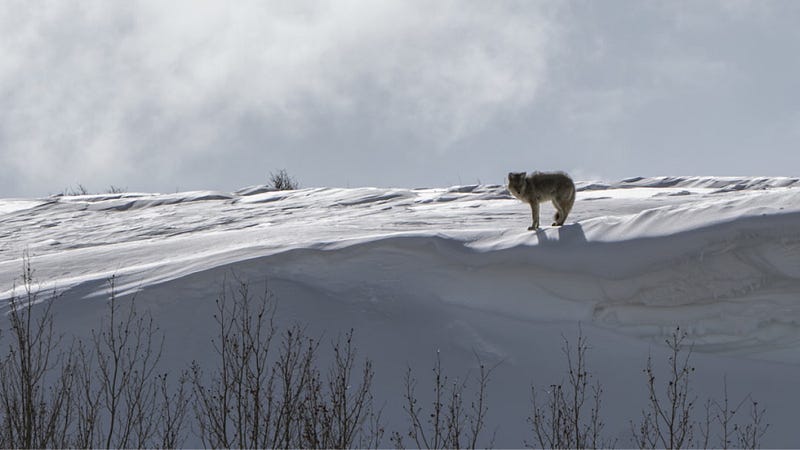
Nature abhors a vacuum, and the loss of wolves left open a crucial niche that couldn’t be replaced by another organism.
Elk populations exploded and subsequently, tree and shrub growth declined rapidly due to overgrazing. The result was a progression of ecosystem degradation that continued until 1995.
Ironically, and in typical human fashion, by 1935 the park administrators began a program of culling elk to limit the escalating environmental damage. The program halted the park's decline for a time. But by the late 1960s, it was abandoned, due to pressures such as complaints about the impact of hunting for sport.
And so the elk populations began to rise again.
Without the renewal of saplings, nesting bird populations suffered. Many Songbird species left and did not return for 70 years, and without the steady supply of carcasses from wolf kills, Scavenger birds struggled to replenish their numbers.
The absent wolf was a boon to the smaller coyote, and they thrived without competition. Coyotes rarely prey on elk, but instead on Pronghorn Antelope and smaller mammals such as rabbits and mice.
The thread further unraveled, the reduction in smaller mammal numbers affected the populations of foxes and weasels whose major food source was now suppressed.
The loss of beaver colonies exemplifies the wide-reaching impacts of a trophic cascade. The first survey of beavers in 1925 totaled 25. By 1953 this had collapsed to 8, and in 2001, just 1 colony.
What Happened After Wolf Re-introduction
Today about 108 wolves live inside the park. They prey primarily on elk which controls their numbers.
The presence of wolves keeps elk on the move. This dynamic is crucial to the health of the park’s ecosystem. Constant elk relocation prevents overgrazing, which allows saplings and shrubs to regrow.
Significantly, in the case of beavers, the regeneration of willow — which they use to build dams — has allowed their numbers to rebound. There are now an estimated 108 colonies in the park.
Beavers are ecosystem engineers. Their dams produce new wetlands, retain groundwater, and redistribute silt that would otherwise flow away through river systems.
The return of wolves and beavers creates richer biodiversity and encourages the return of absent animals.
- Bird species such as Songbirds have returned, having better access to nesting sites through more abundant shrubs. Scavenger birds have a more readily available food supply.
- New wetlands provide shelter for a greater variety of fish species.
- Bears are more common. Their diets are more robust, supplemented by a more accessible supply of berries.
- Coyote populations have declined. Fox, weasels, and eagles have a more secure source of food.
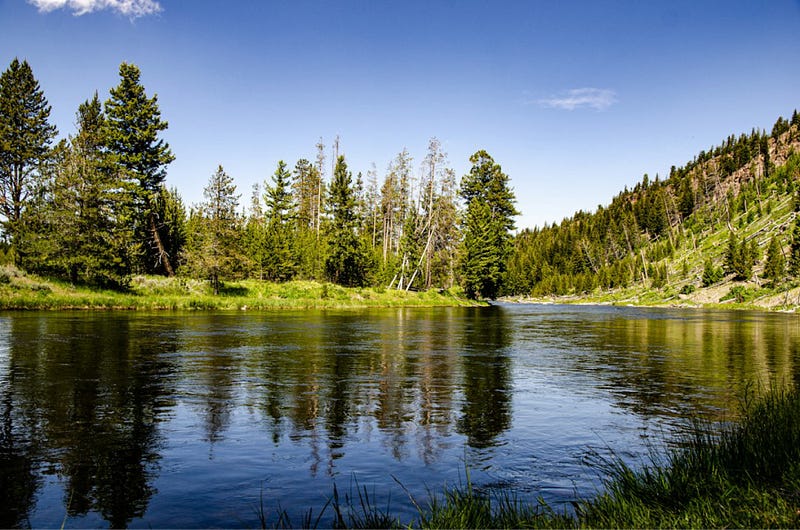
It is also suggested that the existence of wolves is impacting the geography of rivers within the parks’ valleys.
The logic is that the reclamation of flora — lost due to overgrazing — is reversing rapid river bank erosion that occurred pre-wolf reintroduction. Rivers now follow a more natural progression.
Beaver dams reduce the speed of the river's flow in some areas which further transforms the environment. The degree to which wolves are responsible for these changes is not yet fully understood.
Economic Benefits
This regeneration has had significant economic benefits.
In 2009 it was estimated that over $35 million of economic activity was generated across the region through tourism. Specifically, those visiting to see wolves.
Over 12 years between 2005 and 2017, visitations to the park increased 145% to over 4 million, generating up to $65 million annually when adjusted for inflation.
When you consider that the entire reintroduction program cost about $30 million in total, the net benefit is significant.
As for the reason wolves were exterminated in the first place. The worries about threats to livestock haven’t panned out. Only 0.01% of cattle lost across the region can be attributed to wolves. The benefit-to-cost ratio speaks for itself.
Yellowstone is not a unique example. There is an argument to be made that wherever we protect keystone species or restore natural habitats, we reap the economic rewards.
- The now protected Sea otters off the coast of California are helping to restore the highly productive kelp forests along the Pacific coast. It has been estimated to provide $53 million in economic benefits from habit restoration, tourism, and carbon capture.
- Forest elephants in Africa are a keystone species. We are now beginning to understand the astonishing impact they have on the carbon cycle. Some figures put the value of each African forest elephant to be worth $1.75 million in carbon storage potential alone.
Summary
A century of Yellowstone history provides a stark picture of what happens when an ecosystem becomes unbalanced and one group is allowed to take without consequence.
Sustainability is about providing for ourselves only what is necessary without threatening the needs of future generations.
Ecologists often term humans as a hyper keystone species. Our activities have a disproportionate impact across all food chains and in all directions.
However, our current relationship with the environment is more parasitic. We take without consideration for the health of the host. In this scenario, one side will have to give way at some point.
The story of the wolves shows us how an ecosystem in equilibrium is more productive, more diverse, and more secure for the future.


