
How Medium Helps to Combat Cheap Content Marketing
Content without purpose is content without value

The more I write on Medium, the better I see the tremendous value it brings for readers.
Each content piece, grammar, and spelling are checked by editors to ensure the readers get the most out of it.
Empirically validated “how-to” guides, case studies, tips are written by experts and novel writers to share their experience with the world.
Do you know what differentiates Medium from other blogging platforms? — The content quality. A raw content piece will never get through. Any time I read business, entrepreneur, marketing-related articles — I know, the stories shared are real!
If I want to achieve similar results, I am given a step-by-step guide on how to do it. All I need is just to stand up and act.
Success requires hard work, but you are one step closer if you know how to do it.
Why Cheap Content is Ubiquitous
2 million new content pieces are published daily on the Internet. They are supposed to be crawled, indexed, and shown to users.
Some unique content pieces might be never discovered due to a huge amount of copyrighted articles.
Have you ever wondered why plenty of articles are published on the same topic and why marketers keep producing them?
This is what an average user might see on a Google search result page when searching for “how to improve the google ads performance”:
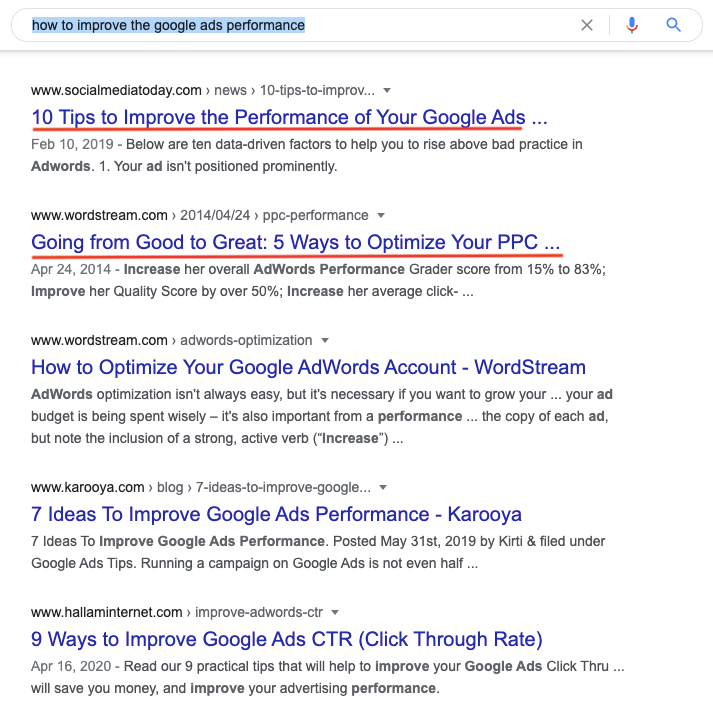
A bunch of content with 10 tips, 5 ways, or 7 ideas are on the first Google page that are considered the most relevant for readers.
What will you discover if you open most of them? Identical copyrighted suggestions what I should do to improve the effectiveness of my ads, but none of the articles show what I will achieve if I apply these strategies.
Multiple businesses produce such content pieces to rank high in Google and attract users to their websites. They do not always care about the content quality, but rather about the page rank, the content lengths, the traffic acquisition, and the lead generation.
With millions of pieces on the same topic, it gets hard for Google to decide what is quality and how to measure it. Google constantly updates search algorithms to make its crawler smarter and provide the high-quality results for users, but the content shown is still far away from being relevant.
Business is business! Money rules the world and until Google provides an environment for companies to bypass the competitors that use shady strategies, we will continue seeing these general listings on the top.
Why Medium Can Outperform Google Searches
I do believe Medium can easily outrank Google’s results in terms of quality.
If I want to learn how to make some fortune online, I can search and easily find an actionable plan with the results shown.
If I want to lose weight and keep living a healthy lifestyle, I just need to read a few stories from BetterHumans to get inspired.
“How-to” guides are in-depth reads to provide newbies and seniors with the answers as fast as possible.
The most expensive asset is the time! It cannot be revert back and it should not be wasted browsing invaluable content.
This is where Medium is different:
You are not told what to do, you are showed how to manage things right and how to achieve results!
Medium can change your searching habits and make you spend more time on the platform.
Whenever I have general or business-related questions, I do not google answers anymore! I browse Medium for empirical evidences.
One right advice can save from tons of mistakes and inspire to think big.
How I Made My Medium Article Rank in Google Top 10 Results
My primary goals of publishing content on Medium are to build a personal brand, unlock one more income source, and develop my writing skills.
I never did heavy SEO optimization for my articles, since it is not needed to get in front of your audience on Medium.
Surprisingly for me, some of my articles started ranking well on Google without much effort from my side.
Let me show you one successful case:
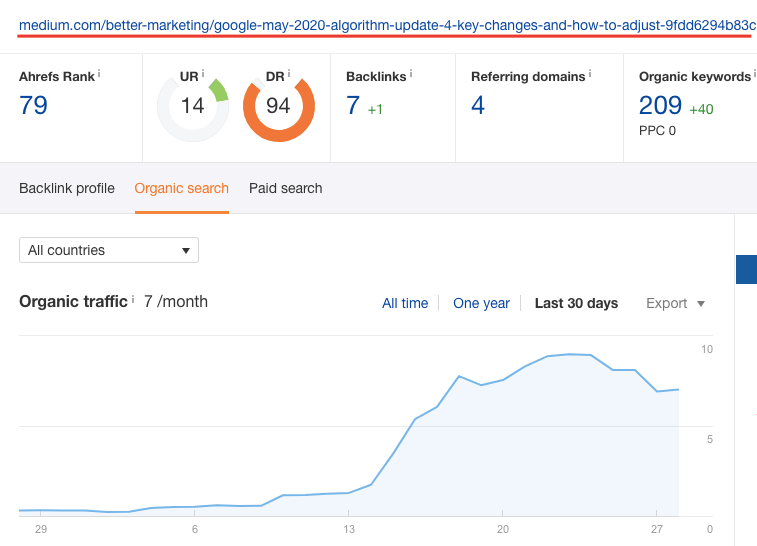
I checked how one of my articles performs via Ahrefs. The title is the following: “Google May 2020 Algorithm Update: 4 Key Changes and How to Adjust”.
I wrote it at the end of May, just a bit after Google released changes to their algorithms. Up until today, the article ranks for over 209 organic keywords, it has naturally got 4 referring domains, and it ranks in Top 10 Google results under 1 keyword.
You can see a traffic spike on the graph. The keywords it ranks for are merely informational with low monthly volume, but I did almost nothing to achieve these results.
In fact, everything I did to optimize my article is the following:
1. I chose a trendy topic
Until May 2020 no one wrote anything about the Google Algorithm. There was no proper piece of information covering what this update is about and how it will affect webmasters.
I conducted some research, analyzed the information published by Google and ranking happened on its own.
The same applies to the referring domains — other websites started to mention my source in their content while talking about the Google updates.
Mentions from side platforms and the positive user behavior on-site could have provided Google with the signal that my page is worths ranking higher.
2. I added the title and description on Medium
Navigate to SEO settings to update your search preview title and description. Here is how it looks for my article:
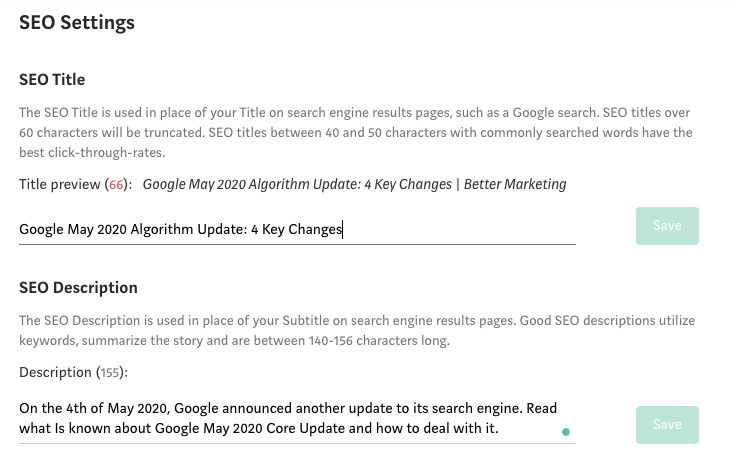
Nothing special here, I added the title and description, which contained the keyword “Google May Algorithm Update”.
3. I checked user’s questions online
I knew what I want to write about, but I also checked what readers want to know by checking “People also ask” and related searches in Google.
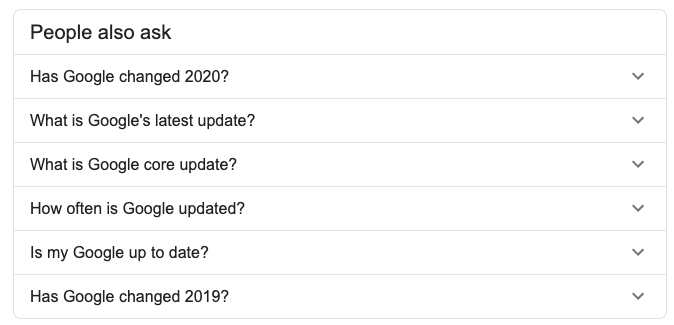
As a result, I added the following paragraphs to my article:
- What Is Known About Google May 2020 Core Update
- Do I Need to Start Updating My Website?
For the corporate blog posts, I would have conducted a more thorough keyword research, but that was not my goal this time. I focused on writing, rather than optimizing content for Google.
4. The content was published by a reputable publication
I am not 100% sure it directly affected the ranking, but the fact that the article is published via BetterMarketing could have made Google trust it a little bit more.
Moreover, the content has been already seen and read by multiple Medium readers before it started ranking, with the average reading time 2 mins 39 seconds!
And this is it! It took me one full day to conduct research, write and publish the article on Medium.
This small case study made me wonder if I can achieve similar results for corporate blog posts with low-difficulty keywords.
As a reader, I do trust top Medium publication and expect clear and actionable written pieces. The fact that the content is completely moderated and edited by humans makes me trust Medium even more.
Why can’t Google adapt the same logic? It trusts Wikipedia, Glassdoor, Growthhackers, etc for having expert content, so does Medium!
Marketers need to finally switch the approach and start producing the content for readers, not for the crawling bots.
Backlinks exchange, keyword stuffing, etc manipulate the search algorithms, but they cannot fool actual readers.
Sooner or later someone will produce a golden piece, which will eventually outperform artificial rankings.
Think upfront, discover what bothers your readers, ask them if needed, craft content to answer their needs, and promote it. Play longterm, do not support cheap marketing.


