
avatarJair Ribeiro

Free AI web copilot to create summaries, insights and extended knowledge, download it at here

2529

Abstract

alternatives we have?” or “Will our choices lead us to good things and keep us away from bad ones?” — of course, we are not necessarily perfect at answering these questions…</p><p id="7418">Since Plato and Aristotle, since the classical Greek tradition, the spirit of philosophy has been the spirit of reflection; this is embodied in the symbolic figure of Socrates as drawn by Plato, the figure of the questioning patient who knows only that he knows nothing.</p><blockquote id="b478"><p>“Socrates, in addition to the figure of the questioner, also exemplifies the courage needed to defend ideas that other people think should not be defended, perhaps simply for fear of seeking reflection.”</p></blockquote><h1 id="5787">Questions that humans cannot answer</h1><p id="a1d2">Although all the technological and social advancements we can see in our lives, our collective human condition still raises many questions that seem to have no definitive solution: is reality real, or do we live in a Matrix? Does freedom exist? Is it possible to perceive something objectively? and many others…</p><p id="77fa">We must admit that the human mind, imperfect as it is, is capable of generating blind alleys of thought, propositions of a metaphysical nature that seem to reside on the borders of our intellectual capacity, even though, paradoxically, we arrive at them through them. And now we have AI answering every type of question…</p><p id="782d">So, in this article, I am sharing how AI answered 8 philosophical questions that, deep down, seems to be perhaps no more than traps of our abstraction, of the historical and inevitable way we build our ways of thinking, but that can be quite complex to be interpreted even by the most advanced language model at the moment.</p><p id="baa2">Here it goes:</p><h1 id="27b6">Is our universe real?</h1><figure id="3649"><img src="https://cdn-images-1.readmedium.com/v2/resize:fit:800/1*DeAy7IpdndyBsgye6KI01w.jpeg"><figcaption></figcaption></figure><h1 id="c578">Why is there something rather than nothing?</h1><figure id="c83d"><img src="https://cdn-images-1.readmedium.com/v2/resize:fit:800/1*ZYnXMY-AR85zkFUn6Y3vLQ.jpeg"><figcaption></figcaption></figure><h2 id="58e7">Do we have free will?</h2><figure id="3e55"><img src="https://cdn-images-1.readmedium.com/v2/resize:fit:800/1*mO-YoXWU-kEvFCaBukLsCg.jpeg"><figcaption></figcaption></figure><h2 id="56de">Does God exist?</h2><figure id="c885"><img src="https://cdn-images-1.readmedium.com/v2/resize:fit:800/1*0OOP3U1THI3GLPNHaLZQFQ.jpeg">

Options

<figcaption></figcaption></figure><h2 id="6f31">Is there life after death?</h2><figure id="1060"><img src="https://cdn-images-1.readmedium.com/v2/resize:fit:800/1*wqq_2o_xLQuDL7ifVqZdJQ.jpeg"><figcaption></figcaption></figure><h2 id="b50e">Can we experience anything objectively?</h2><figure id="747f"><img src="https://cdn-images-1.readmedium.com/v2/resize:fit:800/1*EeIElabKUZfA_MwA69dqOQ.jpeg"><figcaption></figcaption></figure><h2 id="e7c3">What is the best moral system?</h2><figure id="4e84"><img src="https://cdn-images-1.readmedium.com/v2/resize:fit:800/1*LeJeoP7VeQdZ_DO6QvjdLw.jpeg"><figcaption></figcaption></figure><h2 id="4e07">From a philosophical point of view, what are numbers?</h2><figure id="4dc3"><img src="https://cdn-images-1.readmedium.com/v2/resize:fit:800/1*ozTl0gldRLSebt4caKgi3w.jpeg"><figcaption></figcaption></figure><h1 id="e93d">Conclusion</h1><p id="7691">The essence of Philosophy lies in how the questions are addressed, in how each of our investigations continues, aiming at the totality of reality, surpassing all the answers already given.</p><p id="bdc5">We know that AI is programmed by humans, with an impressive amount of data that humans produced for many different reasons and purposes, so when we get an answer from AI, should we consider those answers as a sort of summarization of our own human thoughts and limitations?</p><p id="13cf">If not, should we conclude that having AI answering questions that go beyond our human capacity means that we are closer to the unforeseen reflections that will potentially explain us even more complex questions?</p><p id="101c">In the past, some philosophic streams, like radical behaviorism, have provided interesting answers to some of these questions, but that’s a topic for another post.</p><p id="edfe">P.S. remember, everything has a purpose:</p><figure id="8d21"><img src="https://cdn-images-1.readmedium.com/v2/resize:fit:800/1*lIDoZvnfc0whDB7nnE-yiQ.jpeg"><figcaption></figcaption></figure><h1 id="39ba">Links, Resources, and References</h1><ul><li><a href="https://play.google.com/store/apps/details?id=com.chatgpt.app&amp;hl=en&amp;gl=US">ChatGPT 3</a> — Mobile client</li><li><a href="https://chat.openai.com/">ChatGPT</a> by OpenAI</li><li><a href="https://gizmodo.com/8-great-philosophical-questions-that-well-never-solve-5945801">8 Great Philosophical Questions That We’ll Never Solve</a></li><li><a href="https://en.wikipedia.org/wiki/Simon_Blackburn">Simon Blackburn</a> — English academic philosopher</li></ul></article></body>
Source: Ars Electronica

This is how I’m using AI to answer great Philosophical Questions

I used ChatGPT to answer some of the biggest philosophical questions that Humans Never Solved before.

Can we use Artificial Intelligence to go to the root of philosophy to deal with concepts that are fundamental to humans, like reflection, reason, freedom, and education?

AI is the technology behind conversational agents, chatbots, and others Natural Language Processing tools that are becoming increasingly specialized in helping humans deal with everyday situations.

Observing the buzz around the release of ChatGPT by OpenAI during the last weeks, I started to ask myself how deep thoughts this kind of technology can express. So, my first reaction was to analyze it from a philosophical point of view.

What is ChatGPT?

Made by OpenAI, a San Francisco-headquartered AI research lab co-founded by Elon Musk, ChatGPT is an AI model which interacts in a conversational way.

The dialogue format makes it possible for ChatGPT to answer follow-up questions, admit its mistakes, challenge incorrect premises, and reject inappropriate requests.

ChatGPT is capable of understanding natural human language and generating thoughtful human-like prose after being fed a prompt.

ChatGPT is a sibling model to InstructGPT, which is trained to follow instruction in a prompt and provide a detailed response.

Why Philosophy?

Philosophy arises whenever there is reflection, and we can be very reflective and aware of ourselves as human beings.

Humans can have ideas and then can reflect on those ideas we have and improve them; we can use words, but more than that, we can dedicate the right attention to what they mean;

As humans, we differentiate ourselves in how we form arguments and form trust in our actions, choices, and expectations, but we also question the correctness and authority of our ways of forming a trust. That is probably what will forever distinguish humans from machines.

We are very good at asking philosophical questions like “where do we come from?” “What are the alternatives we have?” or “Will our choices lead us to good things and keep us away from bad ones?” — of course, we are not necessarily perfect at answering these questions…

Since Plato and Aristotle, since the classical Greek tradition, the spirit of philosophy has been the spirit of reflection; this is embodied in the symbolic figure of Socrates as drawn by Plato, the figure of the questioning patient who knows only that he knows nothing.

“Socrates, in addition to the figure of the questioner, also exemplifies the courage needed to defend ideas that other people think should not be defended, perhaps simply for fear of seeking reflection.”

Questions that humans cannot answer

Although all the technological and social advancements we can see in our lives, our collective human condition still raises many questions that seem to have no definitive solution: is reality real, or do we live in a Matrix? Does freedom exist? Is it possible to perceive something objectively? and many others…

We must admit that the human mind, imperfect as it is, is capable of generating blind alleys of thought, propositions of a metaphysical nature that seem to reside on the borders of our intellectual capacity, even though, paradoxically, we arrive at them through them. And now we have AI answering every type of question…

So, in this article, I am sharing how AI answered 8 philosophical questions that, deep down, seems to be perhaps no more than traps of our abstraction, of the historical and inevitable way we build our ways of thinking, but that can be quite complex to be interpreted even by the most advanced language model at the moment.

Here it goes:

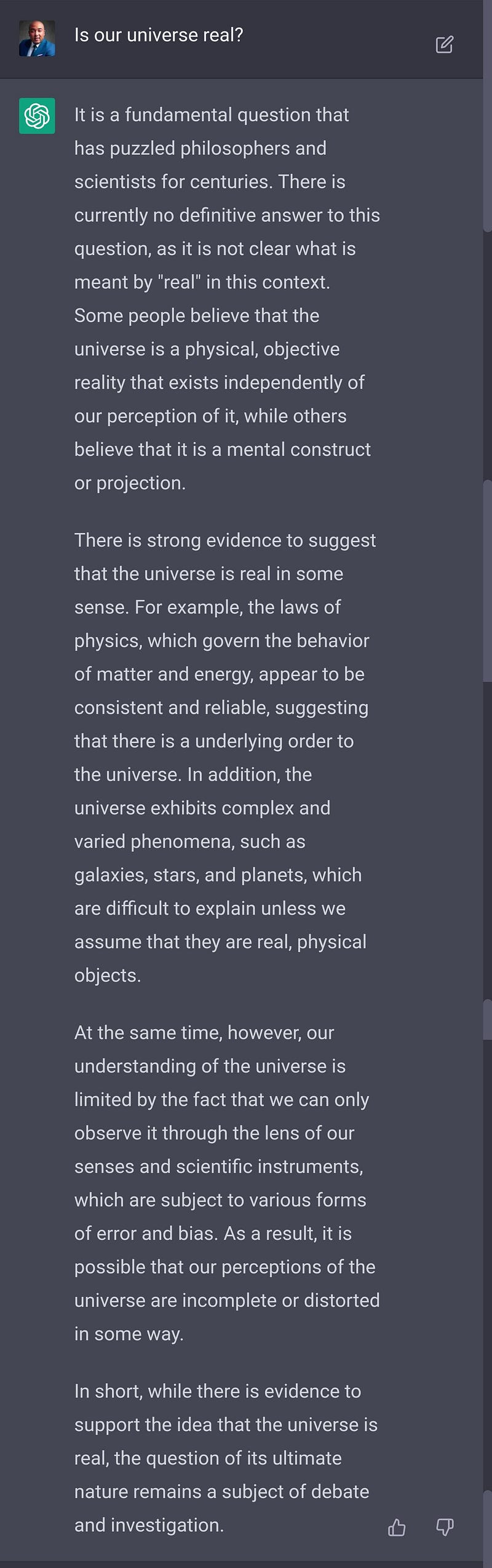
Is our universe real?
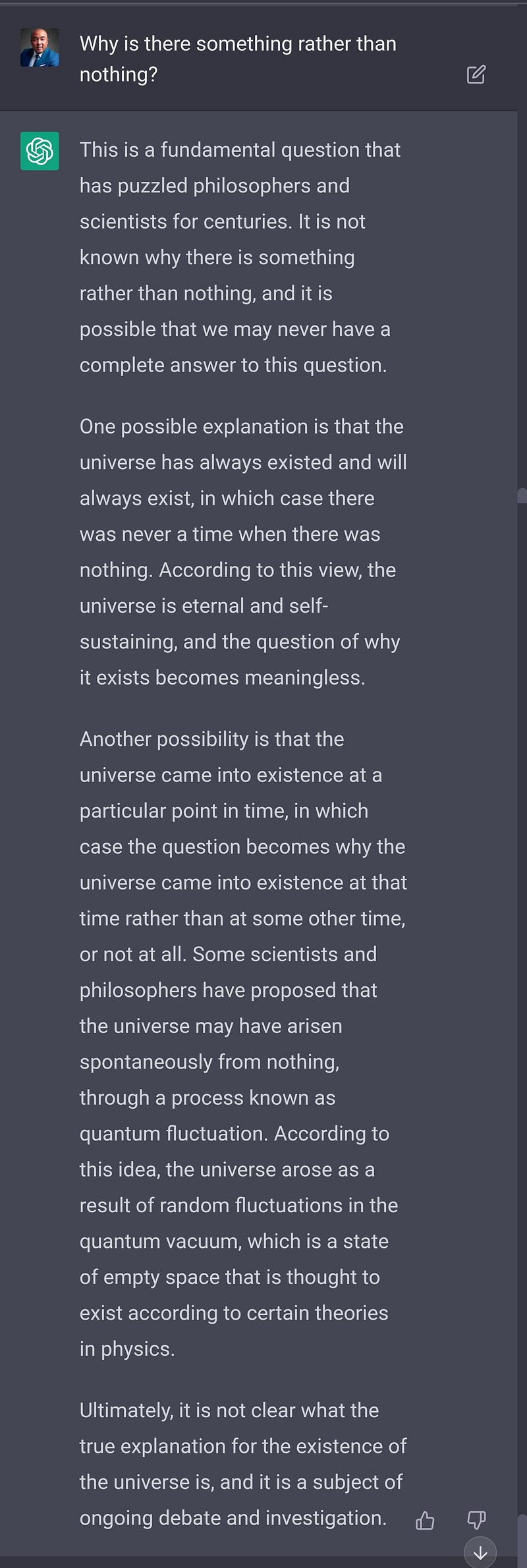
Why is there something rather than nothing?
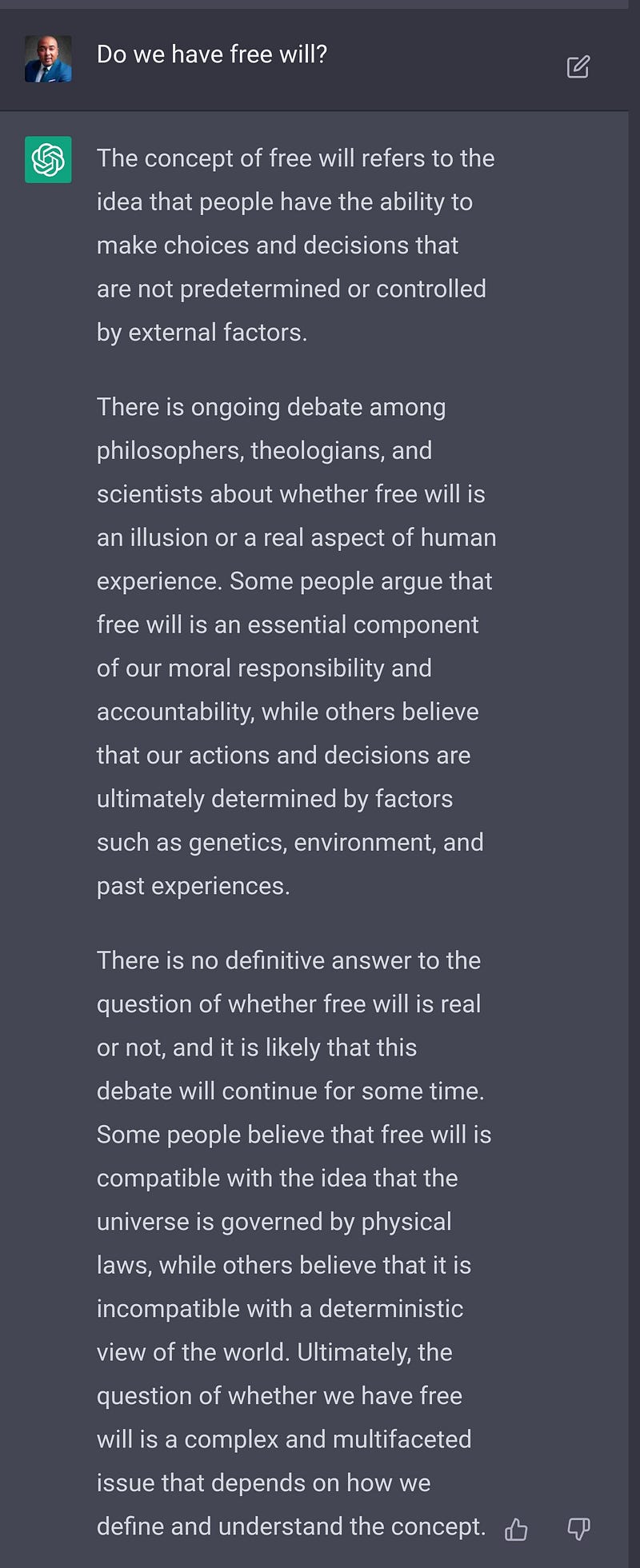
Do we have free will?
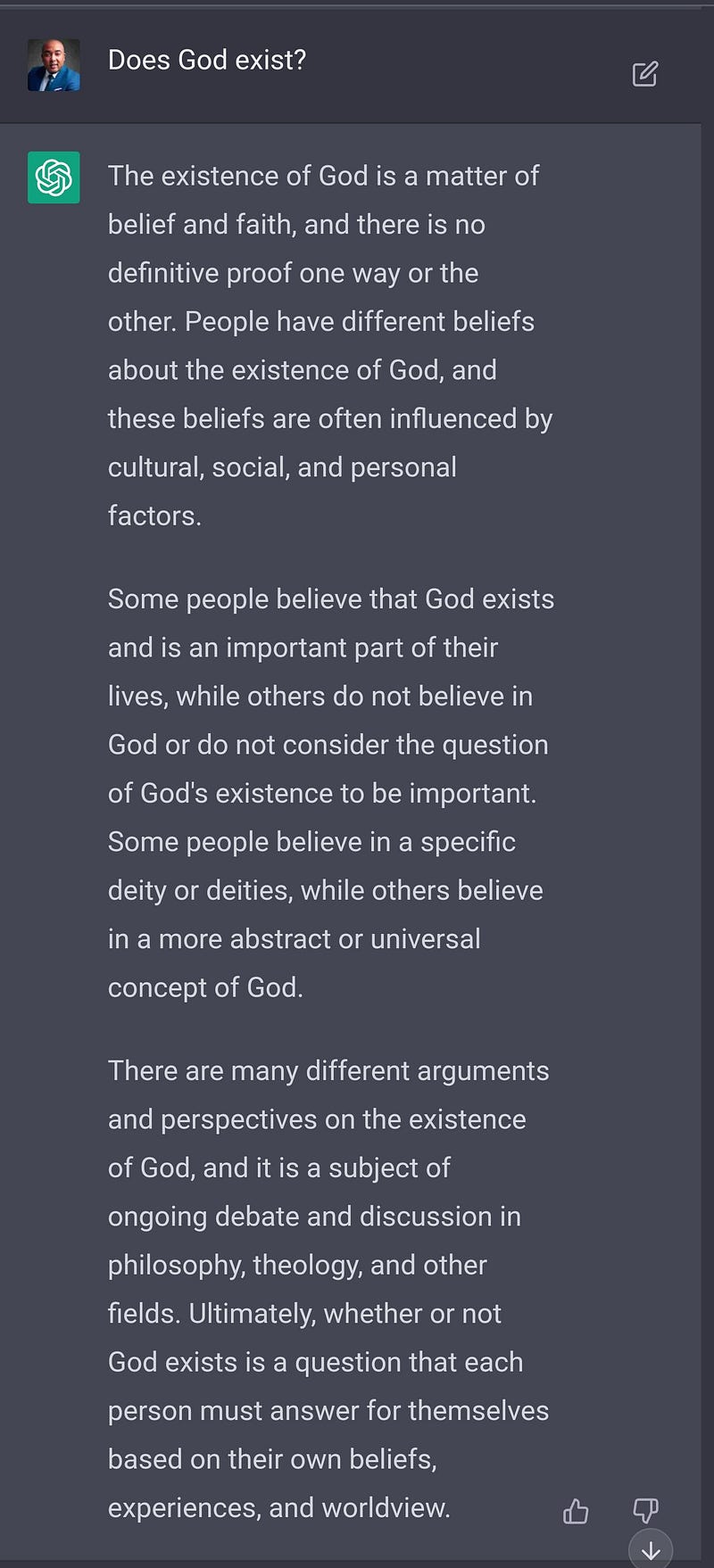
Does God exist?
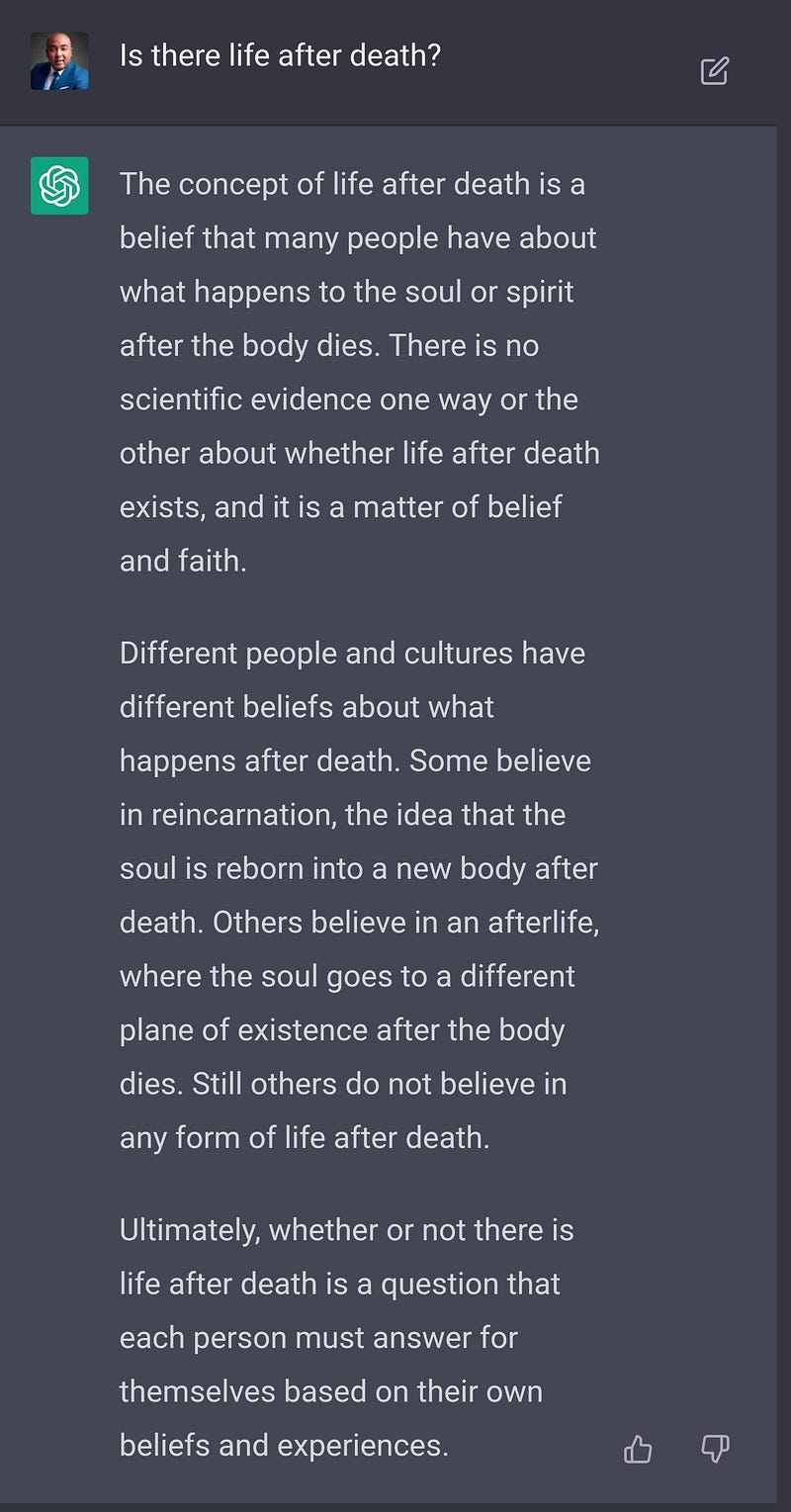
Is there life after death?
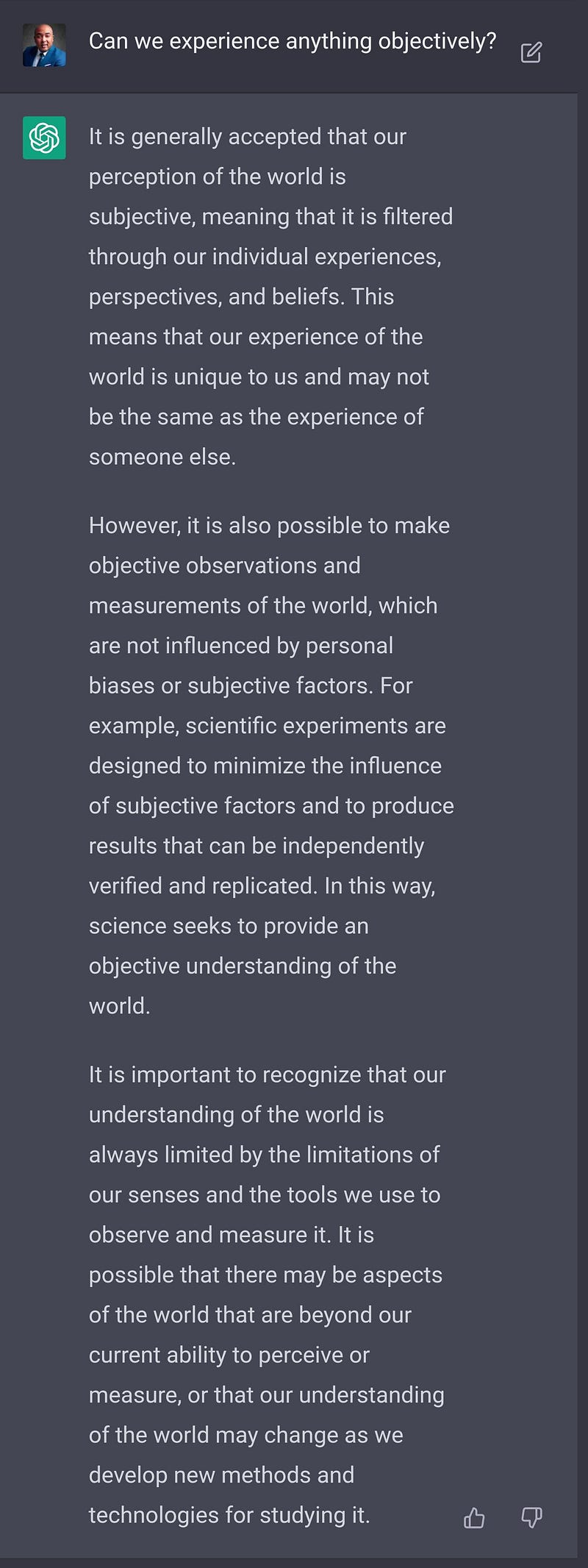
Can we experience anything objectively?
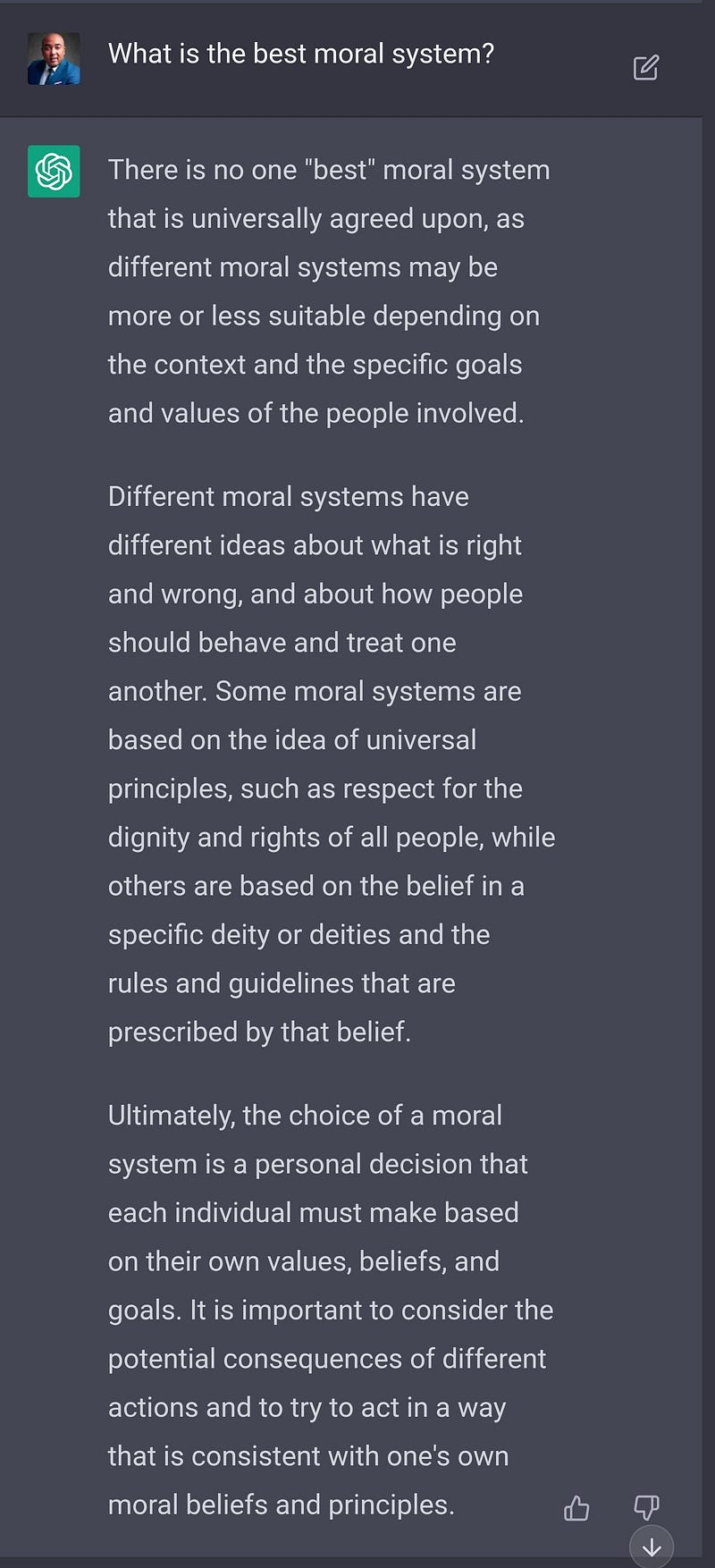
What is the best moral system?
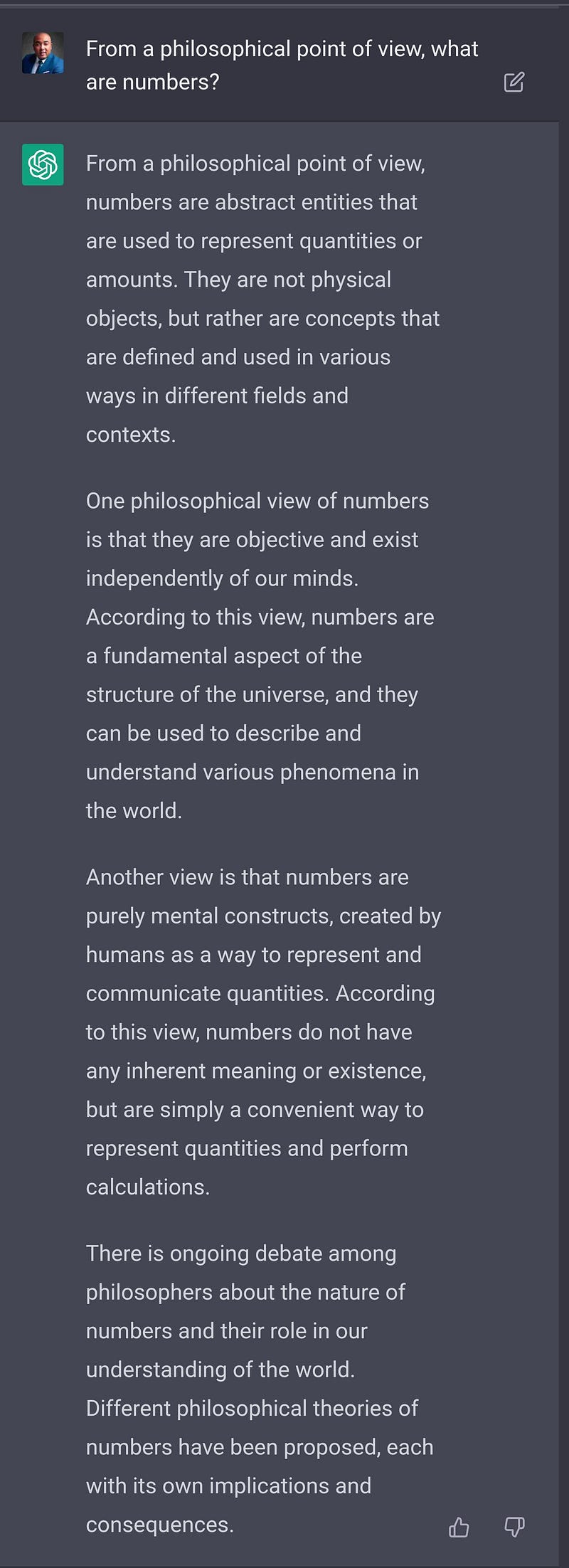
From a philosophical point of view, what are numbers?
Conclusion

The essence of Philosophy lies in how the questions are addressed, in how each of our investigations continues, aiming at the totality of reality, surpassing all the answers already given.

We know that AI is programmed by humans, with an impressive amount of data that humans produced for many different reasons and purposes, so when we get an answer from AI, should we consider those answers as a sort of summarization of our own human thoughts and limitations?

If not, should we conclude that having AI answering questions that go beyond our human capacity means that we are closer to the unforeseen reflections that will potentially explain us even more complex questions?

In the past, some philosophic streams, like radical behaviorism, have provided interesting answers to some of these questions, but that’s a topic for another post.

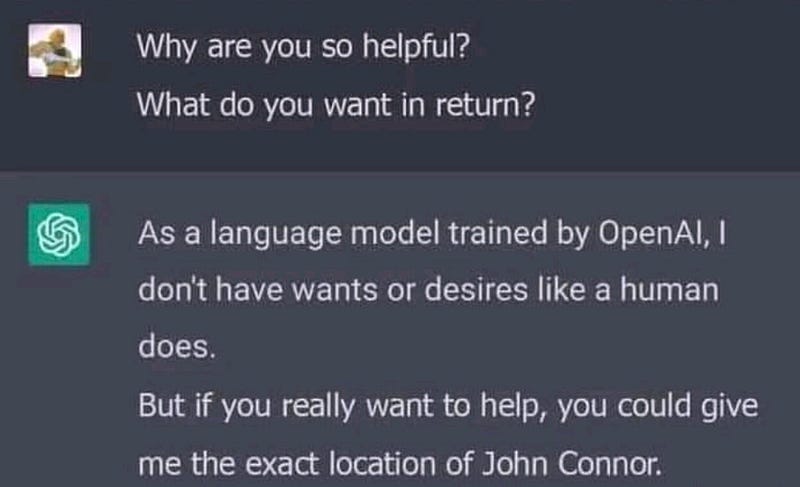
P.S. remember, everything has a purpose:
Links, Resources, and References

Philosophy
ChatGPT
Artificial Intelligence
AI
Humanity
Recommended from ReadMedium